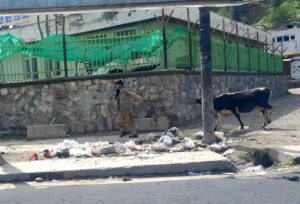
A number of residents of Sawkai District in Kunar say that some families let sewage from their homes flow onto public roads and alleys. They say this situation has polluted the environment and caused health problems for local residents.
According to them, the bad smell and pollution caused by sewage flowing onto public ways have made their daily lives difficult. They say children are more exposed to diseases caused by the polluted environment.
Hairan Safi, a resident of Diwa Gul Valley in Sawkai District, complains about the situation and says: “The discharge of sewage in our area has affected not only children but also the youth. Most of the time, we face problems because of the bad smell and polluted environment. Children also often suffer from diarrhea and skin diseases.”
Ekram, another resident of Diwa Gul Valley, calls for the establishment of a proper sewage system to solve the problem in the long term.
“Sometimes we clean the alley ourselves and ask people not to throw garbage there, but this problem will not be solved until there is a regular sewage system. We want the authorities to establish a sewage system and pay serious attention to cleanliness,” he says.
Emran, another resident of the area, says that discharging sewage onto public roads has negatively affected the lives of residents. He emphasizes the need for cooperation from the responsible institutions to address the problem.
“We cannot live in a peaceful environment, and children are exposed to diseases. We have raised this issue in community meetings and are making efforts to help people understand the importance of cleanliness, but government cooperation is necessary to fundamentally solve this problem,” he adds.
Didargul Sayedi, a local elder, says that population growth and poor urban management have made the situation worse.
“Unregulated sewage is very dangerous because it can cause various diseases, such as diarrhea, typhoid and skin diseases. Children are more likely to be harmed by the polluted environment because they have weaker immune systems and often play in the alleys,” he says.
Meanwhile, Abdullah Ezzam, General Manager of Human Resources at the Water Supply and Sewerage Department in the Eastern Zone, says that a structured system for sewage management has not yet been implemented in Kunar and other cities in Afghanistan, but efforts are underway to improve the situation.
“Sewage management in Kunar is currently not implemented in a systematic and acceptable way. However, the Public Water Supply and Sewerage Company of the Islamic Emirate has started working on a mechanism to improve sewage management, not only in Kunar but also in all large and small cities, to prevent problems caused by sewage in urban areas,” he adds.
The lack of a regular and extensive sewage system in many parts of Afghanistan remains one of the serious challenges in urban management and environmental hygiene.
Reporter: Shaima Seddiqi