Category: WOMEN’S RIGHTS

Emotional support; a religious right of women in married life

Islamic Sharia and legal experts consider emotional support one of the fundamental pillars of married life and emphasize love, respect, and kind treatment between husband and wife — a right whose violation can even provide grounds for filing for divorce. However, a number of women complain about the lack of affection and emotional understanding in their marriages, saying that the situation has placed them under psychological pressure.

Inserting conditions in Marriage Certificate; a legal mechanism for protecting women’s rights

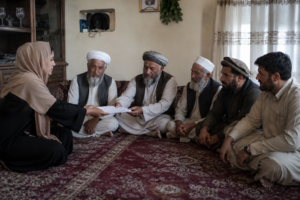
Legal experts and religious scholars emphasize that women have the right to insert lawful conditions in the marriage certificate (Nikah Nama) prior to marriage, and if the husband fails to act in accordance with such conditions, the wife may demand her rights through legal channels. However, some women complain that after years of marriage, the very conditions agreed by their husbands’ side prior to the marriage certificate have not been fulfilled.

A survey on the level of depression among women in Afghanistan

For this reason, the Salam Afghanistan Media Organization (Radio Salam Watandar) conducted a field survey in 26 provinces of the country and examined the mental health status of 401 women, aiming to present a realistic and scientific picture of depression among women in Afghanistan. The findings of this survey show that nearly half of the surveyed women experience moderate depression, which can be considered a serious threat to women’s mental health in Afghanistan.

Lack of awareness; women left without Tetanus vaccine in Jawzjan

Doctors believe that although Tetanus vaccination is vital for preventing life-threatening diseases in mothers and newborns, some women in Jawzjan province have not received the vaccine due to a lack of awareness, economic difficulties, and limited access to health services.

‘They told us to wait, but there is no aid’; widows’ right to access emergency assistance

While Islamic Sharia and international documents emphasize the right of widows and women without guardians to access emergency financial assistance, evidence from Kunduz shows that many of these women are, in practice, deprived of this right. In the Holy Quran (Surah At-Tawbah, verse 60), the poor and needy are identified as rightful recipients of zakat, and in the Hadiths, caring for widows is described as equivalent to performing major social deeds.