UNHCR and Salam Watandar hold talks to amplify returnees’ voices
Representative of UNHCR Afghanistan visited Salam Afghanistan Media Organization (Salam Watandar Radio Network) in Kabul.

Representative of UNHCR Afghanistan visited Salam Afghanistan Media Organization (Salam Watandar Radio Network) in Kabul.

The government of Japan, in partnership with the United Nations Development Programme (UNDP), has announced a new joint initiative titled “Resilient Income Solutions Empowering Alternative Livelihoods” (RISE) aimed at supporting vulnerable communities in Afghanistan.

UNHCR’s Representative in Afghanistan visited Kandahar province to scale up support for refugee returnee communities, a key return area in the country, while continuing to respond to emerging needs along the border.

Young Afghan migrants in Pakistan say the current conditions have caused them serious psychological distress. Jamila, 26-year-old, who has lived with her family in Pakistan for three years, says: “I cannot even sleep because of the fear of deportation. Economic problems, unemployment—every kind of fear is inside me. We were warned to hide ourselves; otherwise nothing can be done for us. The situation for refugees is extremely difficult.”

The UN Refugee Agency (UNHCR) in Afghanistan has announced that Japan has contributed USD 2 million to the organization.

The UK government has imposed an emergency brake on visas for nationals from four countries, including Afghan citizens, halting work visas as well.

“This is one of the biggest problems,” He says. “People want to work and move forward with their lives, but without proper documents, they don’t have legal permission.”

“For many Afghans, education is not just a right. It is a necessity. If we do not study, we have nothing to stay for, nothing to survive on. Education is a way to escape a fate that threatens us,” Samir says.

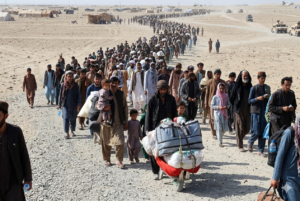
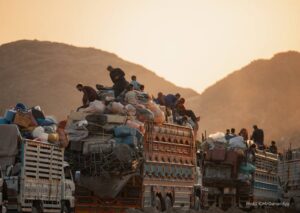
The High Commission for Addressing Migrant’ Problems announced that Iran and Pakistan have deported 1,761 Afghan citizens.

Afghan youths are leaving their country in search of economic opportunities despite serious risks abroad. Iran remains a primary destination, even amid political unrest and security threats. Salam Watandar’s findings indicates that Afghan young people are migrating to Iran despite the country is facing waves of internal instability and the threat of an external conflict.

Officials of the Islamic Emirate have called on the Pakistani government to refrain from expelling Afghan migrants during the Eid al-Fitr celebrations.

As the returns and deportations of Afghans decreased significantly in March, mainly due to the border closure, Amnesty International has called on Pakistan to withdraw the opaque ‘illegal foreigners’ repatriation plan targeting Afghan refugees.