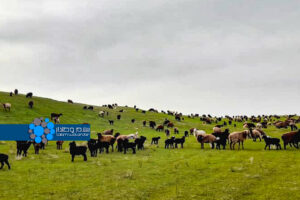
The sound of livestock bells, the smell of fresh milk, and the movement of livestock-owning families across the green slopes of Band-e Bayan—this is the Yaylaq (Ailaq) in Ghor Province, a highland grazing area where, with the arrival of spring, many families move their livestock to make use of the pasturelands.
Life in the Yaylaqs in Ghor is more than just a seasonal migration. It is an important part of the economy and livelihoods of livestock owners. They say that during this short period, they produce traditional dairy products that meet a significant portion of their families’ annual needs.
Haji Amir Bai, a livestock owner from Taqa Timor village in Ghor who is currently staying in the Yaylaq, says,
“We have around 80 sheep and goats, about 40 of which are lactating. We collect nearly 20 kilograms of milk every day. We use the milk to make yogurt, dogh, chaka, qorot, and clarified butter. During the winter, we take these products to the market to sell. The income we earn during these two months in the Yaylaq covers a large portion of our family’s annual expenses.”
Masum Bai, another livestock owner from Taqa Timor village, says,
“We have around 60 sheep and collect nearly 30 kilograms of milk every day. Most of the milk is processed into dogh and qorot because they are easier to preserve. Selling these products helps us buy essential household necessities.”
Meanwhile, women also play an important role in producing and processing dairy products. Bibi Gul, a resident of the same village, says,

“In the Yaylaq, most dairy processing is done by women. Every morning and evening, we collect the milk and make yogurt, chaka, and clarified butter. The income from selling these products is very important for our family. Our major challenges are the lack of proper storage facilities and the difficulty of transporting our products to the market.”
Livestock experts believe that if efforts are made to improve the quality of dairy products and create appropriate markets, Ghor’s Yaylaqs could become an important source of income for livestock owners. Zia-ul-Haq Honarmand, a livestock expert, says,
“The Yaylaqs (highland pastures) in Ghor have significant economic potential. If livestock owners adopt better feeding practices and improve animal hygiene, milk production will increase. Currently, the lack of regular markets, limited veterinary services, and traditional packaging methods are among the main challenges facing this sector. Establishing dairy collection centers and providing training for livestock owners could increase the added value of dairy products.”
Meanwhile, officials from Ghor’s Department of Agriculture, Irrigation and Livestock emphasize that livestock farming is one of the pillars of the province’s rural economy. Ramazan Wafi, spokesperson for the department, says,
“Livestock farming is one of Ghor’s most important economic sectors, and thousands of families depend on it for their livelihoods. Recent droughts and climate change have negatively affected grazing lands and livestock numbers. However, we are working to expand veterinary services and support programs. Proper use of the Yaylaqs can increase dairy production and improve the incomes of livestock-owning families.”
The Yaylaqs of Ghor remain an important part of the lives and economy of the people in Ghor Province. If given greater support, this natural potential could help improve the livelihoods of many livestock-owning families.
Reporter: Mah Rokh Adel