Rising temperatures, irregular rainfall, and water shortages have disrupted the traditional agricultural calendar in Nangarhar. Wheat is ripening earlier than usual, vegetables are being damaged before the harvest season, and some farmland has been left uncultivated due to water shortages. As a result, farmers are facing growing challenges, while experts emphasize the need for a climate-smart agricultural calendar aligned with the changing climatic conditions across the province.
In the fertile plains of Nangarhar, where seasons once followed relatively predictable patterns and farmers passed down the planting calendar from one generation to the next, the agricultural calendar is now being disrupted.
The question is: Have rising temperatures, changing rainfall patterns, and reduced access to water altered growing seasons and the agricultural calendar in the province?
The answer is yes. This is not a temporary change but an ongoing reality affecting the lives of thousands of farmers’ families.
Rising temperatures and shorter growing seasons in some areas
Nangarhar is one of Afghanistan’s eastern provinces and is highly vulnerable to climate change because of its geographical location and its dependence on surface water and groundwater resources.
A joint assessment by the World Food Programme (WFP), the United Nations Environment Programme (UNEP), and Afghanistan’s National Environmental Protection Agency shows that, unlike in many other parts of the country where growing seasons have become longer, they have become shorter in some areas of Nangarhar and Laghman provinces.
Nezamullah Ziyar, an environmental and climate change specialist, says: “Based on available climate data up to 2025, Nangarhar has experienced a clear rise in temperatures. This increase is particularly noticeable on hot days, with more frequent heatwaves and higher rates of evaporation. Temperatures begin to rise earlier, and cold weather starts earlier in autumn, although this pattern varies from year to year.”
Farmers in Nangarhar are already feeling the effects of these changes. Ezharuddin, a farmer from Nangarhar, says that over the past six years, agriculture and the climate have changed significantly.

“Because of rising temperatures, our wheat ripens earlier than it used to. The hot weather starts much earlier and lasts longer. As a result, our crops ripen and are harvested earlier,” he says.
Saajed Safi, another farmer, has had a similar experience. He says that planting and harvesting seasons have changed compared with the past.
“Agricultural seasons have changed to some extent because the weather has become hotter. Due to water shortages, some crops ripen earlier, while others ripen later. Sometimes, we have to harvest our crops earlier than usual. For example, wheat ripens earlier because of the high temperatures. If we do not harvest it on time, its quality will decline,” he adds.
Nesar Dehqan, another farmer in Nangarhar, adds that vegetables are now planted earlier than usual and are ready for harvest sooner.
Ezzatullah Sadat, a Teaching Assistant at the Faculty of Agriculture, says that temperatures have increased significantly over the years due to rising greenhouse gas emissions and that temperature is the main factor influencing climatic conditions.
“Every plant needs a specific temperature, enough water, and suitable climatic conditions to grow, reproduce, and produce fruit. A longer period of hot weather is directly related to the agricultural season, but higher temperatures do not necessarily mean a longer growing season. If temperatures rise and enough water is available, the negative effects are less. However, if temperatures increase and there is not enough moisture in the soil, crop yields decline, and planting and harvesting times change,” he adds.
From an agricultural perspective, plants pass through different stages of growth depending on the amount of heat they receive over time. When temperatures rise earlier than usual, the period during which seeds develop and fill becomes shorter. As a result, crops reach the harvesting stage earlier. However, in many cases, the seeds become lighter, and overall crop yields decline. Therefore, earlier crop ripening is not necessarily an advantage for farmers. Instead, it can be a sign of heat stress and reduced agricultural productivity.
Irregular rainfall; when rain does not occur during its usual season
One of the most serious consequences of climate change is the disruption of rainfall patterns. Farmers say that rain no longer falls at the right time. Rainfall decreases when crops need water most, while heavy rain and flash floods occur at unsuitable times, damaging farmland and crops.
Saajed Safi, a farmer who has experienced changes in rainfall patterns and their effects on agriculture, says: “When we plant our crops, it does not rain, and the crops suffer because of water shortages. Rain often comes with strong storms, and many crops are damaged by storms and hail.”
Omar, another farmer, describes his experience with irregular rainfall: “Heavy rain falls when plants do not need it. This heavy rainfall causes soil erosion and reduces soil fertility.”
These observations are not limited to local experiences. International reports also show that climate change in Afghanistan has increased the intensity of heavy rainfall while reducing regular rainfall. In Nangarhar, this has increased the risk of flooding and threatens agricultural land.
Scientific evidence aligns with farmers’ experiences
Farmers’ experiences in the fields are also reflected in academic research. A 2024 study by researchers at Nangarhar University on farmers’ views of climate change in the province found that the majority of farmers had experienced rising temperatures and drought.
According to the study, approximately 92 percent of farmers reported rising temperatures, while around 91 percent reported experiencing drought. Similarly, about 96 percent identified the drying up of water sources, and 85 percent identified crop failure as major consequences of climate change.
The same study identified drilling new wells, changing the timing of agricultural activities, and growing different types of crops as the most common ways farmers adapt to climate change. Another study conducted by researchers at the same university in 2021 found that more than 80 percent of farmers rated the effects of climate change on pests and diseases, as well as declining groundwater levels, as high or very high.
Water shortages; the main challenge behind changes in cropping patterns
Water shortages are the main problem. Water levels in kariz systems, drainage channels, and springs are declining. Groundwater levels are also falling every year, forcing farmers to dig deeper wells. Omar, a farmer in Nangarhar, says:
“As temperatures have increased, most kariz systems, drainage channels, and wells have dried up. There is a kariz in our village that dries up during the summer. Its water returns in autumn, but it is dry when we need water the most. Every year, many farmers dig wells about 20 to 50 meters deep. Groundwater levels are also declining.”
Ezharuddin also speaks about the drying up of springs. He says: “In the past, there was plenty of rain and snow, and there were many springs during the summer. But now, we do not have enough water reserves. Because of water shortages, we cannot grow some crops, such as rice, vegetables, tomatoes, cucumbers, spinach, and other crops.”
These concerns are also reflected in scientific predictions. Fazlullah Akhtar, a water resources expert based in Bonn, Germany, said in an interview with Dialogue Earth that, according to his modelling, the maximum monthly flow of Afghanistan’s rivers could decrease by up to 40 percent by around 2050. The timing of snowmelt may also change. This means that the water available to farmers in spring and summer could decline and may not rain at a suitable time.
As a result, farmers have changed their planting patterns. Many have replaced rice and water-intensive vegetables with wheat and other resistant crops. Some farmland has been left uncultivated. Farmers in Chaparhar district had previously reported that thousands of jeribs of land had remained uncultivated because of water shortages.
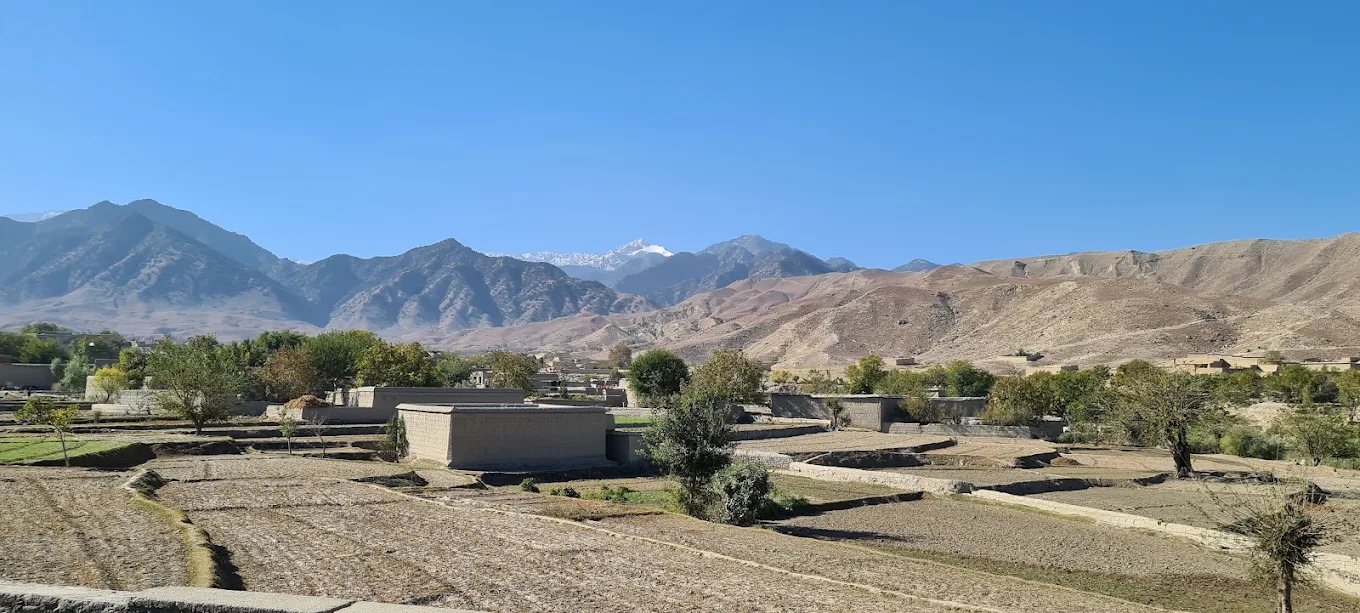
Saajed Safi, a farmer, says: “We try to cultivate crops that require less water on land where there is not enough water. For example, in some fields, we plant wheat instead of crops that require large amounts of water.”
Meanwhile, Attaullah Bashari, Director of Planning and Programs at the Nangarhar Department of Agriculture, Irrigation and Livestock, confirms that districts with limited water resources and areas far from irrigation canals have suffered the most harm. These include Haska Mina, Achin, Shirzad, Surkh Rod, Nazyan, Chaparhar, Dur Baba, Khogyani, Hesarak, Pachir Agam, and mountainous areas.
According to him, wheat, corn, vegetables, legumes, and fruit orchards are facing reduced growth, increased pest attacks, and lower yields due to water shortages and rising temperatures.
However, changing planting patterns can also create new risks. According to Dialogue Earth, some farmers in Nangarhar who grow crops that require less water to cope with drought have suffered losses due to unexpected cold spells.
A farmer in Dara-e-Noor district says that potato crops, which had replaced wheat, were severely damaged by frost. This example shows that changing crops without access to climate information and weather forecasts may simply replace one problem, such as water shortages, with another risk.
Farmers’ climate adaptation efforts and limitations
A number of farmers in Nangarhar say that, to adapt to changing climatic conditions, they change their planting times, use improved seeds, limit irrigation to the morning and evening, and use water-saving irrigation methods as much as possible.
Nesar, a farmer, says: “We have adopted different methods to save our crops, including digging kariz systems, regular irrigation, drip irrigation, and sprinkler irrigation.”
Saajed Safi also speaks about storing water and using improved seeds. Ezharuddin says that he grows crops that are more resistant to water shortages and even irrigates his fields in the evening.
However, these measures have their limitations, and some may even contribute to the problem. When every farmer tries to overcome water shortages by digging deeper wells, pressure on underground water resources increases.
Omar warns: “These seeds alone cannot solve the problem. The government and partner organizations need to build large water storage facilities for local people. Drip irrigation systems should be installed in agricultural fields. The government must establish rules and regulations to prevent the growing trend of excessive well drilling. Otherwise, future generations will face the same problems if this trend continues.”
The head of the Nangarhar Department of Agriculture, Irrigation and Livestock also speaks about extension programs aimed at introducing drought-resistant crop varieties, managing water resources, and improving irrigation methods. He emphasizes that the agricultural calendar must be adjusted to the conditions of each district.
Experts’ views; the need for a climate-smart agricultural calendar
Experts believe that changes in the agricultural calendar are not caused by climate alone. Other factors, including farmers’ decisions, seed varieties, market conditions, fertilizers, pesticides, plant diseases, and economic circumstances, also play a role. However, climate change remains a major factor that makes these challenges worse.
Nezamullah Ziyar, recommends revising the entire agricultural calendar based on climate information. He emphasizes the need to determine suitable planting and harvesting times, adjust irrigation schedules during periods of extreme heat, use climate-resilient crops, monitor the timing of disease outbreaks, and explore opportunities to grow multiple crops in a year.
Ultimately, he calls for a climate-smart agricultural calendar for Nangarhar that is updated every year based on temperature, rainfall, access to water, and the needs of each crop.
Ezzatullah Sadat, also emphasizes that traditional agricultural calendars should be reviewed in cooperation with scientific institutions.
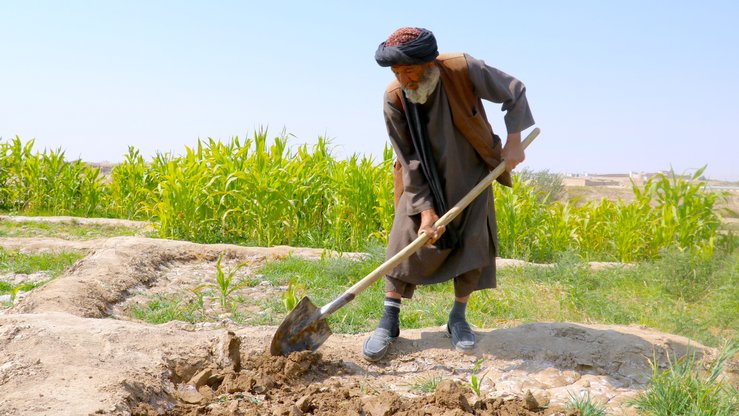
According to him, conditions vary from one district to another, so the same approach cannot be applied everywhere. Planting schedules should be adjusted to ensure that critical stages of plant growth do not coincide with extreme heat and water shortages.
Attaullah Bashari also considers revising the official agricultural calendar essential. He highlights the Department of Agriculture’s extension programs, which aim to raise awareness, improve water management, and introduce drought-resistant crops.
The views of farmers and experts highlight the following key pillars of a climate-smart agricultural calendar:
- Regularly collecting data on temperature, rainfall, and groundwater levels in each district and providing early warnings about heatwaves and frost.
- Developing separate planting and harvesting calendars for each district and updating them every year.
- Building water storage facilities, restoring kariz systems, and expanding drip and sprinkler irrigation.
- Registering and regulating the drilling of deep wells.
- Distributing climate-resilient seeds and providing farmers with practical training.
The reality has changed, and it is time to act
Field observations, farmers’ accounts, and experts’ views all point to the same conclusion: climate change has altered Nangarhar’s agricultural calendar. Rising temperatures have shortened growing seasons in some areas, rainfall has become irregular, and water shortages have forced farmers to change the crops they grow, their planting times, and their irrigation methods.
These changes are not simply a technical issue. They directly affect food security, family livelihoods, and the future of coming generations. Farmers are using their creativity and experience to adapt, but their efforts will not be enough without structural support. This includes building water storage facilities, expanding water-efficient irrigation systems, regulating well drilling, distributing climate-resilient seeds, and developing a science-based agricultural calendar specific to each district.
Nangarhar still has great potential for producing valuable agricultural crops. However, this potential can only be protected by combining farmers’ local knowledge with scientific data and targeted investment.
The time has come to move beyond describing the problems and focus on practical, sustainable solutions. The future of agriculture in Nangarhar and, more broadly, food security in eastern Afghanistan depends on the decisions made today.
Reporter: Nasir Keshawarz
A report from the “Maseer Sabz” program
References:
- A joint assessment by the World Food Programme (WFP), the United Nations Environment Programme (UNEP), and Afghanistan’s National Environmental Protection Agency about growing seasons in Nangarhar and Laghman provinces.
https://cdn.wfp.org/wfp.org/publications/WFP_UNEP_NEPA_Afghanistan_Impacts_climate_%20cha
- (IOM). Afghanistan Climate Vulnerability Assessment 2025– Province Profiles, Eastern Region. https://dtm.iom.int/reports/afghanistan-acva-round-3-eastern-region-provincial-profiles-december-2025
- Noor, N. A., Sarwary, M., et al. (2024). Farmer Perceptions to Climate Variability and Adaptation Strategies in Nangarhar Province. Nangarhar University International Journal of Biosciences
https://nuijb.nu.edu.af/index.php/nuijb/article/view/210 .
- Dialogue Earth (2026). War and climate stress push Afghan farmers to the brink. https://dialogue.earth/en/climate/war-and-climate-stress-push-afghan-farmers-to-the-brink/
- Radio Salam Watandar (December 2020) Water shortages leave drastic impacts on farming in Nangarhar https://swn.af/en/2024/12/water-shortages-leave-drastic-impacts-on-farming-in-nangarhar/ ).
- Impacts of Variation in Temperature and Precipitation on Surface Water in Nangarhar (2025); Assessment of Seasonal Impacts of Climate Change on Groundwater Depletion in Nangarhar https://www.researchgate.net/publication/400063802_The_Impacts_of_Variation_in_Temperature_and_Precipitation_on_Surface_Water_A_Case_Study_of_Nangarhar_Afghanistan?__cf_chl_tk=YTUBWO1otjBMo2QKQY8Bbj5oxk6.doA3Xjlve11Bbdo-1793859985-1.0.1.1-VwEwOEIm6x3_0OC1O.cI7WEFuI5HkfgZejNWaV0FuRQ