Findings from interviews conducted by Salam Watandar with 20 students who have come to Kabul from 8 provinces to continue their education indicate that rising economic hardship is one of their main challenges.
Of the interviewees, 7 are enrolled in private universities and live in private guesthouses. They complain about increasing room rents and electricity costs. The remaining 13 study at governmental universities and reside in dormitories; they also report financial difficulties in meeting their educational and basic living needs.
On the other hand, all interviewees complain of additional challenges, including poor hygiene conditions, insufficient electricity and water, lack of privacy, overcrowded rooms, and the absence of a quiet environment for studying.
These students are pursuing bachelor’s degrees in fields such as journalism, curative medicine, computer science, pharmacy, and engineering.
Mohammad Nasim Noori from Badakhshan, a medical student, complains about the high cost of dormitory living. He explains,
“About 7,000 Afghanis is our monthly expense. Our electricity tariff was changed from residential to commercial. At one point, they even tried to ask us to leave. We looked for another room but couldn’t find one, so we had to stay here again after the house owner increased the rent.”
Farzam Bashir, a 19-year-old from Faryab and a medical student, also says, “Costs are very high. Even though many of us share one room, it is still very difficult to afford. There is rent, electricity, and personal expenses like books. Besides studying, I also have a job just to earn enough to cover my costs.”
Some students nearing graduation emphasize that dormitory life is particularly difficult. They face challenges such as lack of privacy, poor hygiene conditions, and inadequate water and electricity.
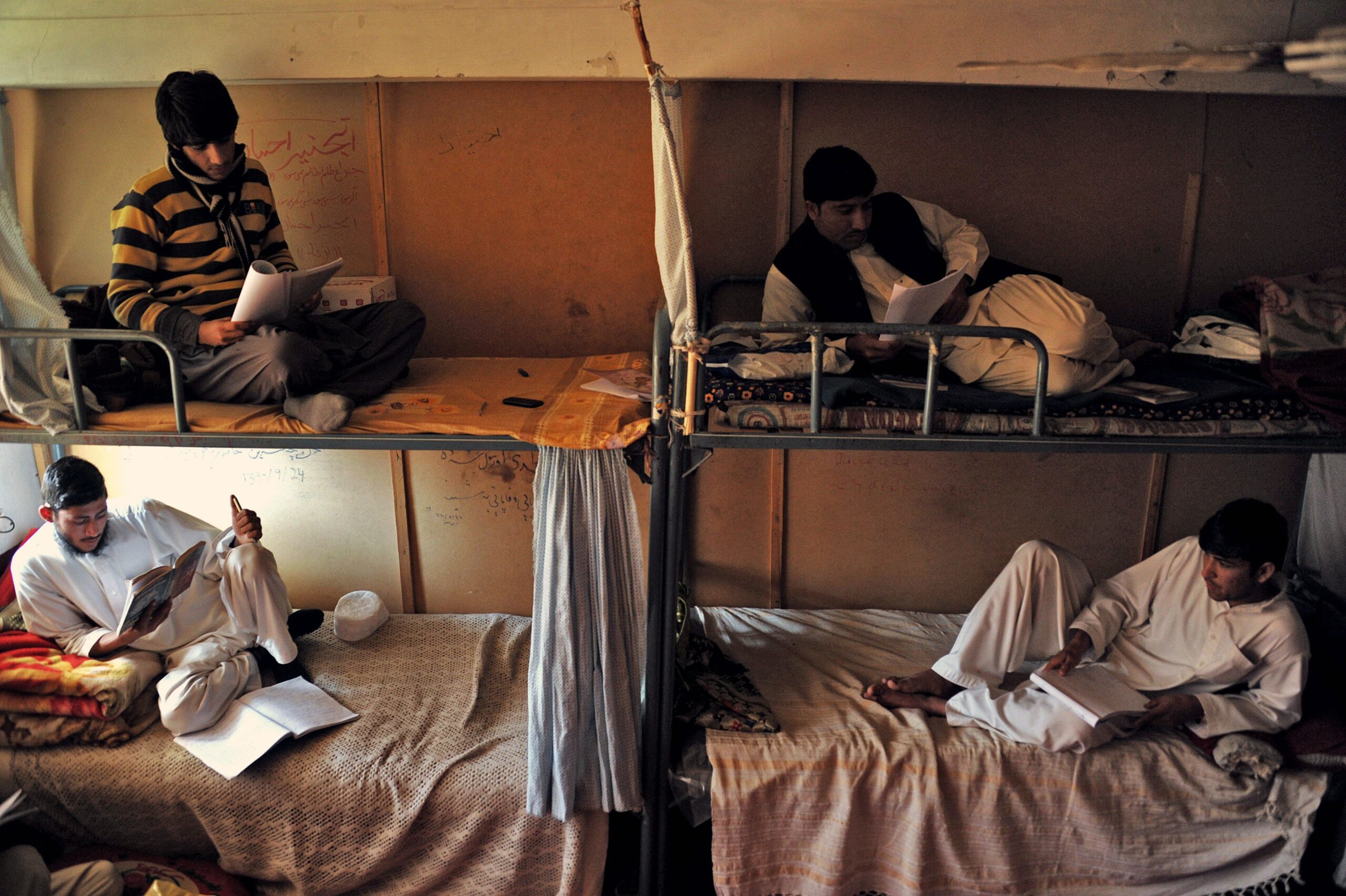
Ahmad, a 23-year-old from Logar and a medical student, says, “When I first came to the dormitory, I faced many problems. Ten of us lived in one room. There was no peace, no privacy, and personal belongings were shared. Hygiene was also an issue—for example, the bathrooms were not in good condition, and sometimes the water supply system would break down. These were the things that really bothered us.”
Sayed Basir Sadat, a 24-year-old from Jawzjan and a journalism student, says, “I lived in the central dormitory of Kabul University for two years, where eight or nine of us shared one room. The hygiene, food, and privacy conditions were not suitable at all, and we lived with a lot of problems.”
Despite these challenges, the students say they continue their education in hopes of building a better future and achieving their goals.
Mukhtar Danish, a 22-year-old from Ghor and an engineering student at private Al-Beroni University, says,
“What made me choose to be away from my family is my motivation. The reason that keeps me hopeful and makes me study here is my field of interest and my preferred university.”
Similarly, Parwiz Qaderi, a 23-year-old from Takhar and a medical student, believes that no one can succeed without effort. This belief makes him continue his education with high motivation.
“When we look at the lives of successful people, we see that they have endured many hardships. No one achieves success without effort and hardship. This gives me great motivation to work harder, study more, and achieve my goals,” he says.
Meanwhile, Qudratullah Seddiq, head of 7 private dormitories in Kabul, says that youth come not only for bachelor’s studies but also for Kankor (the university entrance exam) preparation.
“Currently, around 450 to 500 youth are staying in our dormitories. Most of them come from remote provinces such as Jawzjan, Faryab, Balkh, Helmand, Farah, Badakhshan, Herat, Ghor, and Bamyan. Compared to renting private rooms, more students prefer dormitories for preparing for the Kankor exam, exit exams, specialization and stage programs in Kabul,” he says.
Mohibullah Moahed, an education expert, considers youth coming from across the country to Kabul for education an important opportunity for building their future. He explains,
“Since Afghanistan is at a very low economic level, there are no facilities in remote areas, so the coming of youth to Kabul is a very important opportunity for academic growth and access to better facilities. However, along with these opportunities, it can create challenges such as being away from family, economic problems, and psychological pressures.”
Youth coming from across the country to Kabul for education reflects their efforts to access better educational opportunities and realize their academic goals. Many accept being away from their families and choose a new path for growth and progress. Although life in dormitories and guesthouses comes with many challenges, these difficulties do not prevent them from continuing their efforts, demonstrating their strong determination to build a brighter future.
Reporter: Husna sadat