While many orchard owners in Daikundi were expecting a productive year, continuous snowfall and rainfall in the first month of the solar year (March–April) have damaged fruit tree blossoms before they could turn into fruit, turning farmers’ hopes into serious concern.
The flowering stage is the most sensitive period in the growth of fruit trees—a stage in which any heavy precipitation or sudden decrease or increase in temperature can disrupt pollination and cause flowers to fall.
In Daikundi, where the economy of many families depends on orcharding, snowfall, rainfall, and the falling of blossoms have created serious concern among farmers.
A number of orchard owners in the province say that rains in March–April, during the flowering period, have destroyed tree blossoms and that this year’s fruit harvest will be significantly reduced.
They emphasize that despite the positive role of rainfall in increasing soil moisture and strengthening roots, lack of awareness and effective management has prevented them from avoiding losses.
Bostan Ali Ekhtiyari, an orchard owner in Nili, the capital of Daikundi, says that due to sudden cold weather, the blossoms of his trees were completely destroyed and no flowers remain to turn into fruit.
“My orchard had a lot of flowers this year, but the cold weather destroyed them all. Last year, almonds were damaged, but apricots, grapes, and apples were good. This year, because of the rains, no flowers are left. The harvest is finished; if there are no flowers on the trees, there is no fruit,” he says.
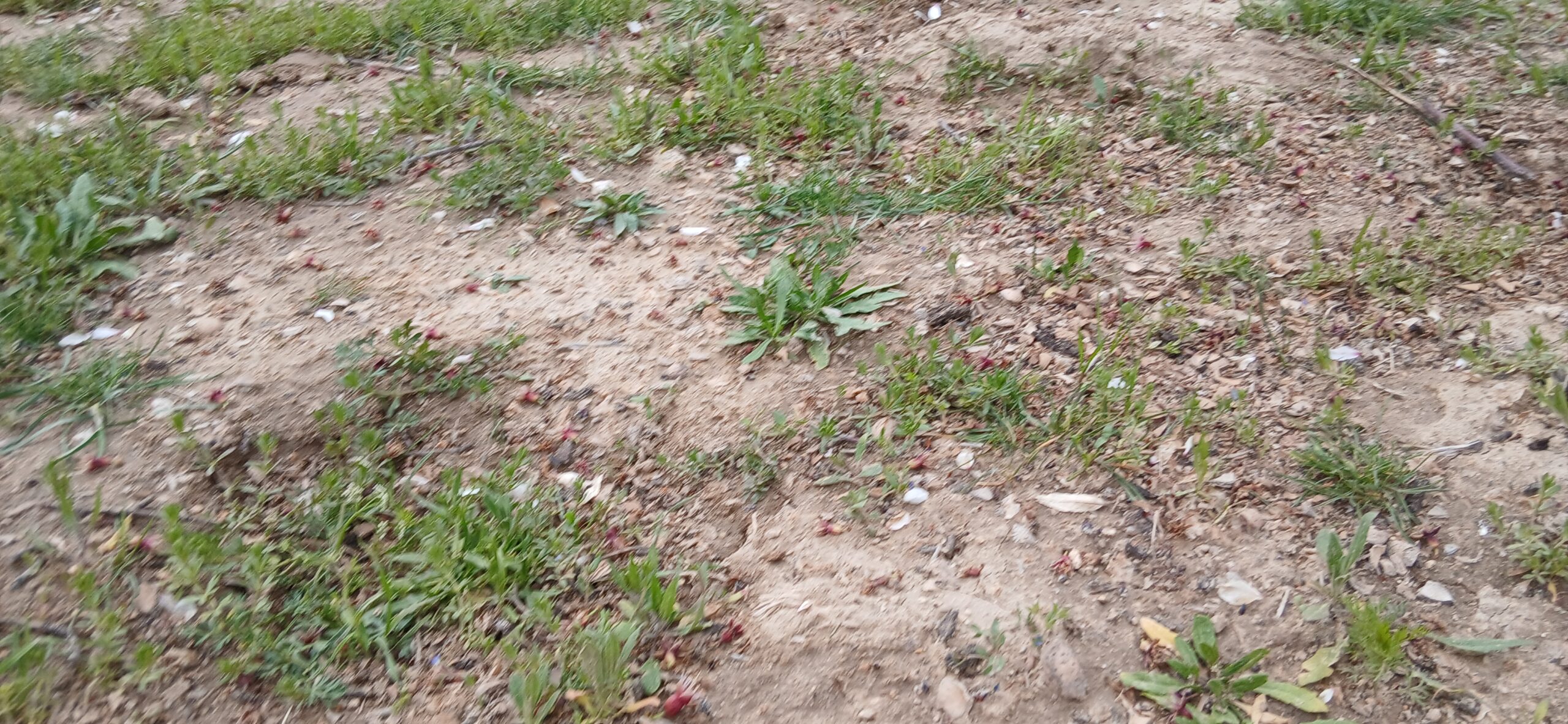
Mohammad Nabi Mohammadi, another farmer from Daikundi, says that in addition to the destruction of blossoms, agricultural lands have also been affected by frost damage. He adds that most farmers still cultivate in a traditional way and have no awareness or information about preventing the possible risks of climate change.
“The recent rains have affected everything. Wheat crops were damaged and floods submerged people’s lands. First hail fell, then snow; the snow remained overnight and the land froze. We have no management at all. We sprayed medicine, but it did not work. Every time it rains, I just feel regret because we cannot prevent the damage,” he says.
Dawood Ali Akbar, another orchard owner, also expressed concern, saying, “The trees had just started flowering when the rain came, followed by a wave of cold. Nothing is left, only a small amount of almonds remain. Last year was the same. We used to harvest about 150 seers of almonds annually, but last year it dropped to only 20 seers. This year more than half of the crop has been destroyed, and even a single healthy tree is not left.”
However, Abdullah Agah, a horticulture expert, says that heavy rainfall during the flowering stage disrupts pollination and causes blossoms to fall, leading to significant reductions in yields, especially in almonds and apples. Regarding possible solutions to prevent losses, he says,
“Choosing resistant and late-flowering tree varieties, using protective sprays before rainfall, and improving soil with proper fertilizers after rain are recommended. In Daikundi, climate change has had serious negative effects on orcharding, and most farmers are not adequately prepared.”
At the same time, despite farmers’ concerns, Sher Mohammad Hatami, Head of Public Information and Awareness and spokesperson for the Ministry of Agriculture, Irrigation and Livestock, says that continuous rainfall this year could create better conditions for agriculture next year. He adds,
“This year’s snow and rain can increase natural water reserves, strengthen groundwater resources, and provide better conditions for farmers next year. We hope this year’s rainfall will meet the needs of agriculture so that farmers can achieve higher yields.”
While recent rainfall has raised hopes for improved water resources, it has also caused widespread damage to fruit trees. This has created serious uncertainty over the future of horticultural production in Daikundi.