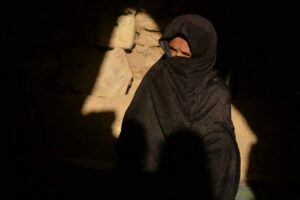
Findings from Salam Watandar’s interviews with 13 girls who were given to adoption show that these girls face identity confusion and, in some cases, discriminatory behavior.
While these girls say that their lineage was changed after being given for adoption, religious scholars consider changing lineage to be forbidden (haram) under Islamic law.
Hassanat, a 21-year-old resident of Sar-e Pol province, who was given for adoption to her father’s sister (aunt) in childhood, says she became aware of this issue at the age of 15, and after becoming aware of the truth, she suffered from depression and experienced feelings of confusion and being lost.
“I was 15 when I found out that I had been given for adoption. I had also heard about this issue among relatives before, but I did not fully believe it until one day I saw my mother talking about this issue with my aunt, and I heard it. Gradually, I felt depressed and lost my way when I heard it,” she says.
Interviewees participated from 7 provinces, and these girls were separated from their original families for reasons such as the childlessness of the adoptive families, economic problems of the original family, being sold for money, and family or social problems.
Based on these interviews, 7 of these girls became aware of their adoption at the age of 15, which led to identity confusion and psychological challenges among them. Out of 13 girls, 9 experienced positive and emotional behavior from the adoptive families, while 4 others faced discriminatory behavior after the adoptive families had children.
Adela, a 22-year-old, says she was given to another family in childhood due to her family’s economic problems and some incorrect beliefs. She later became aware that this giving away happened at birth in exchange for a small amount of money, rooted in incorrect social beliefs.
“I just recently found out about this that when I was born, my family sold me for a very small amount, which was 3,000 Afghanis, and gave me to them. According to common beliefs and culture, if someone takes a child, God gives them a child. Because of these beliefs, they gave me away.”
Adoption among adoptive families in this report is mostly described as due to not having children, and in most cases, the initial behavior toward the children was appropriate and provided with the required facilities. However, some interviewees say that after the adoptive families had children, in some cases they faced changes in behavior and inappropriate treatment.
Raziya, a 22-year-old resident of Baghlan, says that after the adoptive family had their own children, the behavior and attention she previously received decreased. She adds that this change in behavior still remains a question and concern in her mind.
“After they adopted me, they later had their own children. In the beginning, they treated me very well, but gradually their behavior changed. I feel like an extra person in this family. If they were going to treat me like this, why did they adopt me?” she asks.
Zohra, a 20-year-old resident of Daikundi, is another girl who was given for adoption in childhood. After the adoptive family had their own children, she not only faced unequal behavior, but this change in behavior also affected her education and progress.
“There is a difference. From the beginning, I felt these differences. As the elder child in the family, more household responsibilities were placed on me, while my brothers and sisters went to school and attended courses. I usually stayed at home and did housework. This caused me to fall behind in continuing my education and progress,” she says.
On the other hand, some women’s rights activists say that giving girls to other families, although it appears to be a supportive measure, is in practice not without concerning consequences.
Fakhriya Samandari, a women’s rights activist, says that in some societies, giving girls to other families contributes to inequality against girls and can limit their access to education, growth, and life opportunities. She adds,
“Giving girls to other families, although it may be considered a supportive measure in appearance, from the perspective of women’s rights activists, has legal, psychological, and social consequences that should not be ignored. Discrimination against girls who are given away in some societies can limit their opportunities for life, education, and growth.”
Some psychologists, emphasizing the long-term consequences of emotional and psychological insecurity in the family environment, say that this situation, especially during adolescence, can lead to confusion and have negative effects on an individual’s behavior. Shamsuddin Watanyar, a psychologist, says,
“Identity usually reaches its peak formation during adolescence, and awareness of adoption, if it occurs in unhealthy conditions, may lead to an identity crisis for the individual. If the child has experienced signs of rejection, this awareness can intensify the sense of being different. Identity confusion in an individual with an early background such as abandonment, early instability, and insecure attachment may increase risky behavior.”
On the other hand, some religious scholars also emphasize that, based on Islamic Sharia, adopting a child in a way that changes their lineage is not permissible. Abdul Ghaffar Ghaffarzada, a religious scholar, says,
“Adopting a child and raising them, which in Arabic is called ‘tabanni,’ Allah Most High says: ‘Call them by the names of their fathers; that is more just in the sight of Allah.’ The meaning of this verse is that changing lineage is not permissible, meaning do not attribute their lineage to yourselves. These issues are mentioned in jurisprudence books such as Radd al-Muhtar, Al-Durr al-Mukhtar, and Bada’i al-Sana’i. Because of this, they cannot inherit, and they are not mahram according to Sharia. Therefore, the solution is that they should be attributed to their own fathers and own relatives.”
Some legal experts also say that, although in custom and in the civil legal system of Afghanistan, adoption is mostly defined as a supportive relationship, a child under adoption does not have the right to inheritance unless a will is made in their favor, and at the same time, the child’s attribution to their original parents also remains preserved.
Ali Reza Akhlaqi, a legal expert, explaining custody (Hizanat) rights based on civil law, says,
“Based on Afghanistan’s civil law, which is influenced by Islamic jurisprudence, the institution of adoption does not recognize the creation of a lineage relationship between the child and the guardian, but instead considers it as custody (hizanat) or kafalah. Articles 86 to 101 describe general effects such as inheritance, maintenance, and mahram status. According to article 1993 and later articles of civil law, a lineage relationship leads to inheritance conflicts among parents and children. According to Articles 61 and 71, lineage leads to ‘hurmat’ or the prohibition (haram) of marriage.”
However, the Ministry for the Promotion of Virtue and Prevention of Vice of the Islamic Emirate of Afghanistan, in an interview with Salam Watandar, says that so far no case of buying and selling children due to poverty has been registered with the ministry. Saif-ul-Islam Khyber, spokesperson of the ministry, says,
“No such case that families have sold their children due to economic problems has been registered in the ministry, but we have had cases where, due to economic problems, girls have been forced into marriage without their consent.”
Based on recent reports of UNICEF and Save the Children published in 2024 and 2025, the economic crisis in Afghanistan has exposed children, especially girls, to serious risks. These institutions have warned that some families, in difficult economic conditions, are forced to make decisions such as giving their children to others.
Reporter: Momina Zarif