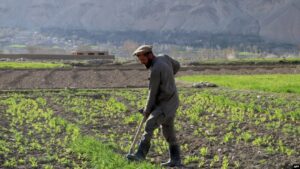
Several farmers in Balkh province say that, in addition to recurring drought and water shortages driven by climate change in recent years, infestations of Moroccan locusts have emerged as a new threat to their agricultural crops.
Farmers add that locust infestations have caused significant damage to their farmland, resulting in substantial financial losses to their farming activities.
Some farmers in Balkh province express concern over the situation and are calling on the government and relevant institutions to provide the necessary cooperation in combating the pest.
Nawid, a farmer in Balkh, in an interview with Salam Watandar, says, “Approximately, it has been two to three years that these locusts have been bothering us. We ask the government to cooperate with us and help carry out spraying pesticides or find another solution to our problems, as we have become driven crazy by the locusts.”
Din Mohammad, another farmer, also says, “These locusts have bothered us. Day and night, they have severely damaged our farming and agriculture. Even now, some locusts can still be found in our orchards and lands. We ask the government to pay attention, come and see the situation up close, and begin spraying. A campaign should be launched so that we can get rid of these locusts.”
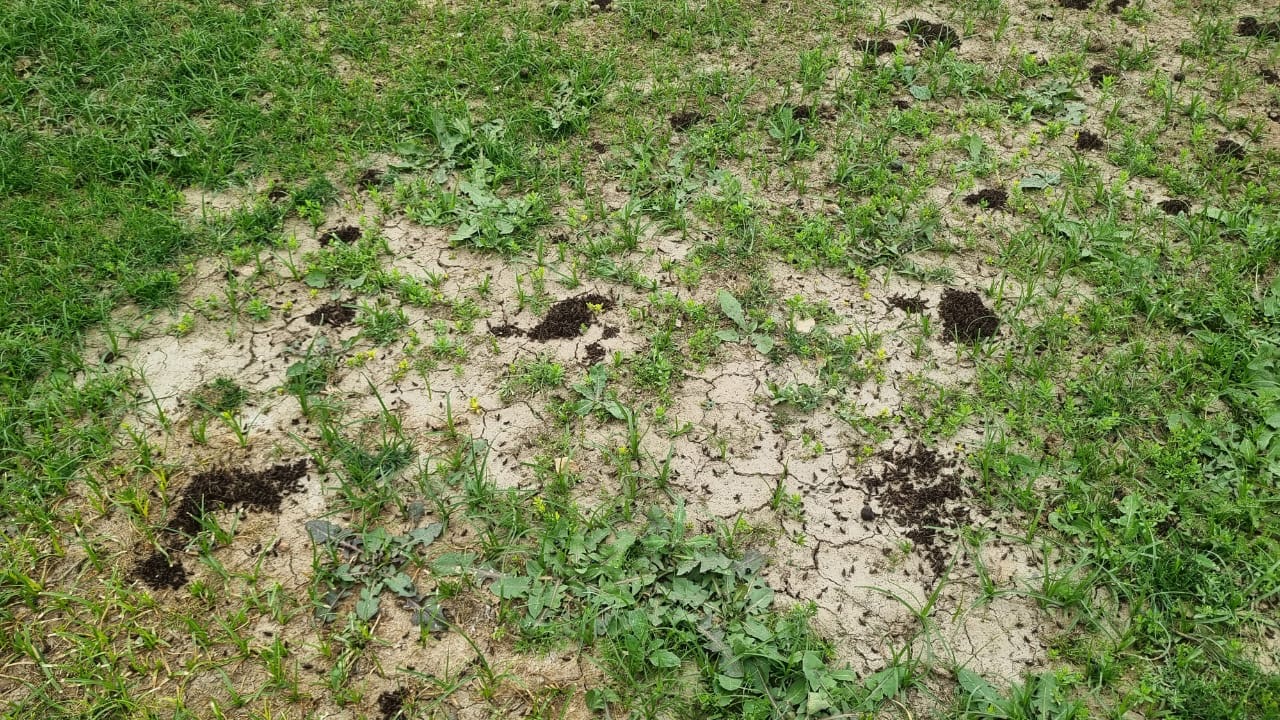
Meanwhile, some agricultural experts in Balkh say that if the spread of this pest is not prevented, a large portion of agricultural harvests, which are a source of income for families, will be lost.
Emran, an agricultural expert, says that traditional and chemical control methods can be effective in combating this pest.
“These pests cannot be eliminated without poison. Although we can use biological and physical methods such as beating locusts with sticks or digging the ground, people should try to use these methods and avoid pesticides. However, when necessary, the government and agricultural personnel are ready and have sufficient pesticides to help farmers eliminate the locusts. Not only locusts, but other pests can also be controlled.”
However, officials of the Department of Agriculture, Irrigation and Livestock in Balkh emphasize that the campaign against locusts has been launched in a targeted manner in the affected districts. Hussain Azimi, Manager of Agricultural Promotion at the Department of Agriculture, Irrigation and Livestock of Balkh, says,
“The campaign will cover most of the affected districts, including Zari, Sholgara, Chimtal, Keshendeh, Charkint, and Nahr-e-Shahi. The Department of Agriculture implements its plans ahead of large-scale locust outbreaks. This year, approximately 2,500 hectares of farmland will be covered. We have the necessary resources for this program, including pesticides, personnel, and equipment, and we are prepared to combat locusts.”
With repeated Moroccan locust outbreaks in recent years, coinciding with prolonged drought, concerns are growing over the vulnerability of the agricultural sector in Northern provinces. Experts emphasize that effective control of the pest requires sustained coordination between authorities and farmers. Without it, the risk of further spread of locusts and heavier losses to agricultural harvests and the rural economy will persist.
Reporter: Sebghatullah Toraan