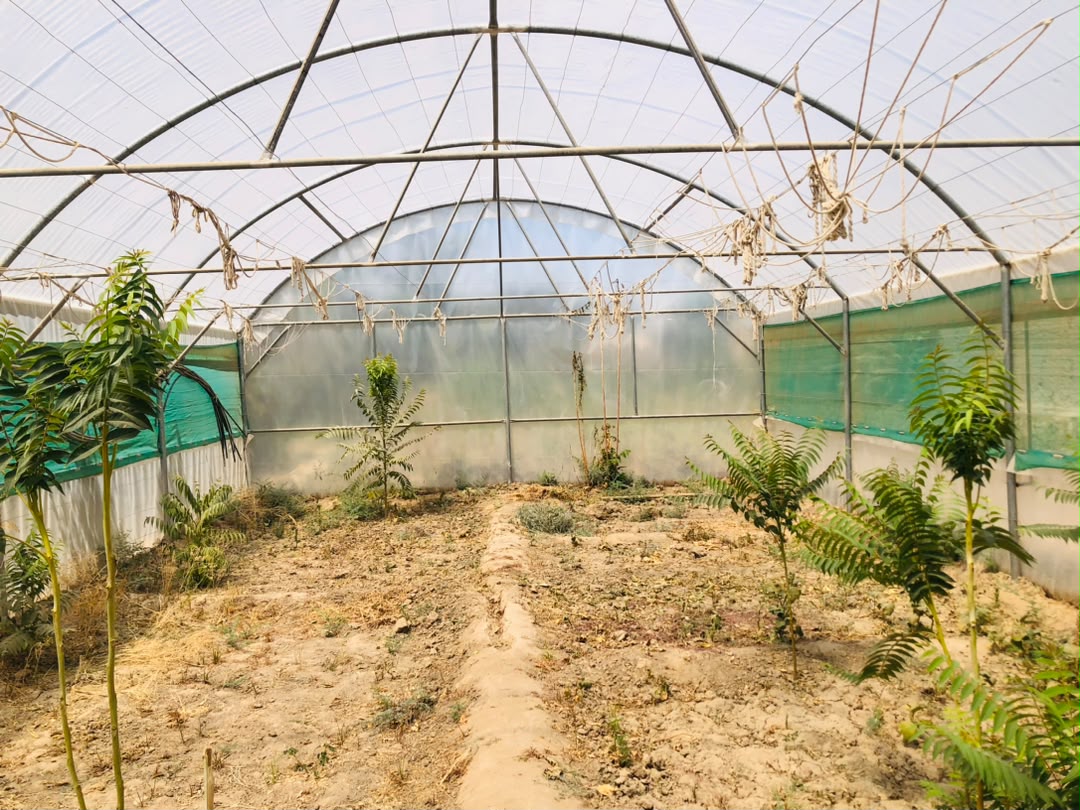
For some women in Zer Chenar village in Jawzjan, growing cucumbers in greenhouses was more than just farming. It was an opportunity to work, earn an income, and help cover their families’ expenses. However, drought and water shortages have forced them to stop growing cucumbers, depriving these women of an important source of income.
Malika, who managed “Baghcha-e Baadrang,” says she started the cucumber farming project with an investment of 50,000 Afghanis in cooperation with a private organization. The project involved 25 women and ran successfully for about two years.
“There were 25 of us women working together to grow cucumbers in Zer Chenar village. We earned money by selling our produce and shared the income among ourselves,” she says.
She adds that their greenhouse-grown cucumbers also had customers outside Jawzjan and were sold in the markets of Sheberghan, Sar-e-Pol, and Andkhoy. She emphasizes that this work gave women an opportunity to become economically independent.
“We had customers from other provinces as well. Our greenhouse-grown cucumbers were sold in the markets of Andkhoy, Sar-e-Pol, and Sheberghan. Cucumber farming is a good opportunity for women. It gives women the opportunity to work and earn their own income.”
However, the drying up of water sources has brought this economic opportunity to an end. Malika says that women need access to water, improved seeds, and fertilizers to resume their cucumber farming activities.
Mariya, another 37-year-old woman from the village, describes how drought has affected her life and economic activities.
“One year, we had a good cucumber harvest. We sold some of it at the market and used the rest for our own consumption. The following year, we planted cucumbers again, but there was no water, so the entire crop dried up. We had nothing left to sell or even to use for our family,” she says.
Mastora, another woman working in this field, says that an organization previously provided the women with seeds, fertilizers, and the necessary equipment, enabling them to start growing cucumbers.
“I am happy with the government for providing us with seeds, greenhouse equipment, and chemical fertilizers. I used to cultivate cucumbers, pack them, and sell them to shops,” she says.
According to her, in addition to selling cucumbers, the women also made pickles and jam from them. Their products were then sent to markets in Kabul, Andkhoy, and Sar-e-Pol.
However, this year’s drought has stopped this activity. “Twenty-five of us women worked together and shared the profits among ourselves. We used some of the cucumbers for our own consumption, sold the rest, and used the income to cover household expenses. I was very happy, but this year there was no water, the cucumbers dried up, and I could not even earn enough to cover my own expenses.”
She hopes to receive seeds and the necessary equipment again so that she and the other women can resume their work.
Economic experts say that greenhouse cucumber farming can become a source of income for rural women if production and marketing are properly managed.
Abu Raihan Entezar, an economic expert, says investment in this sector has good potential to create jobs and generate income. However, its success depends on several factors, including the cost of building greenhouses, access to seeds and water, production levels, and the availability of markets.
He considers access to financial resources and suitable loans essential for farmers. He also emphasizes that women should receive technical training in greenhouse farming, irrigation methods, pest control, and production management.
However, water shortages remain one of the main problems facing agriculture in Jawzjan. Abdul Sattar Jalal, an agricultural expert, says: “One of the main problems in this sector is water shortages and drought.”
He identifies drip irrigation systems, suitable channels and planting beds to deliver water directly to plant roots, and the use of mulch to reduce water evaporation as methods for reducing water consumption.
Meanwhile, the Jawzjan Department of Agriculture, Irrigation and Livestock also considers greenhouse cucumber farming a good opportunity to increase the income of women farmers. Zabihullah Khairandish, the department’s spokesperson, says:
“Cucumber is a well-known crop that poor women and women farmers can cultivate in greenhouses. Growing it using proper techniques and professional methods can increase yields and play an important role in improving the economic situation of farming families,” he says.
According to him, there are 27 greenhouses in Jawzjan’s provincial capital, and they vary in size. Some are about 25 meters long and eight meters wide, while the area of others is approximately 200 or 150 square meters.
He says that each greenhouse produces more than 400 kilograms of cucumbers per growing season. However, high temperatures this year have reduced production compared with last year. He identifies water shortages, high temperatures, and a lack of suitable markets as the main challenges facing women working in this sector.
“The main challenge for women has been the lack of suitable markets to sell their produce. Establishing proper markets for cucumbers, providing improved seeds, offering technical and professional training to vegetable growers, and building standard greenhouses through organizations and the Ministry of Agriculture, Irrigation and Livestock could help reduce these problems,” he adds.
Growing cucumbers in greenhouses can provide rural women with opportunities to work and earn an income. However, continuing this activity requires more than seeds and equipment. Consistent access to water, water-saving irrigation methods, technical training, and suitable markets are also essential to restoring these women’s economic activities.
Reporter: Marina Barakzai