For some women in Nuristan, Salma work is more than a traditional craft; it is a way to earn an income and help cover family expenses. However, limited job opportunities, the need for training, and the lack of support programs to help market their products pose major challenges to the expansion of Salma work.
Zulaikha, a 28-year-old woman, has been doing Salma work for about a year. She says that although her income is low, it helps her meet some of her daily needs.
“The income is not much, but it helps me cover daily living expenses, buy clothes and personal items, and meet other family expenses. Even this small amount is important because it allows me to contribute to household expenses,” she says.
Shakila, a 31-year-old woman, has been doing Salma work for nearly three years. She says the income helps cover some of her family’s expenses and meet her children’s daily needs and educational costs.
“This income is a great help to my family. I spend most of what I earn on household needs, clothes, and my children’s education,” she says.
Zohra, another 24-year-old woman, chose to do Salma work because of the limited job opportunities available to women.
“Job opportunities for women in our area are very limited. That’s why I chose to do Salma work. It is a local craft that allows me to earn an income,” she adds.
Bibi Amena, a 27-year-old teacher at a Salma workshop in Nuristan, says she is teaching other girls this skill to help them learn the craft and gain access to more job opportunities.
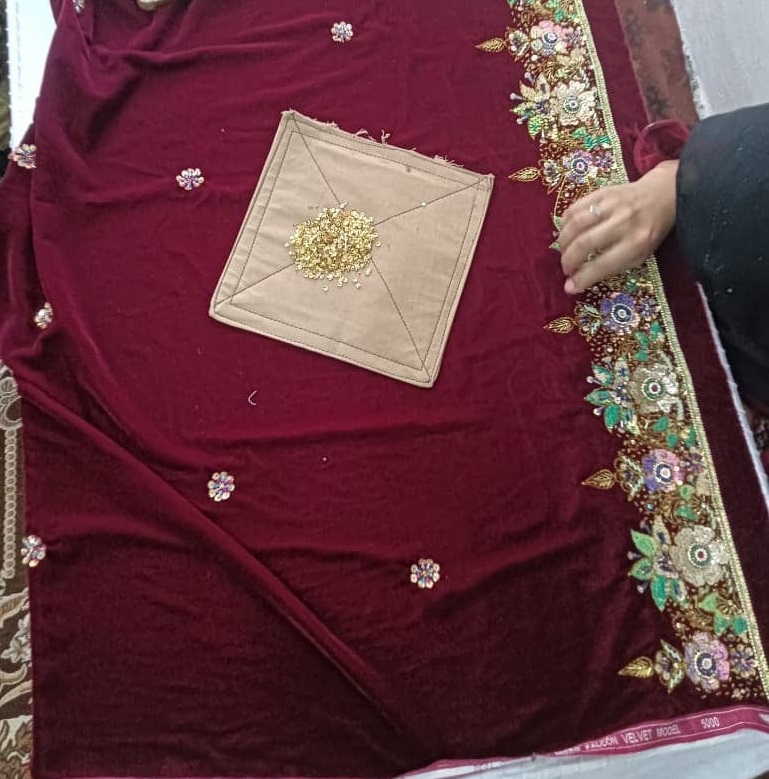
“If we had better facilities and more opportunities, we could train more girls in this field and create more jobs for ourselves and others,” she says.
Economic experts also consider training, financial support, and access to markets important factors in expanding Salma work.
Sayed Ahmad, an economic expert, says Salma work can help women and girls earn an income from home with little investment.
“Salma work can be a good source of income for women in Nuristan because they can do it from home with little investment. With access to suitable markets, training, and financial support, women can earn a sustainable income,” he says.
Meanwhile, women working in the Salma craft face major challenges due to a lack of support programs and limited opportunities to market their products. Loqman Hakim, acting head of the Nuristan Department of Industry and Commerce, says:
“So far, we have not launched any programs to support Salma work products or help expand their markets.”
Despite existing restrictions, Salma work has given some women and girls the opportunity to learn a skill and earn an income. Women and economic experts say that providing training, financial support, and better access to markets could help expand this work and enable more women to contribute to their families’ economic well-being.
Reporter: Bakhmina Raiskhail