Charikar, the capital of Parwan Province, is one of Afghanistan’s developing cities, where climate change and poor sewage management are raising concerns about residents’ health. Population growth, the expansion of residential areas, and the lack of a proper sewage collection and treatment system have led many residents to dispose of wastewater through soak pits, open drains, and other traditional methods. As water resources decline due to climate change, these practices increase the risk of groundwater pollution and pose further threats to residents’ health.
Gul Rahman Rahmani, head of the Statistics and Information Department in Parwan, says the province has a population of 806,431, including 222,751 people living in Charikar. The consequences of this situation are clearly felt by the residents of Charikar. Many families complain about bad smells, sewage flowing into the streets, environmental pollution, and the possibility of drinking water pollution.
Fardin Yousufi, a resident of Charikar, says: “Some houses are located above or below these drains, and people use the water from them. When the wind blows, rubbish from the surrounding areas is blown into the drains. Many children suffer from diarrhea and digestive diseases.”
Shukrullah Shams, another resident of Charikar, says the city’s sewage system must be properly managed to prevent residents from contracting diseases.
“During rainfall, much of the water flowing through the streets is sewage. This pollutes the environment and exposes people to various diseases. Action must be taken to prevent this,” he adds.
A number of residents of Charikar say that falling groundwater levels and the short distance between sewage pits and drinking water wells have increased their concerns about water pollution.
Amrullah Utmankhel, a resident of Charikar, says most sewage pits in the country are shallow, which has led to water pollution.
“About 70 percent of sewage pits are shallow. In some areas, sewage pits and septic tanks are located close to deep drinking water wells. This problem is not limited to District 13; there is no proper sewage system across Parwan Province,” he says.
At the same time, Abdul Shokor Sarwari, head of the Ghorband–Charikar River Basin Department, says groundwater levels have fallen in recent years.
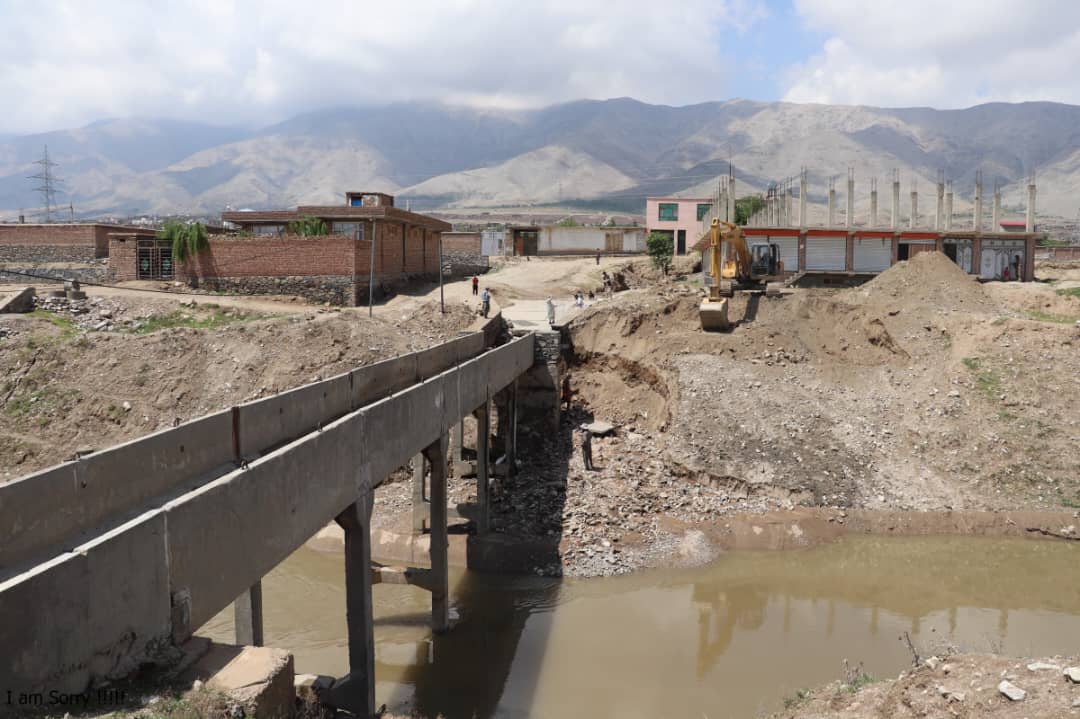
“From 2024 to October 2026, groundwater levels have fallen by about 0.68 to one meter. Around 60 wells are also under construction. Of these, 10 have been completed, while the rest are still under construction,” he says.
Environmental experts say that falling groundwater levels may reduce the soil’s natural ability to filter pollutants. This increases the possibility of sewage seeping into drinking water sources and agricultural land.
Zelgai Naseri, head of the Water and Environment Department at the Faculty of Engineering at Parwan University, says environmental problems must be addressed with public participation.
“Water, soil, and air are connected, and pollution in one can pollute the others. When sewage seeps into the ground through soak pits, this causes different types of bacteria, viruses, and chemicals to seep into underground water layers,” he says.
Meanwhile, Neyaz Mohammad Taayeb, head of Agricultural Affairs at the Parwan Department of Agriculture, Irrigation and Livestock, says climate change has affected nearly 1,200 hectares of agricultural land in the province.
“This situation has polluted the soil, reduced the quality of irrigation water, and lowered soil fertility. In coordination with relevant institutions, the Department of Agriculture is monitoring the situation of agricultural land through field and technical assessments. The department also emphasizes raising farmers’ awareness about proper water management and preventing the use of untreated sewage,” he says.
As residents and experts warn about the environmental consequences, municipal officials also identify the lack of a proper sewage management system as one of the biggest challenges facing Charikar.
Raz Mohammad Yaser, mayor of Charikar, says establishing a proper sewage collection and treatment system is one of the city’s basic needs. However, no specific date has been announced for the start of the project.
“About 70 percent of Charikar’s urban sewage is still managed through traditional methods, which pose risks, including groundwater pollution. We call on the Water Supply and Urban Sewerage Department to fulfill its responsibilities properly,” he says.
The findings of this report show that climate change and non-standard sewage management have become two closely linked problems in Parwan. Together, they pose serious risks to water resources, agricultural land, and the health of Parwan residents.
Experts and officials consider the key steps to prevent the situation from getting worse to be building a standard sewage system, protecting groundwater resources, managing water resources properly, and raising public awareness.