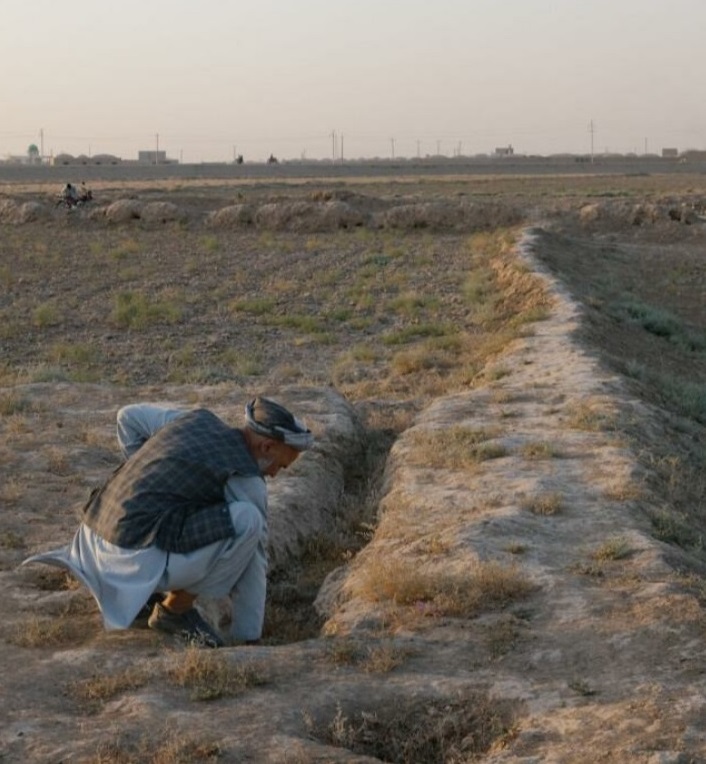
Farah Province has been one of Afghanistan’s major agricultural regions for many years. But today, parts of the province are clearly showing signs of a deepening water crisis. This crisis has placed a heavy economic burden on poor farmers. Drilling a deep well costs between 300,000 and 500,000 Afghanis, an amount that many rural families cannot afford.
Mohammad Nader, a resident of Khak-e-Safed district in Farah, says orchard farming was his family’s main source of income about 13 years ago. But as water levels fell, their orchards gradually dried up. Eventually, they cut down the trees and burned the wood in their stove to heat their home.
“Thirteen years ago, wherever we went, there were green trees, and orchard farming was our source of income. Now all the trees have dried up, and we sawed them all down and burned the wood in our stove. Our village had 4,000 families, but now fewer than 150 families remain. When we go to the dried-up orchards, we feel as if we have entered a cemetery,” he says.
Declining crop yields and financial losses have deepened the livelihood crisis. Being unable to cover the basic costs of cultivation has made farming no longer economically practical for many farmers. For families whose livelihoods depend on their land and orchards, losing an orchard means losing their source of income and increasing their living costs.
Abdul Manan, a resident of Deh-e-Eshq village in Pusht Rod district, says all four or five orchards owned by his family have dried up. He says a well that once reached water at a depth of about 50 meters has now been drilled to 150 meters, but there is still not enough water for irrigation.
“We had foreseen this situation because the well that was once 50 meters deep has now been drilled to 150 meters, but the farmer says there is still not enough water and that he may not be able to irrigate his lands. Water is now available only in sufficient quantities to meet the daily needs of cultivation and agriculture; there is not enough water for the orchards,” he says.
The crisis has even affected wheat cultivation. Manan says land that once produced about 20 kharwars of wheat now produces only seven kharwars. Based on this example, wheat production has fallen by about two-thirds. Alongside the decline in crop yields, the cost of production has increased. He says drilling wells 150 to 200 meters deep is expensive, and not all farmers can afford it.
However, farmers who have turned to deep wells and solar-powered pumps to save their land are facing another problem; the continued decline in groundwater levels.
Farid, a resident of Panjela village in Farah, says that previously the water in wells was found at a depth of 13 to 15 meters. But now, in some areas, people have to dig 120 to 150 meters to reach water.
“Most people are forced to have a well for drinking water and to earn a living. Whether they borrow money or get it from somewhere else, they have to drill a well. A few years ago, when the water level was high, even if the water pump ran all day, the water would not run out. Previously, there was water in wells at a depth of 13 to 15 meters; now wells have to be dug to a depth of 120 meters or even 150 meters to find water,” he adds.
But this effort to access water has itself become a concern: the more deep wells are drilled, the more pressure is placed on groundwater resources.
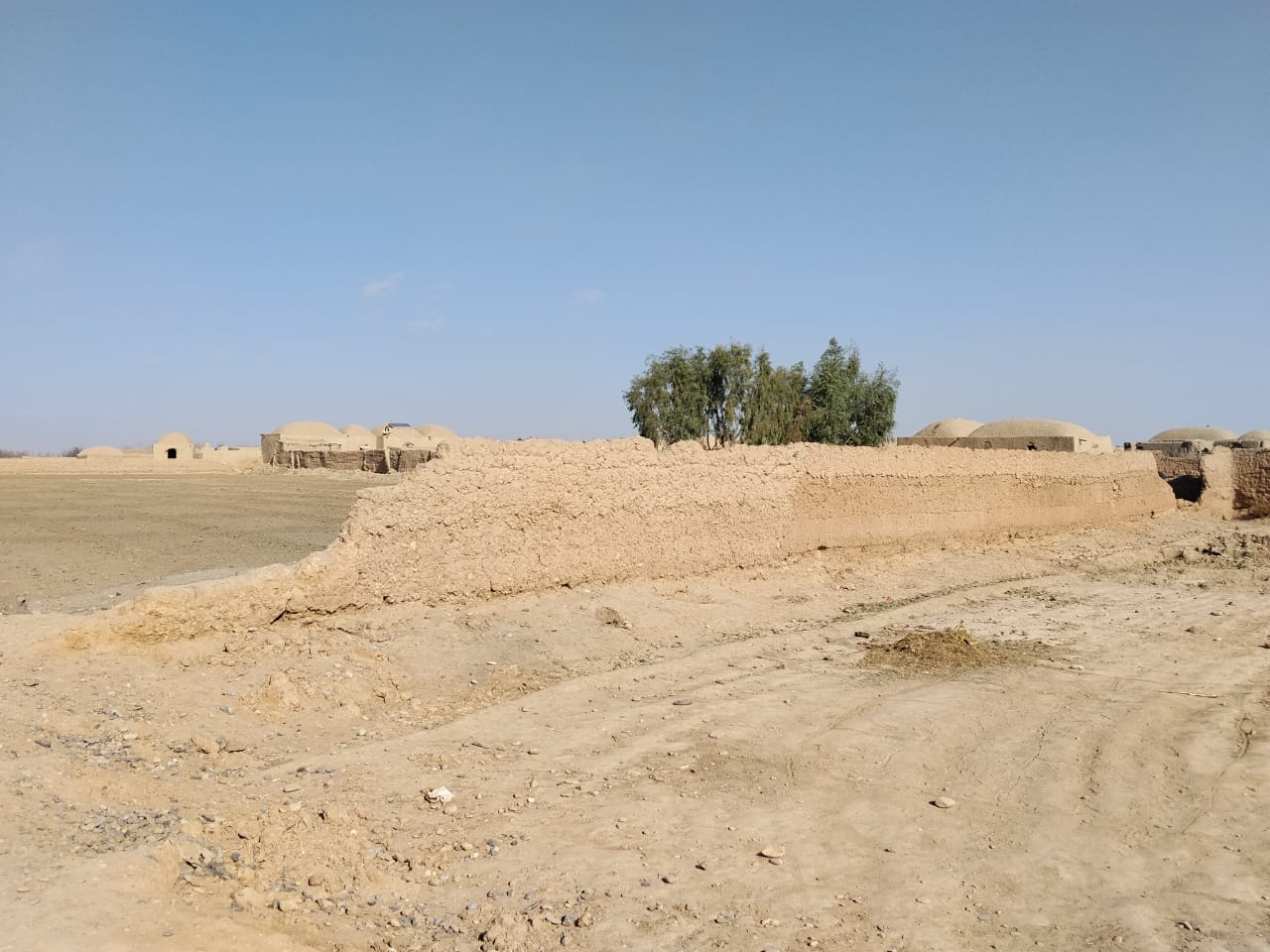
Mohammad Dawood, a resident of Bakwa district, says that in some areas, wells have been drilled to depths of about 200 meters. Several wells and different types of equipment are sometimes used to irrigate just one or two plots of land.
According to him, the decline in water levels is not only a problem for farmers. The costs of solar systems, pumps, power lines, and drilling wells again are also a burden on farmers.
“In Bakwa district, the water level in wells has dropped to 100 meters. After 100 meters, wells have to be drilled to 200 meters. People are facing many problems and have been forced to migrate. Many have moved to Nimroz and Farah because of the shortage of water,” he adds.
Masoud, another resident of Bakwa district, says about 80 percent of the orchards in his area have dried up because of drought and falling groundwater levels. He says even the orchards that remain require high costs to survive. Some families have been forced to spend the income from their orchards on drilling wells and buying water equipment again.
“Every year, orchard owners spend their income on buying solar systems and drilling deeper wells to keep the trees alive because groundwater levels have fallen and drought and extreme heat have become severe. The extreme heat has caused the leaves of the trees to burn and turn yellow, reducing the productivity of the orchards. Despite these problems, families cannot leave the region because they depend entirely on orchard farming and livestock. They are forced to struggle just to save the few remaining trees at high costs,” he adds.
Thus, the water crisis has created a bitter contradiction: farmers are spending more money to save their orchards, while the limited water is becoming increasingly inaccessible each day.
Abdullah Alizai, an agriculture and climate change expert, says declining rainfall and excessive groundwater extraction are among the main causes of falling groundwater levels. He says the decline in groundwater has not only destroyed farmland but has also damaged vegetation and native forests in the area. This has caused severe soil erosion and increased sandstorms in Farah.
“Drought and excessive groundwater extraction have severely depleted the aquifers. The loss of shrubs and vegetation in western Farah has caused soil erosion, and annual sandstorms fill canals and farmland with sand. Lower humidity and unusually high temperatures have significantly reduced the quality and productivity of crops,” he says.
He emphasizes that three main measures are needed to prevent the crisis from getting worse: better management of surface water, preventing excessive groundwater extraction, and using low-cost irrigation methods.
He also recommends that farmers choose crops that require less water, are more resilient, and are better suited to the region’s climate instead of continuing to grow water-intensive crops. He also recommends using irrigation systems such as drip and sprinkler irrigation systems.
But the consequences of the crisis have not been seen only in dried-up farmland; villages are also changing. Mohammad Nader says a village that once had about 4,000 families now has fewer than 1,500 families remaining.
“Many members of our family and many people from the village have moved to the cities, and only a number of families have remained,” he says.
Residents of Bakwa district also talk about the migration of families to Nimroz and other regions because of water shortages.
Mufti Ahmad, head of the Farah Department of Refugees and Returnees, confirms that drought and water shortages have caused a number of families to be displaced.
According to him, surveys conducted in the province have registered about 30,000 people who have moved for various reasons, including drought and water shortages. Some have moved from one district to the provincial capital, while others have moved from one district to another.
“Based on surveys conducted, about 30,000 people have been displaced because of drought and water shortages and have moved from the districts to the provincial capital or to other regions. In the past, we had cash-assistance programs, but these programs have now stopped. If water is not properly managed, climate-related displacement will increase,” he says.
Here, the problem is not only the shortage of water. The problem is that when there is no water, agriculture is lost; when agriculture is lost, family incomes fall; and when there is no income, it becomes difficult for families to remain in rural areas. In such circumstances, migration can become the last option for families that can no longer afford to continue living on their land.
Meanwhile, officials say water projects are being implemented to manage part of the crisis. Motiullah Abid, the spokesperson for the Ministry of Energy and Water, says declining rainfall is one of the major problems caused by climate change in Afghanistan.
He announces the beginning of construction of the Bakhshabad Dam in Farah and says that the dam will help resolve some of the problems related to groundwater, surface water, agriculture, and electricity.
“Climate change and declining rainfall have affected all provinces. Construction of the Bakhshabad power and water-storage dam in Farah has begun and is progressing well. Once this dam is completed, the shortages of groundwater and irrigation water, as well as the region’s electricity problem, will be largely resolved,” he says.
But experts and residents of Farah emphasize that the water crisis cannot be solved by a single project. This province needs better management of both surface water and groundwater, controls on aquifer extraction, improved irrigation methods, and agricultural adaptation to changing climate conditions.
Farah’s experience shows that climate change is not an abstract concept for the future, but a tangible reality that is already devastating the lives of millions of people. Perhaps this experience is a message that Afghanistan should take to global climate conferences, including COP31; a country that has made little contribution to the climate crisis is paying a heavy price because of the drying up of water resources, the destruction of agriculture, and the migration of its people.
This raises a question: Can water be managed and livelihoods protected in these regions before more villages are emptied?
Reporter: Nasir Keshawarz
A report from the “Maseer Sabz” program