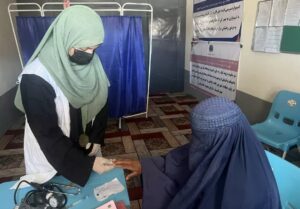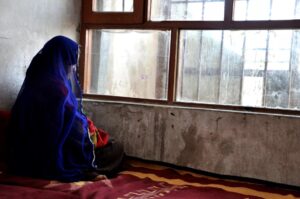
Obstetricians and gynecologists say endometriosis is a disease in which tissue similar to the lining of the uterus grows outside the uterus. According to them, the disease can affect the ovaries and fallopian tubes, causing severe pain during periods, pelvic pain and, in some cases, infertility.
A number of women with endometriosis say that, because they were unaware of the symptoms, they initially thought their severe pain was normal. They say that not seeing a doctor on time caused the disease to worsen and, in some cases, affected their ability to become pregnant.
Nahida Salim, a 31-year-old from Kabul who has endometriosis, says, “I have had pain in my uterus for several years. At first, I thought it was just period pain, but I had heavy bleeding and severe pain. I went to a doctor, and they told me I had a uterine problem.”
Nargis, a 27-year-old from Estalif district of Kabul, says she has been married for nearly two years but has not been able to get pregnant because of the disease.
“I have been married for a year and a half. I went to a doctor, but it did not help. I have been receiving treatment for a year. I had pain, but I did not know what the problem was. I worry a lot. I have not been able to get pregnant in the past year and a half,” she says.
Firoza, another resident of Kabul, says she has had endometriosis for eight years. She adds that her mother also had the disease.
“I have had this uterine problem for eight years, and I have been receiving treatment for two years. I have a lot of pain. For the past three or four days, the pain has been very severe. My mother also had this illness. I used to have severe pain during my periods. I even thought I had a kidney problem,” she says.
Meanwhile, obstetricians and gynecologists say factors associated with endometriosis may include hormonal changes, particularly high levels of estrogen, genetic factors, and factors related to the immune system.
Sahar Karimi, an obstetrics and gynecology specialist, says endometriosis can develop in different parts of the body, including the ovaries, fallopian tubes, cervix, vagina, navel and small intestine.
“Endometriosis is a common disease among women in which endometrial tissue grows in places other than the lining of the uterus, such as the ovaries, fallopian tubes, cervix, vagina, and even the navel and small intestine. It is more common during the reproductive years, between the ages of 15 and 45,” she adds.
Muzhda Bayan, another obstetrics and gynecology specialist, also says that hormonal changes and genetic factors are among the factors associated with endometriosis.
“Endometriosis occurs when the tissue that normally grows inside the uterus grows somewhere else in the body, such as outside the uterus or on the ovaries. Many women think that severe menstrual pain is normal, but when the pain becomes unbearable, they should see a doctor. The causes of endometriosis can be related to genetic, hormonal and immune-system factors,” she says.
Shaima Waziri, another obstetrics and gynecology specialist, says severe pain during menstruation is one of the symptoms of endometriosis and that the disease can cause infertility in some cases. She explains,
“Severe pain during menstruation, which usually begins several days before the period and becomes worse during that time; during urination, especially during the period; and irregular or heavy bleeding, such as spotting or prolonged bleeding. Infertility is one of the major consequences of endometriosis, and it can also cause adhesions in the fallopian tubes and even the ovaries.”
Obstetricians and gynecologists say endometriosis is diagnosed based on a patient’s medical history and a gynecological examination. Further tests may be carried out when necessary. According to them, treatment depends on the severity of the disease and may vary accordingly. It can include hormonal medications and painkillers. In severe cases, laparoscopy, a minimally invasive procedure used to examine and treat the inside of the abdomen, may be used.
The doctors add that during laparoscopy, adhesions and tissue caused by endometriosis can be removed. In advanced cases, surgery to remove the uterus, known as a hysterectomy, may also be performed.
They emphasize that in cases of severe or unusual pain during menstruation, abnormal bleeding or fertility problems, women should see a doctor as soon as possible for diagnosis and treatment.
Reporter: Sharifa Qasemi