In a corner of her small, simple workshop, Farida carefully works on a new piece. The silence is broken only by the sounds of the tools she works with. The atmosphere reflects hard work, creativity and hope.
Farida Wakilzada, a 26-year-old political science graduate, says that after learning skills such as making artificial stone, working with resin, making silicone molds and candle-making in Iran, she decided to use what she had learned there to start a small art workshop in Kabul.
She says that by starting the workshop, she has also tried to pave the ground for other girls and women to learn these skills so that they can become financially independent and build a new path in life for themselves.
“In 1400 Solar year (2021), because of the circumstances at the time, we migrated to Iran and lived there with our family for two years. During that time, I wanted to make good use of my time by learning a valuable and practical skill or profession so that I could rely on my own abilities,” she says.
She started her work about a year and a half ago with an initial capital of 8,000 Afghanis. The income she now earns from this work covers her living expenses as well as her business expenses. She explains,
“I started with 8,000 Afghanis and was able to buy all the necessary materials from Iran. Gradually, my income increased, and I was able to use it to order materials wholesale, including silicone molds, candle-making materials, raw silicone and other necessary materials from China.”
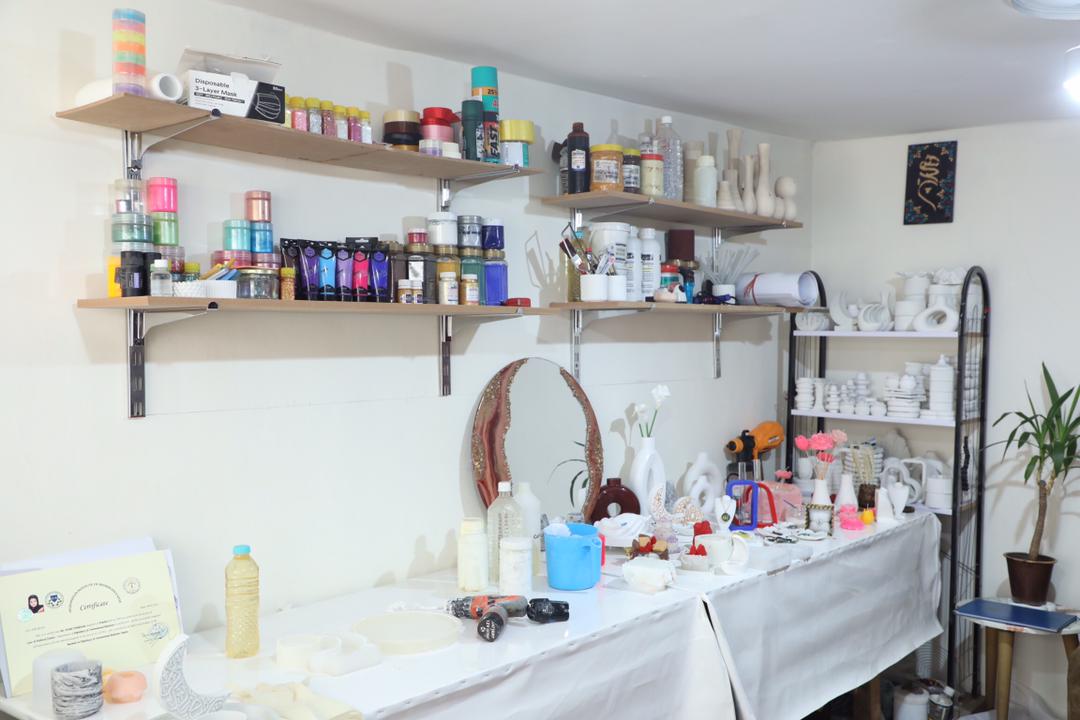
Farida says she buys some of her primary materials from markets in Kabul, while she imports some specialized materials and raw silicone from other countries because they are not available in Afghanistan. She says the shortage of silicone molds was one of the main challenges she faced when she started her work.
“When I had just returned to Afghanistan, one of our biggest challenges was the lack of silicone molds because without molds, we could not make decorative items. But because I had learned how to make molds myself, we ordered raw silicone from other countries and made the molds ourselves,” she adds.
She also says that, in addition to herself, three other young women work at the workshop. They work on packaging and painting the products.
“At the moment, three young women work with me. One works in packaging, while the other two help with painting the products. I do all the production work myself,” she says.
She considers her family’s support one of the main reasons for her success and hopes to establish a larger workshop in the future to provide training and job opportunities for more girls. She says,
“My family has always supported me in my work and has played an important role in the progress of my work. From the beginning until today, they have always encouraged me, stood by my side and supported me.”
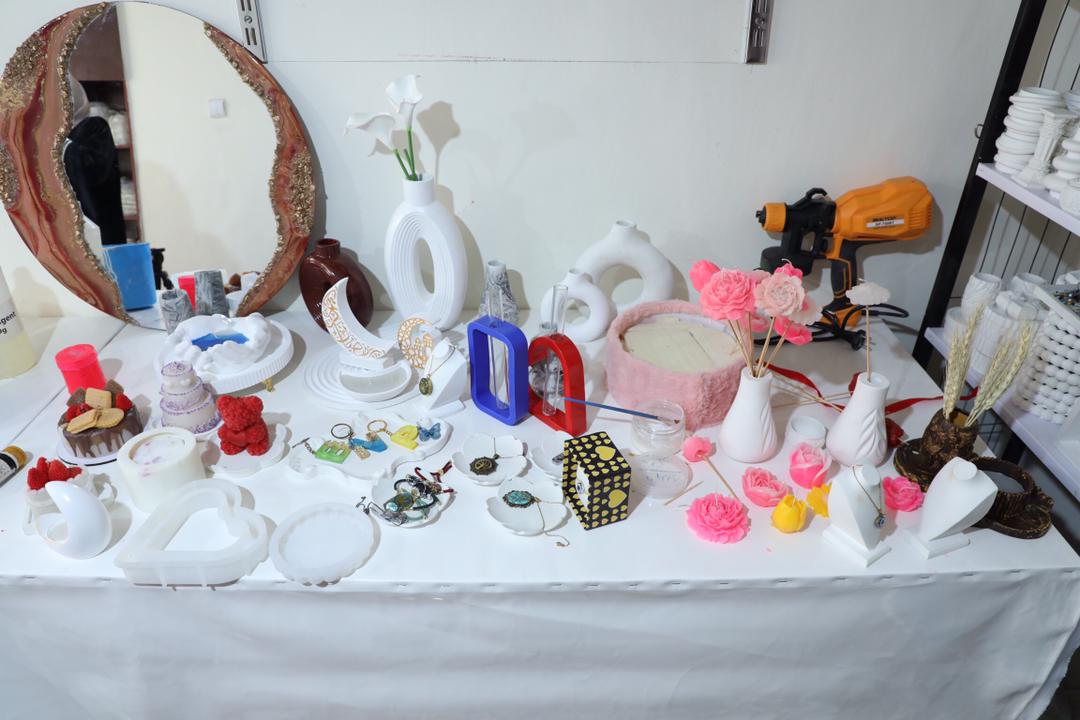
She talks about her dreams and says that she wishes to have a large and well-equipped workshop where she can make progress in her work and support other girls as well.
“One of my biggest dreams is to establish a large and well-equipped workshop that, in addition to developing my work, provides job and growth opportunities for other women so that they can learn a skill and earn a good income,” she adds.
Meanwhile, Tahmina Mangal, a women’s rights activist, emphasizes the role of women in the growth of the local economy. She says families can encourage and support women’s skills, talents and creativity and pave the ground for them to have a greater presence in economic activities.
“Society and families can play an important role in the success of girls by having trust in them and encouraging them, providing educational opportunities and respecting their abilities. Financial independence increases girls’ self-confidence and gives them greater decision-making power. It also gives them more opportunities to participate in the development of society and make a meaningful contribution. They can become financially independent, play an active role in their families and communities, and inspire others,” she adds.
The day gradually comes to an end, and the sun is about to set. Farida closes the workshop door and heads home, hoping to return to the workshop tomorrow to shape more of her dreams with her creative hands.
Reporter: Atefa Malekzada