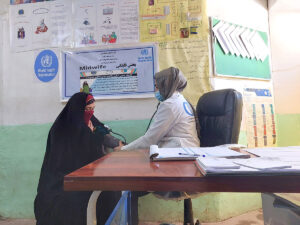
A number of women in Samangan say that economic hardship, the long distance to healthcare centers, inadequate facilities, and limited access to healthcare services have left many women with no option but to give birth at home.
Obstetricians and gynecologists, while confirming the challenges women face in accessing healthcare services in the province, emphasize that pregnant women should undergo regular check-ups as their delivery date approaches and give birth at healthcare centers to reduce the risk of complications.
Local officials in Samangan also point to a shortage of skilled healthcare personnel, saying they are working to address the shortage at healthcare centers and raise public awareness about the risks associated with home births.
Several women who have experienced home deliveries say that giving birth at home without the supervision of healthcare staff exposed both them and their newborns to significant risks and challenges.
Horiya Rahimi, a 30-year-old resident of Ruyi Du Ab District, says that because the hospital was far away and adequate facilities were unavailable, she had no choice but to give birth at home.
“Although it was my third child, I was very worried. During the delivery, only the local midwife and my sister were with me. The labor was extremely painful and lasted for several hours. After my baby was born, I experienced severe bleeding and became very weak. I now realize that giving birth in a hospital is much safer, and during my next pregnancy I will make sure to remain under a doctor’s care,” she adds.
Zahra Zohor, another 28-year-old resident of Feroz Nakhchir District, also says,
“Because of financial hardship and the fact that my family did not allow me to go to the hospital, I gave birth at home. During my pregnancy, I did not visit a doctor regularly. When labor began, my mother and an experienced woman from our community stayed with me and helped me through the delivery. It was a very difficult and frightening experience, and I was very afraid.”
Meanwhile, obstetricians and gynecologists, pointing to the complications of home births, emphasize that pregnant women should consult medical professionals and deliver at healthcare centers to reduce the risk of complications during childbirth.
Samina Azizi, an obstetrician-gynecologist, says, “We frequently receive mothers at the hospital who are referred after home deliveries with serious complications. Many families continue to choose home births because of limited awareness, financial hardship, or the long distance to healthcare centers. A portion of maternal mortality is also linked to home births. We strongly recommend that pregnant women attend regular check-ups and give birth at healthcare centers.”
Maryam Sharim, another obstetrician-gynecologist, says,
“When childbirth takes place without the supervision of healthcare staff, complications such as prolonged labor, maternal fainting, or the need for emergency medical intervention may arise. In some areas, limited access to healthcare services and a lack of public awareness continue to lead families to choose home births. We recommend that women deliver at healthcare centers to reduce these risks.”
Officials at the Samangan Provincial Public Health Department say that, in order to reduce the number of home births, they have undertaken programs to raise public awareness and strengthen healthcare services in rural areas.
Shabnam Asem, General Manager of Reproductive Health at the Samangan Public Health Department, told Salam Watandar,
“Efforts are underway to strengthen healthcare services in hospitals and clinics, and to ensure that professional midwives are active in different areas. However, in some villages, a shortage of healthcare facilities, long distances to medical centers, and the absence of female doctors continue to create challenges. We have also undertaken awareness-raising programs through the media, healthcare workers, and community gatherings.”
Based on the latest report by the United Nations Office for the Coordination of Humanitarian Affairs (OCHA), an estimated 600 women are likely to die for every 100,000 births in Afghanistan in the current year. According to the agency, long distances to healthcare centers, women’s limited access to healthcare services, and a shortage of healthcare facilities are among the main factors contributing to the country’s high maternal mortality rate.
Reporter: Farahnaz Zaheri