United Nations Development Programme (UNDP) has report that mass returns, climate changes, and aid cuts push Afghanistan further into crisis.
In a press release issued on Wednesday (May 13), the agency reported in its Afghanistan Socioeconomic Review that around 28 million Afghans are facing economic hardship as modest economic growth fails to keep pace with rapid population growth, declining international aid, worsening climate shocks, and continuing restrictions on women’s rights.
Kanni Wignaraja, UN Assistant Secretary-General and UNDP Regional Director for Asia and the Pacific said, “Taking stock of Afghanistan’s socioeconomic reality, this year’s report reveals a country under growing strain, with the high number of returnees and further economic and climatic setbacks intensifying in 2025, as pressures layer one upon another.”
The report stated that, in addition to population growth, returnees are deepening the crisis. The return of nearly 2.9 million Afghans in 2025 alone has placed additional pressure on already overstretched services, jobs, and livelihoods. Overall, nearly 5 million Afghans returned to the country between 2023 and 2025. In provinces with high numbers of returnees, only 3% of people have formal employment, while 78% depend on casual daily labor.
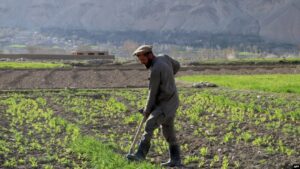
Climate-related challenges have also intensified across the country. According to the report, drought conditions affected 64% of Afghanistan in 2025, while access to adequate drinking water dropped significantly nationwide.
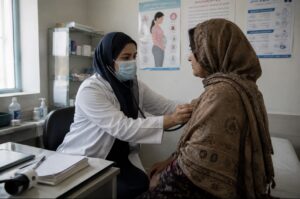
UNDP also reported that international assistance to Afghanistan fell by 16.5% in 2025 despite rising humanitarian needs, as funding shortages forced 440 health clinics to close or reduce services.
Stephen Rodriques, UNDP Resident Representative in Afghanistan, stressed the need for long-term aid in order to progress. He said, “Across Afghanistan, communities need more than short-term relief. They need a pathway to progress.”
Yesterday, the United Nations reported that climate change, economic hardship, and job losses, compounded by rising regional tensions, have driven up prices in Afghanistan and affected food security across the country.