Mass returns, climate changes, and aid cuts push Afghanistan further into crisis
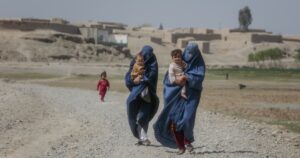
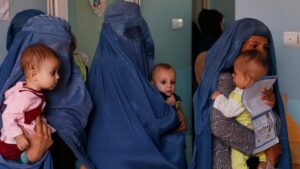
United Nations Development Programme (UNDP) has report that mass returns, climate changes, and aid cuts push Afghanistan further into crisis.

United Nations Development Programme (UNDP) has report that mass returns, climate changes, and aid cuts push Afghanistan further into crisis.

Despite this, some girls in Kunduz province told Salam Watandar that their brothers exercise control over them in an un-Islamic manner and interfere in matters ranging from marriage to education, work, and other affairs of their lives.

The United Nations says that climate change, economic hardship, and job losses, compounded by rising regional tensions, have driven up prices in Afghanistan and affected food security across the country.

The United Nations has said that nurses save lives every day and play a critical role in improving people’s health.

The United Nations Human Settlements Programme (UN-Habitat) in Afghanistan has announced that the World Urban Forum will be held in Baku, the capital of Azerbaijan, to address global housing challenges.

The United Nations Human Settlements Programme (UN-Habitat) in Afghanistan says that many people in the country do not have access to safe water and sanitation.

Grafting and propagation through cuttings are considered important and effective methods in agriculture. In Laghman province, these methods are being used to produce improved and resilient saplings from fruit trees and other plants.

The survey on Artificial Intelligence and Afghan youth was conducted with 1,154 respondents across 32 provinces of Afghanistan. The findings indicate that artificial intelligence has become more deeply embedded in the daily lives of Afghan youth than expected.

Studies show that migraine is more common in women than in men, and one of the main reasons is hormonal changes in women’s bodies. These changes, which occur during the period, pregnancy, and even daily stress, can make the pain worse.

Today, artificial intelligence (AI) is no longer merely a scientific concept; it has become part of the daily lives of youth. From education and work to personal advice, this technology is gradually finding its place among Afghan youth as well. A survey by Salam Watandar, based on 1,154 young respondents (50.6% men and 49.4% women) across 32 provinces of Afghanistan, shows that 84.1% of youth have used artificial intelligence at least once in areas such as work, education, and personal life, while 92% of respondents are familiar with AI.

Findings from Salam Watandar, based on interviews with experts and 20 women who have experienced gender inequality within their families, show that this issue has had serious physical and psychological effects on women.

Although opium poppy cultivation has been completely banned by the leadership of the Islamic Emirate, a number of residents in Badakhshan have turned to cultivating the crop again this year. Some farmers say that the lack of suitable livelihood alternatives and limited employment opportunities have forced them to continue growing opium poppy.