The sound of tools and stones being carved fills Noori’s workshop. Women carefully work on the stones, shaping them into different forms. For these women, stone engraving is more than an art. It is an opportunity to learn new skills, earn an income, and support their families.
Lailuma Noori, a 28-year-old woman, runs the workshop in Faizabad, the capital of Badakhshan. She learned the craft years ago as a student of experienced stone engravers. After five to six years of experience, she decided to open her own workshop.
“I worked with my teachers for five to six years. After that, I became a teacher of this craft and was able to open my own workshop,” she says.
She opened her workshop in 2020–2021 with an initial investment of around 150,000 Afghanis. Since then, her capital has grown to between 700,000 and 800,000 Afghanis.
However, her main motivation for opening the workshop was not just her interest in engraving and jewellery-making. She also wanted to create opportunities for girls to learn the craft and earn an income.
“My aim was to involve girls in this work because this art is new, and girls should also benefit from it,” she adds.
A number of women now work at the workshop as employees, trainers, and trainees. Some learned the craft there and now earn an income through this work.
Rahela Ahmadi, a 20-year-old woman, learned engraving at the workshop about a year and a half ago and now works there. She says she chose this vocation because she is interested in delicate work.
“I was very interested in this work. Both engraving and jewellery-making involve delicate work and require a high level of skill,” she says.
She says her income has helped her meet some of her family’s needs. Her family also supports her work, and she hopes to open her own workshop in the future to train other girls.
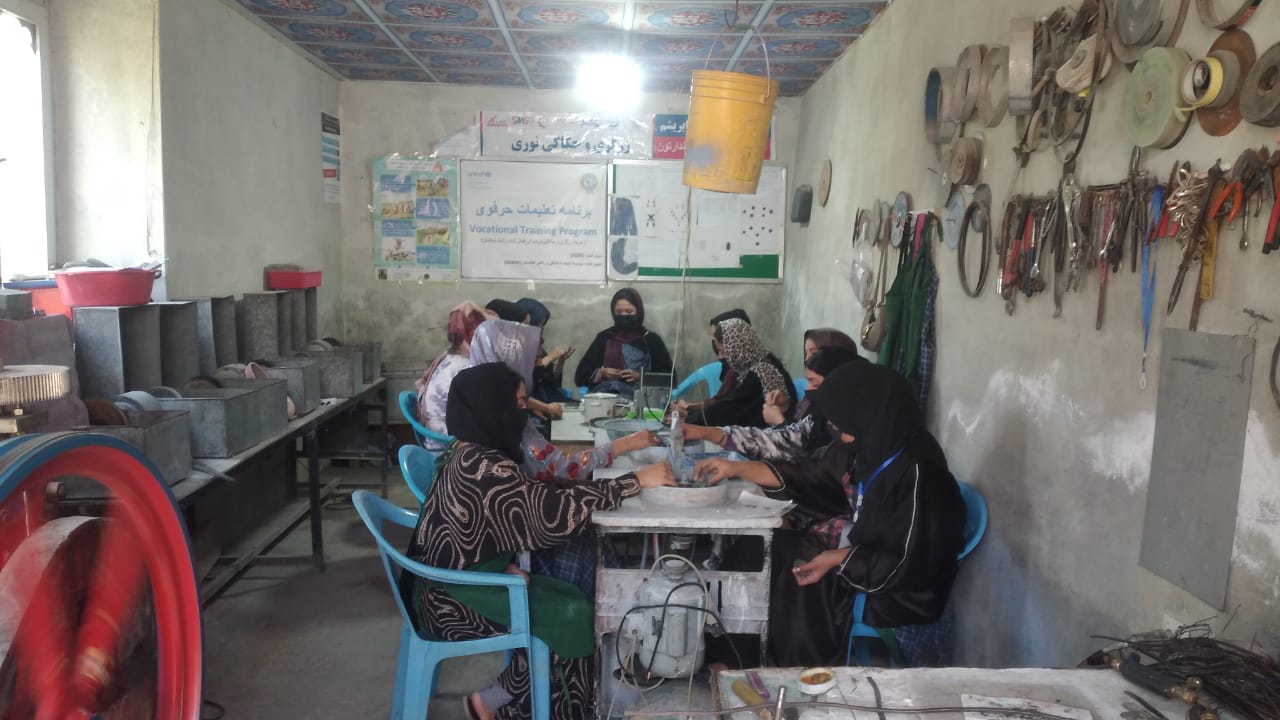
“Since I started working here, I have been able to meet at least half of my family’s needs. I hope that one day I can open an engraving or jewellery-making workshop like my teacher, Lailuma Noori, and provide job opportunities for other girls,” she adds.
Lida Mohammadi, a 21-year-old woman who has been working at the workshop for three years, says the quality and delicacy of their work are more important to her than the number of items they produce.
“The more delicate the work, the more time it takes, so we produce fewer items. Quality is more important to us than quantity. This craft has had a positive effect on my family’s economic and social situation. It allows me to earn an income and help meet my family’s needs,” she says.
Siyah Moi, another 21-year-old woman, has been working as an engraver at the workshop for two years. She considers this vocation an opportunity to earn an income, learn new skills, and expand her social connections.
“I earn an income through this work and can help meet my family’s needs. I have also learned new skills and expanded my social connections,” she says.
However, selling their products remains a major challenge for these women. Despite their hard work and the high quality of their delicate products, they continue to face obstacles to accessing larger markets, especially those abroad.
Shohra Tamana, head of the Badakhshan Women’s Chamber of Commerce and Industries, says various organizations have made efforts in recent years to support women who are active in the precious stone and handicraft sectors. However, she says more measures need to be taken to help them sell their products, especially in markets abroad.
“No formal protocol has been signed yet to allow us to export our products abroad. We are working to create this opportunity for women so they can send their products to foreign countries and neighbouring provinces,” she says.
She adds that opening shops in Faizabad could also help women sell products made in Badakhshan, particularly precious stones and handicrafts. According to her, some shops in the city have not yet officially begun operating. Opening these shops could be an effective way to help sell local products.
At Lailuma Noori’s workshop, the women continue to work with lapis lazuli and marble. For many of them, stone engraving has provided an opportunity to earn an income and learn a craft. However, expanding markets for their products remains one of their main needs to grow their businesses.
Reporter: Raqiba Hamidi