A number of women in Siyahgerd district of Parwan say that the launch of a small workshop producing pickles, tomato paste and local dairy products has not only created job opportunities and provided income, but has also increased their self-confidence and given women in the village hope for the future.
Ebrin, a young woman, started her work by raising a dairy cow and a goat. More than four years ago, she launched the workshop with an investment of nearly 100,000 Afghanis and basic equipment.
Despite many difficulties at the beginning, the workshop now produces an average of 100 to 150 kilograms of pickles, tomato paste and dairy products each month. It earns between 15,000 and 20,000 Afghanis a month, while each trainee earns about 2,000 to 3,000 Afghanis per month.
“With the small amount of money I had and some money we borrowed from others, we bought a cow and started this business. It has been four to five years since we started making pickles, chutney, jam, cheese, yogurt, chaka and qorot. There are girls who work with us,” she says.
Ebrin emphasizes that she could increase production and employ more women if she received technical and financial support. She takes her products to the center of Siyahgerd district to sell them.
“Sometimes we take our products to the district center, and sometimes we sell them at a loss. We need equipment to store our products so they do not spoil. They should provide us with dairy cows, goats and sheep so that the number of women working with me can increase to 10 or even 20,” she adds.
Women who have received training at the workshop say they have learned not only how to produce and package the products, but also how to market and sell them. They say these skills have increased their confidence and strengthened their social position both within their families and in the community.
Benafsha, one of the women working at the workshop, says: “Since I learned how to prepare pickles, tomato paste and processed dairy products from Ms. Nargis, now I make them myself. With the income I earn here, I cover some of my own and my children’s needs. I want to become an entrepreneur like her and help more women and girls. If institutions and the government support me, I have ideas that I hope to put into practice one day.”
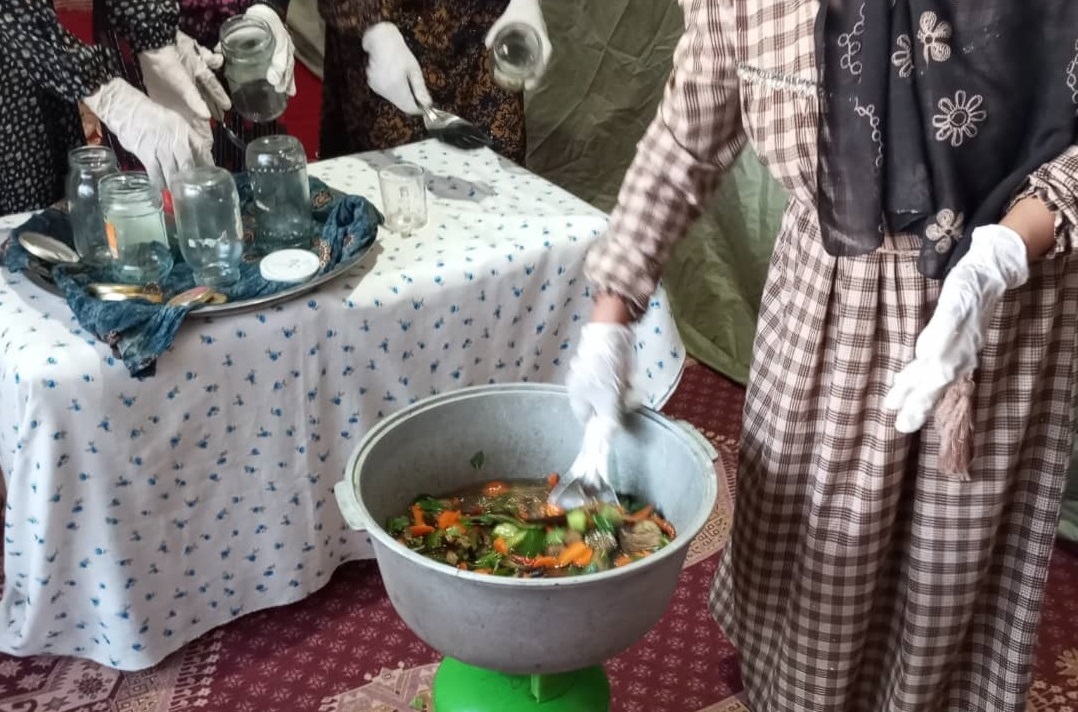
Zulaikha, another trainee, considers this experience the beginning of a new chapter in her life.
“At first, I felt very hopeless. I thought it was impossible, but gradually I realized that nothing is impossible if we are determined. My message to other women like me is not to sit idle. In my view, our village is now rich in dairy products and other products that can provide many benefits and become a source of self-sufficiency if we know how to use them and make an effort,” she says.
Meanwhile, economic experts also emphasize that processing agricultural products and establishing small rural workshops can create sustainable jobs, increase the value of agricultural products, strengthen the local economy and ensure food security. Abdul Wali Hajir, a university lecturer and economic expert, says:
“Technically, the government should provide these groups with equipment and give them training on producing and processing their products, accessing domestic and international markets, and how to attract customers and process their products to a good quality standard.”
Sayed Hekmatullah Shamim, spokesperson for the governor of Parwan, says women’s participation in small-scale industries and production is increasing. He says programs are underway to provide training, small loans and marketing support to women entrepreneurs.
“For people who run small businesses at home, including women, the Department of Labor and Social Affairs provides some technical equipment. This creates opportunities for them to work from home and produce goods,” he adds.
According to the findings of this report, Ebrin’s workshop has created direct and indirect job opportunities for more than 10 women with limited resources. It produces and sells 100 to 150 kilograms of local products each month.
However, the lack of cold-storage facilities, standard packaging, an organized sales network and access to larger markets remain the main obstacles to the expansion of the business.
Experts believe that if these businesses receive practical and comprehensive technical, financial and marketing support, small home-based workshops could become sustainable models for reducing poverty, improving family livelihoods and empowering women in rural areas of Afghanistan.