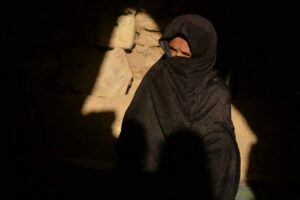
Khanum Gul, a resident of ‘Sarmata’ village in Dasht-e-Archi district of Kunduz, has been engaged in livestock farming for more than 20 years. Five years ago, she also started orchard farming. Her days are spent caring for her cows and goats, tending to her orchard, and working on her farmland—tasks that, despite the fatigue and difficulties they bring, have become an inseparable part of her life.
She currently owns two cows, nine goats, and a fruit orchard, where she cultivates cherries and guavas. Between the fruit trees, she also grows vegetables and wheat. Most of her time is devoted to caring for her livestock and protecting the orchard to ensure that the fruit is not damaged or stolen. She works seven to eight hours a day, and during the summer, she spends nearly the entire day in the orchard and fields.
“After the morning prayer, I give the animals water and straw, then take them out to graze. I stay busy with livestock and orchard work until evening. I raise cows and goats and take care of the orchard—our livelihood depends on these activities,” she says.
The sale of dairy products is also an important source of income for her family. She produces milk, yogurt, and strained yogurt (Chaka) and daily and weekly she sells them to shops. According to her, she earns between 4,000 and 5,000 Afghanis per month from the sale of dairy products, while her annual income from livestock and orchard farming ranges from 70,000 to 100,000 Afghanis.
“Thank God, I am satisfied with my life. The work involves a lot of fatigue, and my hands and feet are cracked, but I am still satisfied that I am busy and can somehow earn an income,” she says.
Despite the economic challenges, Khanum Gul has managed to use this income to meet part of the needs of her nine-member family and even send her grandchildren to a private school. Despite her old age, she carries most of the responsibilities and hardships outside the home because her son is ill and unable to do heavy work.
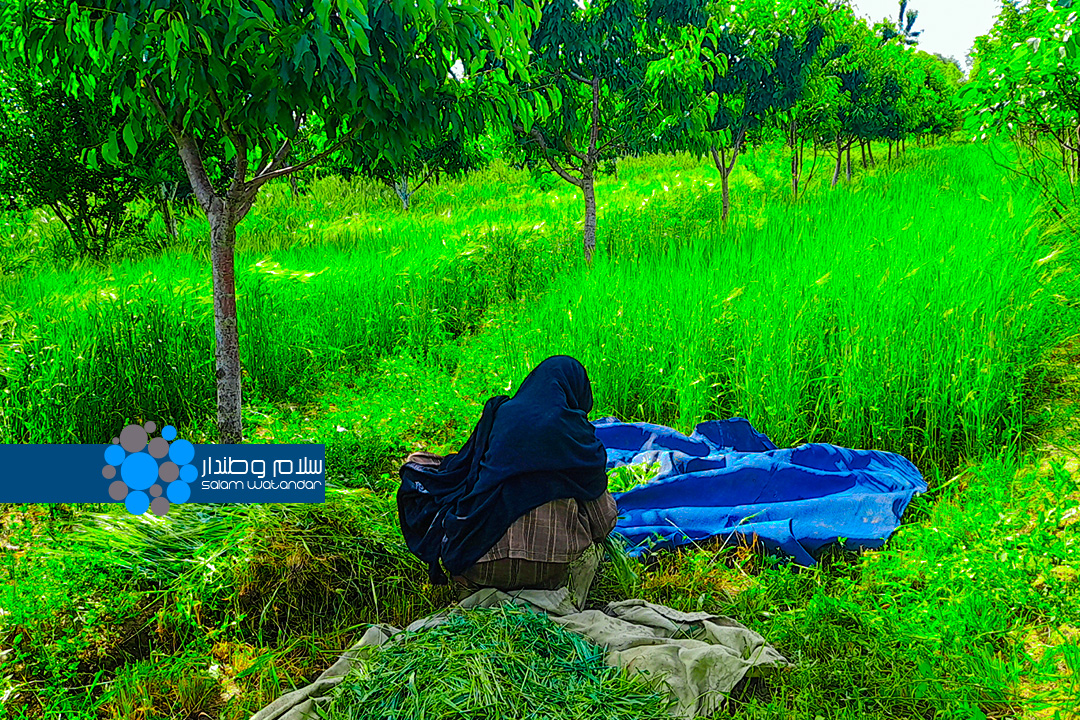
“When the workload becomes too much, I hire someone, but I do most of the work myself—from looking after the orchard to digging the soil and pruning the trees. I am getting older, I walk around a lot, and my legs ache, but I have to keep doing it for the sake of our livelihood,” she explains.
Nevertheless, she still hopes to expand her work. She says that if the necessary opportunities and resources were available, she could increase the number of her livestock and create employment for others. Over the years, she has gained extensive experience in both livestock and orchard management. She now knows how to care for her animals to ensure they produce milk throughout all the seasons and which fruit varieties produce better harvests and have a better market.
“In livestock farming, I have learned how to manage and care for the animals so they always produce milk in every season. In orchard farming, I have learned which fruits have better yields and do not spoil quickly,” she says.
Despite all the problems, she encourages other women to work and be active. She believes that through livestock and orchard farming, women can help reduce their families’ financial problems and become self-sufficient.
“My message to women is not to sit idle. Livestock and orchard farming are nothing to be ashamed of—they are forms of trade. When women work, the financial situation of families improves and they contribute to the country’s economy as well,” she says.
Khanum Gul, despite her fatigue and hardships, remains hopeful for the future. She has spent years working under the hot sun across farmlands. Her story reflects the lives of thousands of Afghan women who, with tired hands and strong determination, keep their families going.
Reporter: Maryam Moqadas