In a narrow street in Herat, the sound of sewing machines and the smell of leather fill a small but vibrant workshop, where Kamela Mirzaei—a girl whose life took an unexpected turn and who was denied the opportunity to continue her education—now works in a shoemaking workshop. She says the workshop has been operating officially for the past four years and is run with the help of her family members.
Kamela recalls the days when everything began in a small room in her home, where the hum of sewing machines blended with the sounds of family life. She says those initial efforts gradually expanded, and today the workshop employs around 12 women, most of whom are returnee migrants from Iran.
“At first, we turned one room in our house into a workshop with my two sisters and my brother, and worked there. Thank God, we now have a workshop, and around 12 people work with us. Most of our employees are migrants who have returned to Afghanistan from Iran over the past six or seven months,” she says.
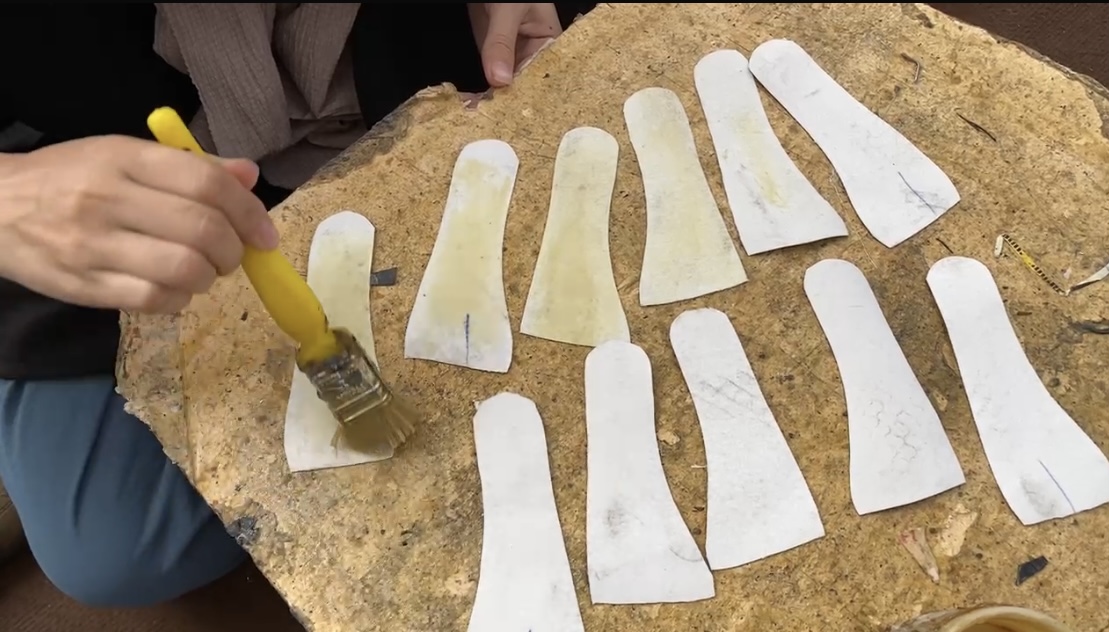
In another corner of the workshop, several women are carefully engaged in cutting and sewing. Their hands skillfully transform dry leather into something soft, delicate, and shapeable. Yet challenges continue to stand in their way.
According to her, obtaining raw materials has become one of the workshop’s greatest difficulties due to rising prices and limited access. She adds that the lack of shopping malls forces them to sell their products through intermediaries in the market. This, combined with the declining purchasing power of people, has affected their sales.

“At the moment, our biggest challenge is not having shopping malls. We have no choice but to produce our goods and sell them to shopkeepers. With the rising cost of materials and the poor economic situation—especially in a period of widespread unemployment—there has been a huge difference in our sales,” she adds.
Meanwhile, the women working in the workshop describe the opportunity to learn and practice this profession as an important step toward improving their lives—an opportunity that, according to them, has helped reduce some of their financial and economic hardships by working in that environment.
Zahra Sultani, one of the workshop’s employees, says the job has given her the opportunity to acquire a skill while earning enough to meet some of her basic needs.
“When we returned from Iran, we had no source of income. We did not know anyone in the city or around here, and life was very difficult. But working in this workshop gave me the chance to stand on my own feet again, become more familiar with people, and at least provide for my basic financial needs,” she says.
Saamea Sarwari, another employee who works at the sewing machine, says the job has not only helped her contribute to household expenses but has also allowed her to leave the confines of home and interact with other people. Although her income is low, she says it is enough to pay for her medical treatment and daily necessities.
“I have been working in this workshop for five months. Before that, I worked at home. I am happy and satisfied with my job. The distance from my house to the workshop gives me a chance to walk and to become familiar with new people. The wages I earn go toward my doctor’s visits and medication,” she says.
At the same time, Hassan Mirzaei, one of the workshop’s managers, emphasizes that women play a vital role in different stages of shoe production, from cutting to upper stitching, and that, given access to opportunities and support, they can perform better.
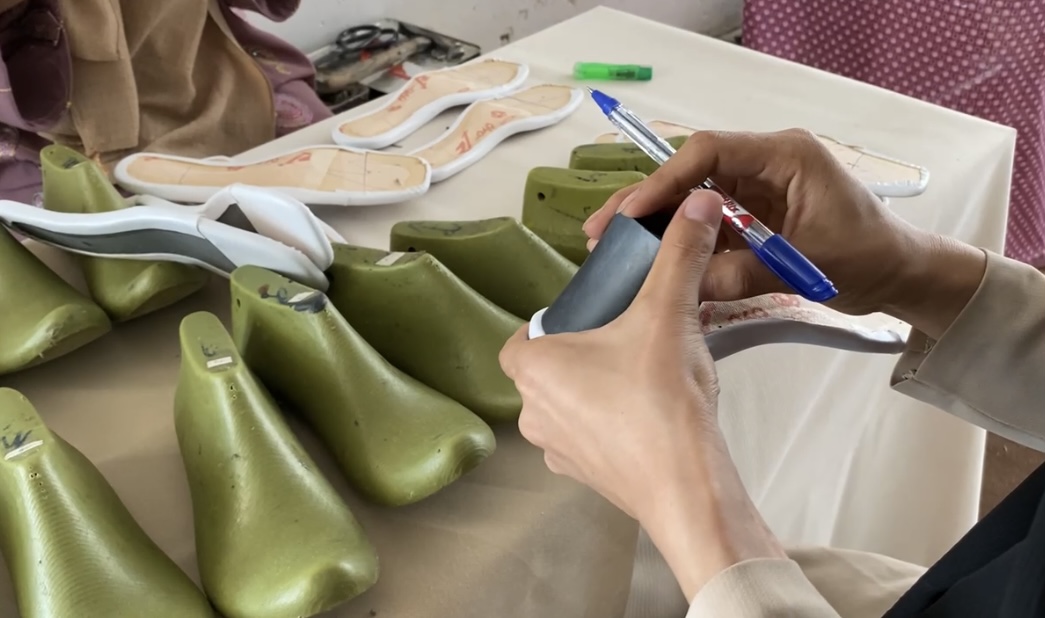
“Women perform better than men in shoe production, provided they are given the necessary opportunities and government support. Shoemaking in Herat is a new profession. It is a job that both women and men can do. A large part of the production process in our workshop—including upper stitching, cutting, sewing, and gluing—is carried out by women, who work with greater precision and motivation than men,” he says.
Officials at the Afghanistan Women Chamber of Commerce and Industry (AWCCI) for the Western Region also point to the strong presence of women in business and the economy, saying that more than 1,000 women are active in various production sectors in Herat.
Behnaz Saljuqi, head of the AWCCI in the western region, emphasizes the importance of supporting women entrepreneurs, saying,
Most women are engaged in arts and handicrafts, while others work in the production of food products, detergents, and other goods. Many of these women are the breadwinners for their families and form the foundation of the family economy. At the same time, they have created employment opportunities for other women and girls, which plays a significant and valuable role in the family’s economic life.
Economic experts also believe that expanding vocational training and reducing challenges could pave the way for greater economic participation by women—a measure that, in the end, they say would increase production and contribute to improving society’s economic conditions.
Shoaib Rahimi, an economic expert, says, “In addition to support, if there are no restrictions on women’s activities, they can produce a wide range of products, sell them, generate substantial demand, and contribute to the sustainability of women-led businesses and the market.”
At the same time, Arafat Jamal, the Representative of UNHCR in Afghanistan, said in a special interview with Salam Watandar that they will pay special attention to women’s employment. Since many of them previously had access to job opportunities in Iran and Pakistan but are now deprived of those opportunities, efforts should be made to pave the way for their access to work.
Reporter: Marzia Hussaini