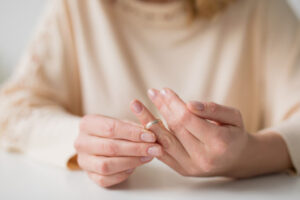
Eid al-Adha is one of the joyful Islamic occasions celebrated among people with happiness, solidarity, and family gatherings. During the days and nights of Eid, people prepare to create lasting and memorable moments in their lives. Among them are women who spend Eid nights baking cookies and ‘Roghan joshi’ before decorating their hands with Henna –a lasting tradition that still remains an essential part of the beauty and spirit of Eid in many Afghan households.
For this report, Salam Watandar interviewed 26 women from 10 provinces. They say that the tradition of applying Henna on Eid night is one that has been practiced among women and girls for many years. They see Henna as a symbol of joy, beauty, and their cultural identity.
Among the 26 women interviewed, 14 of them who are from the provinces of Badakhshan, Faryab, Ghor, and Kunduz say that they apply Henna on Eid night. In contrast, 12 women from Herat, Kabul, Kunar, and Maidan Wardak say they are less interested in applying Henna due to changes in lifestyle, daily responsibilities, a preference for modern makeup, and life challenges.
Gul Jan, a 39-year-old resident of Kapisa, says that applying Henna on Eid nights has been part of her family’s tradition for many years, and that every year before Eid, they come together to decorate their hands with Henna.
“We always apply Henna on Eid nights. It is part of our culture to decorate our hands with Henna, especially during Eid al-Adha, when people say your hands should be decorated with Henna,” she says.
Sara, a 14-year-old resident of Faryab, says that she always applies Henna on Eid nights and she loves applying it because it strengthens her sense of happiness. She says,
“I feel Eid is incomplete without Henna. Eid is one of the most important days of the year for me — a time for joy, meeting relatives, and keeping cultural traditions alive, especially for girls, and applying Henna is part of that happiness.”
However, 12 of the young and employed women interviewed for this report say the tradition has faded compared to the past, adding that modern lifestyles and changing preferences have reduced their interest in applying Henna.
Elaha, a 24-year-old resident of Herat, says that she no longer has much interest in applying Henna and rarely uses it. According to her, one reason for her lack of interest is that the color of Henna stays on the hands for a long time. She adds,
“Since Henna stays on the hands for a long time, I do not like that. The excitement and joy we had as children –receiving Eid gifts and visiting relatives –was something different. Now that we are grown up, Eid is still a joyful occasion and we do visit relatives, but it does not feel the same as before. In general, I do not like applying Henna, and today’s Henna is not like the traditional one; most of it is just artificial coloring.”
Nazanin, a 32-year-old resident of Kunar, also says “Sometimes I apply Henna on Eid al –Adha night, but it is not a regular yearly tradition for me. I do it whenever I have the time and opportunity, as it is considered one of the beautiful customs among women and part of the joy of Eid. However, due to my daily responsibilities, I do not always get the chance to do so.”
Meanwhile, some elderly women say that Eid used to feel warmer and more friendly in the past than it does today, and that the tradition of applying Henna held a special place within families.
Safiya, a 70-year-old resident of Herat, says that in the past Henna was much more common, and both elders and children enthusiastically decorated their hands and feet with it. She adds,
“Nowadays, hardly anyone applies Henna, and the traditions have faded. In the past, all children would decorate their hands and feet with Henna. There was no child or household where Henna was not used. Both adults and children would have their hands and feet decorated with Henna.”
Bibi Najia, a 55-year-old resident of Kabul, also says that in the past Eid nights were full of excitement, and girls would stay up late into the night applying Henna. However, over time, this tradition has gradually faded among women and children.
“In the past, applying Henna was highly valued. If someone did not apply Henna on Eid night, they felt their Eid was incomplete. Girls eagerly applied Henna, and everyone tried to make their hands more colorful and beautiful,” she says.
The Women interviewed for this report believe that if this tradition is completely abandoned, part of the cultural warmth and festive atmosphere of Eid will also lost.
Husna, a 20-year-old resident of Badghis, says that if the tradition of applying Henna disappears, Eid will no longer have its traditional joy and festive atmosphere.
“If the practice of applying Henna declines, an important and beautiful part of the tradition will be lost, and Eid will no longer feel as meaningful. In the past, Henna was prepared one or two days before Eid, and I think Eid would not feel as joyful without it,” she says.
Shakila, a resident of Ghor, also says, “If this tradition fades, future generations may forget many beautiful customs of the past, and Eid will no longer have its traditional atmosphere.”
Meanwhile, psychologists say that when family members take part in shared activities such as applying Henna on Eid night, they are essentially sharing their time, attention, and emotions with one another.
Zuhal Amirzada, a psychologist, says, “In fact, this helps create shared memories within the family. It also gives people a sense of security and being loved, that is why they feel happy, calm, and close to one another during such occasions.”
Sociologists also say that changing lifestyles is one of the key factors behind the fading of cultural traditions in the country, particularly among women. Zia Nikzad, a sociologist, says,
“Today, with the expansion of media, urban life, and widespread migration, a new culture and traditions have emerged, and unfortunately, the old traditions that once existed in villages and cities, where close –knit families and small communities were formed –have gradually faded.”
Eid al-Adha is one of the most important religious occasions for Muslims and is celebrated every year with special ceremonies. In Afghanistan, families also prepare for Eid by observing customs such as buying new clothes, baking cookies, and applying Henna.
Reporter: Zarafshan Sharifi