In the mountainous areas of Ghor, where climate change, increased seasonal floods, soil erosion, and declining water resources are posing serious challenges to people’s lives, residents in some parts of the province are using a simple approach to protect natural resources and reduce the damage caused by these problems. They are conserving lands (qoroq) covered with natural shrubs and preventing the destruction of vegetation to help restore nature and protect natural resources.
A number of residents of Ghor say that several years ago, when vegetation in the area was gradually disappearing because of overgrazing and the cutting of shrubs, local elders and residents decided to conserve (qoroq) some areas of land and prevent their excessive use. Hayatullah, a resident of Ghor, says,
“Here, we have conserved the mountain shrubs and forests. There are large areas of pasture, and we prevent sheep from entering these areas so that the vegetation can be protected. Before these lands were conserved, floods were very frequent, and people were seriously harmed by them. That is why we decided to conserve these areas.”
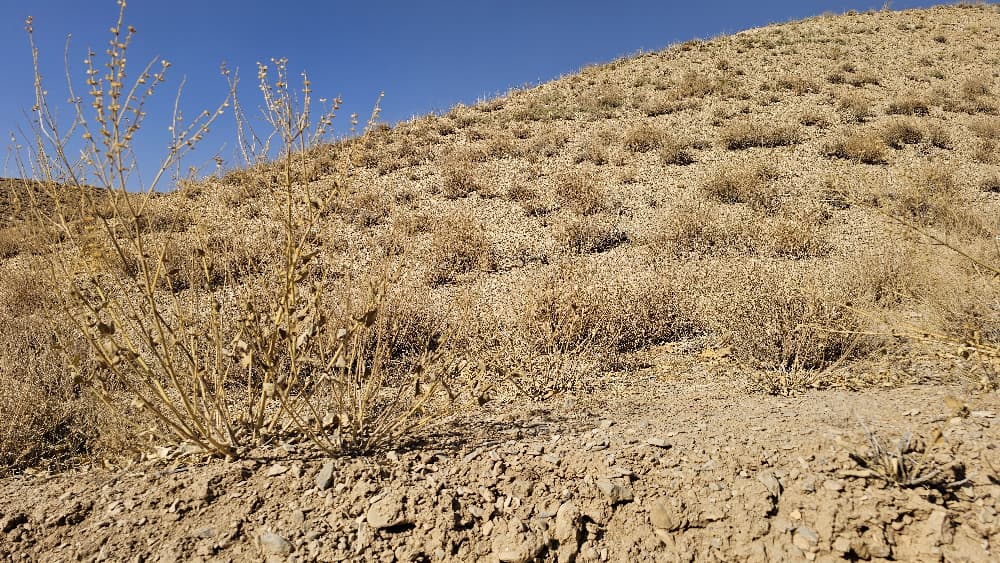
Sultan Ahmad, another resident of Ghor, says that vegetation has increased since these areas were conserved.
“Since our area has been conserved, trees such as halanj, chaka, and some other natural trees have increased and are growing well. The number of shrubs has also increased significantly,” he says.
Residents of Ghor say that, with the cooperation of local elders and the appointment of several guards (qoroqban) to protect the conserved areas, they have been able to conserve hundreds of jeribs of rain-fed land over the past several years and help restore vegetation. According to them, this effort has helped reduce soil erosion, control seasonal floods, and better protect natural resources.
Environmental experts in Ghor also welcome this measure, saying that conserving lands covered with vegetation is a low-cost way to protect natural resources. Abdul Basir Sultani, an environmental expert, says that restoring vegetation in conserved areas can help strengthen water resources, increase the growth of mountain plants, and reduce soil erosion and seasonal floods.
“When an area has green vegetation, it helps prevent the flow of surface water. Also, during rainfall, more water can enter the soil, which plays an important role in preventing floods. Green vegetation can also help reduce the effects of climate change,” he adds.
He emphasizes that, given the consequences of climate change, expanding such programs led by local people in different areas can play an important role in protecting the environment and using natural resources sustainably.
Officials at the Ghor Department of Agriculture, Irrigation and Livestock say they have made efforts to protect natural resources by working with local people and establishing local associations in the provincial capital and districts. Zia-ul-Haq Joya, the department’s head of press, says,
“The Department of Agriculture, as a partner institution, has cooperated with local people to protect natural resource areas and vegetation in the provincial capital and districts. Establishing natural resource protection associations and holding awareness programs have been among the measures taken in this regard. We hope that more programs and projects will be implemented in this field in the future.”
Officials at the Ghor Department of Agriculture, Irrigation and Livestock also say they have held several awareness programs for residents in different parts of the province to encourage people to protect lands covered with vegetation, properly manage pastures, and prevent the destruction of natural resources.
Land conservation (qoroq) in Ghor is an example of local communities’ efforts to protect nature from the consequences of climate change. By protecting vulnerable lands and restoring vegetation, residents of the province are working to reduce soil erosion and the damage caused by seasonal floods and preserve natural resources for future generations.
Reporter: Sayed Maruf Sayedi