Consecutive droughts over the past several years have had widespread negative impacts on agriculture in Paktia, reducing rainfed crop yields and causing significant financial losses for farmers.
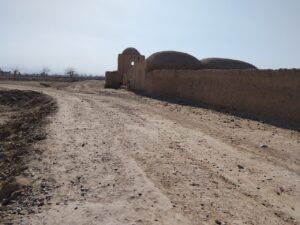
In some parts of Paktia, rainfed farming was widely practiced because it required lower costs and depended on rainfall for irrigation. However, repeated droughts in recent years have led to a significant decline in this type of farming.
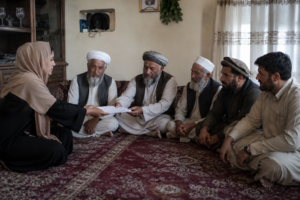
Farmers say that lower soil moisture and rising temperatures have negatively affected rainfed farming, causing many of them to leave their land uncultivated. Abdul Razzaq, a farmer from Sayed Karam district of Paktia, told Salam Watandar that although spring rainfall this year improved soil moisture levels, economic hardships prevented him from cultivating his rainfed land.
He calls on the Department of Agriculture and aid organizations to support rainfed farming by providing tractors and assisting farmers with land preparation. He says,
“I have between six and eight jeribs of land. Last year, I planted rainfed crops, but I suffered heavy losses because of the drought. I could not even cover the cost of the tractor. That is why I left the land uncultivated again this year.”
Essa Jan, another farmer, says that droughts in previous years damaged rainfed farming, but he believes this year’s rainfall will lead to better yields. He adds that following the spring rains, many farmers cultivated their lands and are hopeful of a good harvest.
“Sometimes drought has a very negative impact. Even if there is no rainfall during the summer, it greatly affects rainfed crops. The plants become weak, and weeds spread more rapidly,” he says.
Faisal, another farmer, says that recent droughts have substantially reduced his rainfed crop yields. According to him, prolonged dry conditions have left the soil dry and compact. He adds that recent rainfall has increased soil moisture again, and this year’s rainfed crops are expected to have better yields.
“Because of the recent droughts, our land became dry, and the yield from our rainfed crops declined by 30 to 40% compared to previous years,” he says.
Agricultural experts say that consecutive droughts in recent years, not only in Paktia but also in different parts of Afghanistan, have caused extensive damage to agricultural production. Nevertheless, recent rainfall has renewed hope among farmers.
Sayed Hassan, an agricultural expert, says that recent rains have increased soil moisture, which will help rainfed crops grow better. He emphasizes that unless specific drought-mitigation programs are implemented, the losses from previous years will not be recovered.
“Consecutive droughts over the past several years in Afghanistan, especially in Paktia, have had widespread impacts on all agricultural sectors, including livestock, crops, fruits, and grains. All of these sectors have suffered damage,” he adds.
Officials at the Paktia Department of Agriculture also confirm that drought in recent years has negatively affected the province’s agricultural sector and reduced the level of crops.
Sayed Hassan Takal, an adviser to the Paktia Department of Agriculture, says that recent rainfall has occurred across all districts of the province and will have positive results. He notes that the Department of Agriculture, in cooperation with aid organizations, is working on programs to reduce the effects of drought, including afforestation, building water-retention dams, and digging rainwater-absorbing systems.
“Currently, based on information received from the districts, there has been adequate snowfall and rainfall across all areas. Therefore, we hope this year will be a productive one in terms of agricultural output,” he adds.
Agricultural experts consider the recent rainfall highly beneficial for farming and for reducing the effects of drought. However, they emphasize that relevant institutions must take immediate action to properly manage water resources and establish water storage systems in the provinces to reduce the severity of drought in the long term.
Reporter: Khalid Zaheen