Definition of depression
According to the World Health Organization definition, depressive disorder is the most common mental health condition that means losing of interest and pleasure in enjoyable activities over the long term. Depression is a serious and widespread mental health issue that affects emotions, thoughts, behavior, and daily functioning of an individual. It can cause ongoing sadness, lack of interest in previous activities, low energy, sleep and appetite disturbances, and difficulties with concentration and decision-making. Depression affects not only personal life but also social relationships. In severe cases, it may lead a person to consider self-harm.
Problem statement
In recent years, Afghanistan has undergone major social, political, and economic changes, which have created significant challenges for women. Restrictions on women’s rights and freedoms, unemployment, lack of access to mental health services, poverty, social isolation, discrimination, and domestic or societal violence are all factors that can increase mental health problems, especially depression, among women.
Under such circumstances, diagnosing and analyzing depression among women, one of the most common mental disorders, is essential. The lack of accurate and scientific data on the psychological condition of women in Afghanistan has caused this issue to be overlooked by policymakers, health and civil institutions, and the media. As a result, practical community-level solutions to reduce this problem have not been properly designed or implemented.
For this reason, the Salam Afghanistan Media Organization (Radio Salam Watandar) conducted a field survey in 26 provinces of the country and examined the mental health status of 401 women, aiming to present a realistic and scientific picture of depression among women in Afghanistan. The findings of this survey show that nearly half of the surveyed women experience moderate depression, which can be considered a serious threat to women’s mental health in Afghanistan.
An accurate analysis of these data, through examining variables such as age, marital status, education, employment, type of residence, daily energy levels, sleep, concentration, sense of security, and attitudes toward the future, can help government institutions, health organizations, the media, and civil society design and implement more targeted measures to improve women’s mental health.
Research background
The issue of women’s depression in Afghanistan has become one of the main concerns of national and international institutions. Statistical and official reports have been published on the level of depression among women in Afghanistan. Various studies indicate that the rate of depression among Afghan women is significantly higher than the global average.
- United Nations and affiliated agencies: Common reports from UN Women, the International Organization for Migration (IOM), and UNAMA show that between April and June 2023, nearly 70% of women surveyed reported increased anxiety, depression, and social isolation.
- Afghanistan Center for Epidemiological Studies (ACES): A 2023 study revealed that 80.4% of urban Afghan women showed signs of depression, and 81% experienced mild to severe anxiety. The study also found a strong connection between depression and low household income, poor physical and mental well-being, and negative life experiences.
Research objectives
- To examine the level of depression among women in Afghanistan.
- To identify factors contributing to depression among women.
- To propose strategies to prevent and reduce depression among women in Afghanistan.
- To analyze the social, familial, and personal consequences of depression in the lives of women in Afghanistan.
- To identify barriers to accessing mental health services and recommend infrastructure improvements.
Research questions
- What factors contribute to the rise of depression among women?
- What are the consequences of increasing depression on women and society?
- Do women have motivation and hope for the future?
- Are women able to concentrate and participate in social activities?
- What strategies can reduce depression and improve women’s mental health?
Research methodology
This is a quantitative and field-based study.
Study population
Women aged 15 to 40+ in 26 provinces of Afghanistan.
Analysis method
Data were collected using standardized questionnaires and analyzed with SPSS software.
Research duration
The study took place over five months (November 1, 2024, to April 1, 2025).
Limitations and challenges
- Limited access to target groups or difficulties collecting required data.
- Cultural taboos or sensitivities potentially affecting data collection.
- Technical issues, including power outages and poor internet connectivity, disrupting the research process.
Overall report
The findings of the survey conducted by the Salam Afghanistan Media Organization (Radio Salam Watandar) among 401 women across 26 provinces show that, of the total participants, 199 women (49.67%) experience moderate depression, while 202 women (50.33%) are not depressed.
This survey was conducted in 26 provinces of Afghanistan. Among the participants, Kabul had the highest participations with 20.7%, followed by Herat with 11.4%, Faryab with 10.2%, Balkh with 6.9%, and Parwan and Daikundi each with 0.7%.

According to the survey, 63.6% of women are unemployed, while 36.4% are employed.

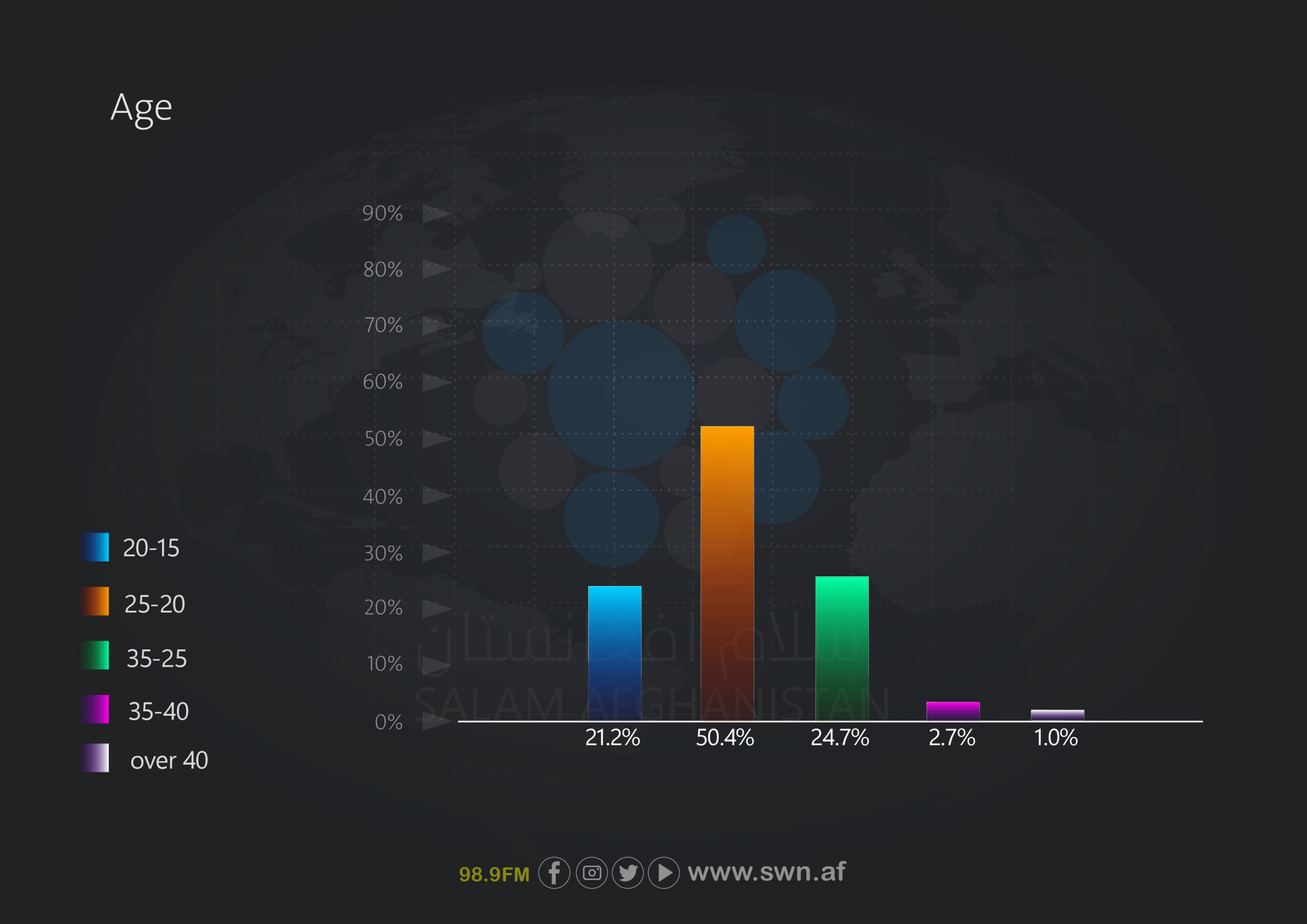
The participants in this survey are in different age groups: 50.4% were between 20 and 25 years old, 24.7% between 25 and 35, 21.2% between 15 and 20, 2.7% between 35 and 40, and 1% were over 40 years old.
Based on education level, 40.6% of women hold a bachelor’s degree, 31.4% have completed 12th grade, 20.7% have completed 14th grade, 4.7% are illiterate, and 2.5% hold a master’s degree.

In terms of marital status, 64.6% of women are single, 25.7% are married, 8.7% are engaged, and 1% are divorced.

Based on place of residence, 93.5% of women live in urban areas, while 6.5% live in rural areas.

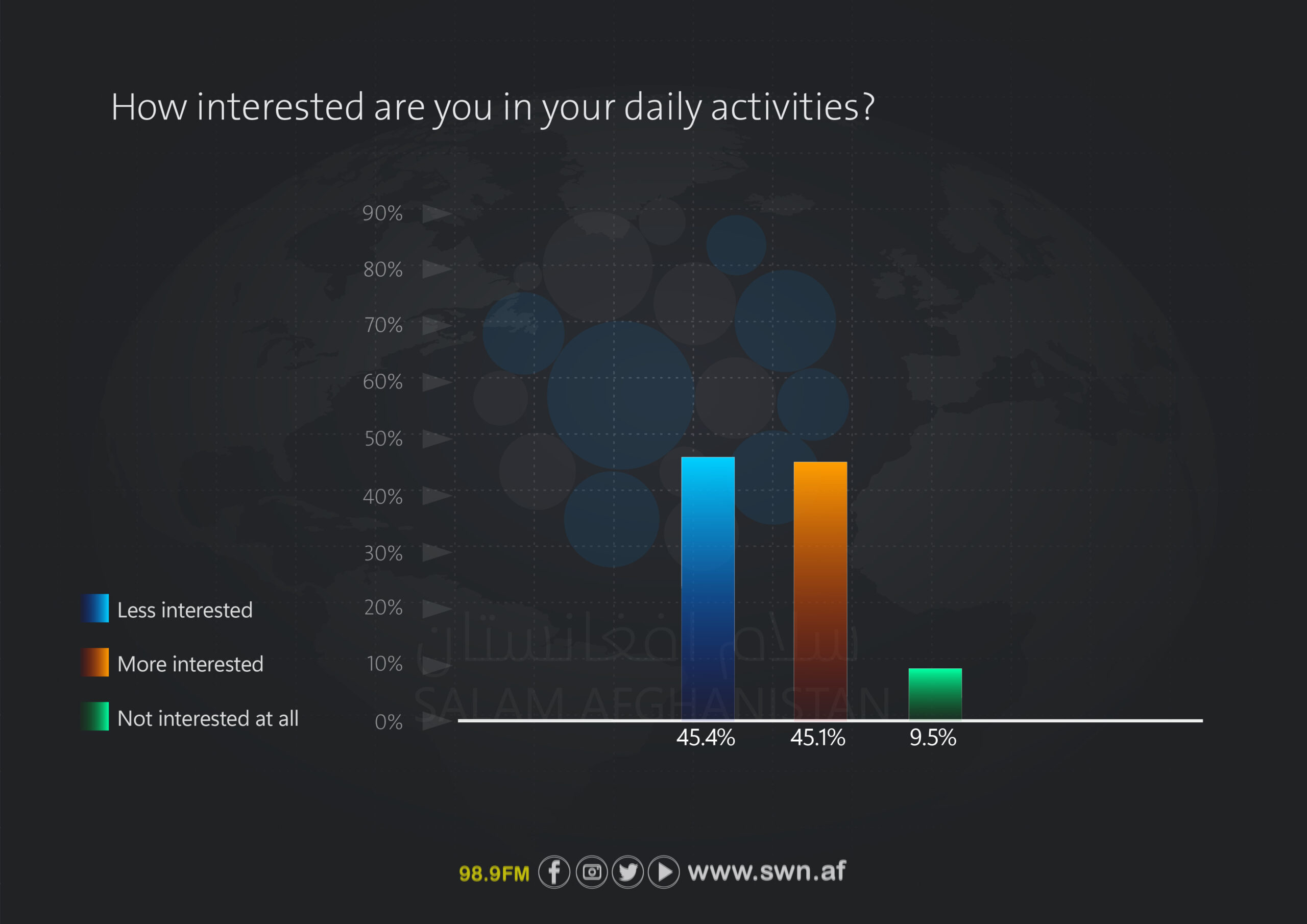
Regarding interest in daily work, 45.4% of women are somewhat less interested, 45.1% are highly interested, and 9.5% are not at all interested.
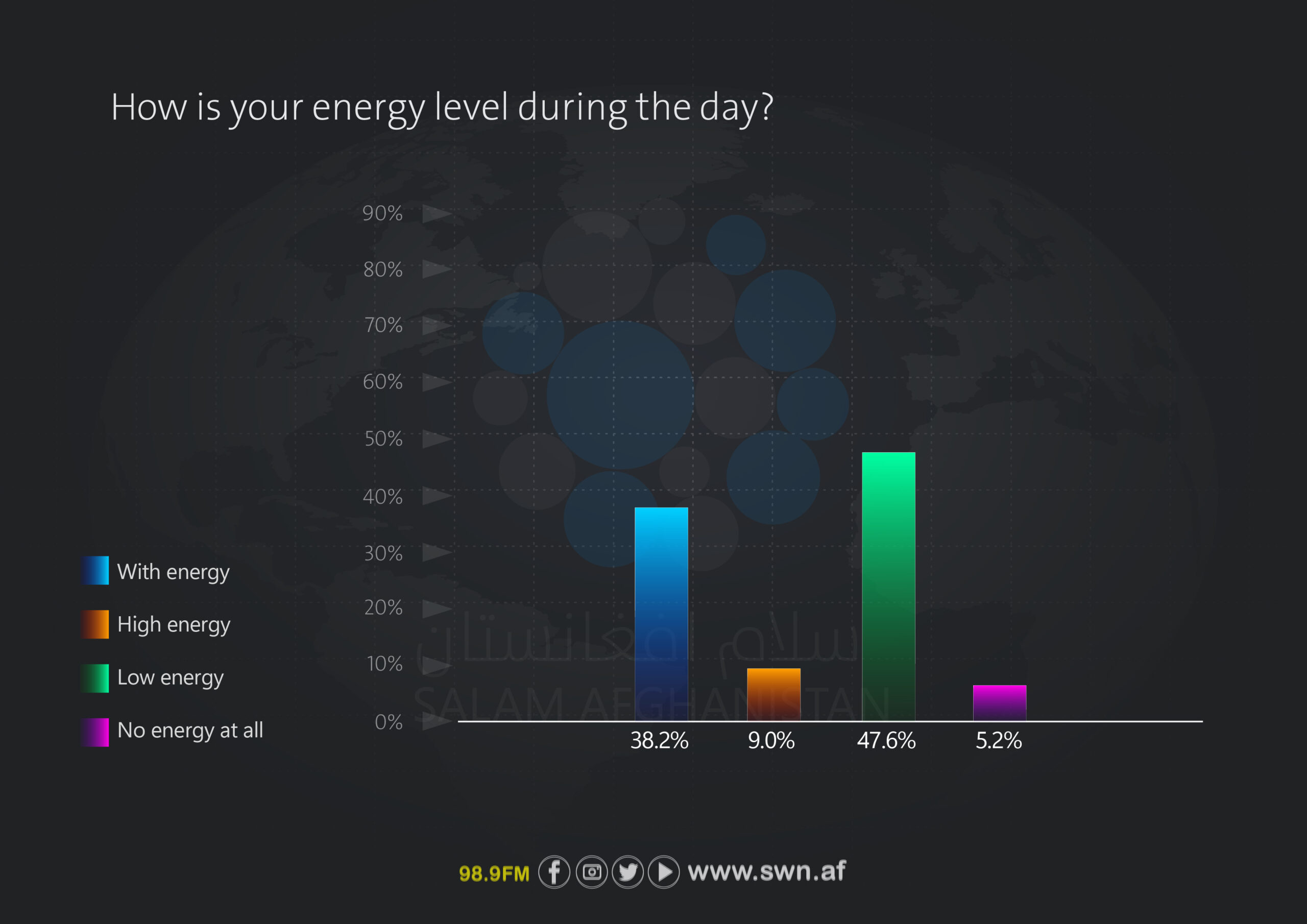
In terms of energy levels, 47.6% of women have low energy, 38.2% have moderate energy, 9.0% are very energetic, and 5.2% have no energy at all.
Regarding enjoyment of social activities and spending time with friends, 72.8% of women reported enjoying it, while 27.2% did not.

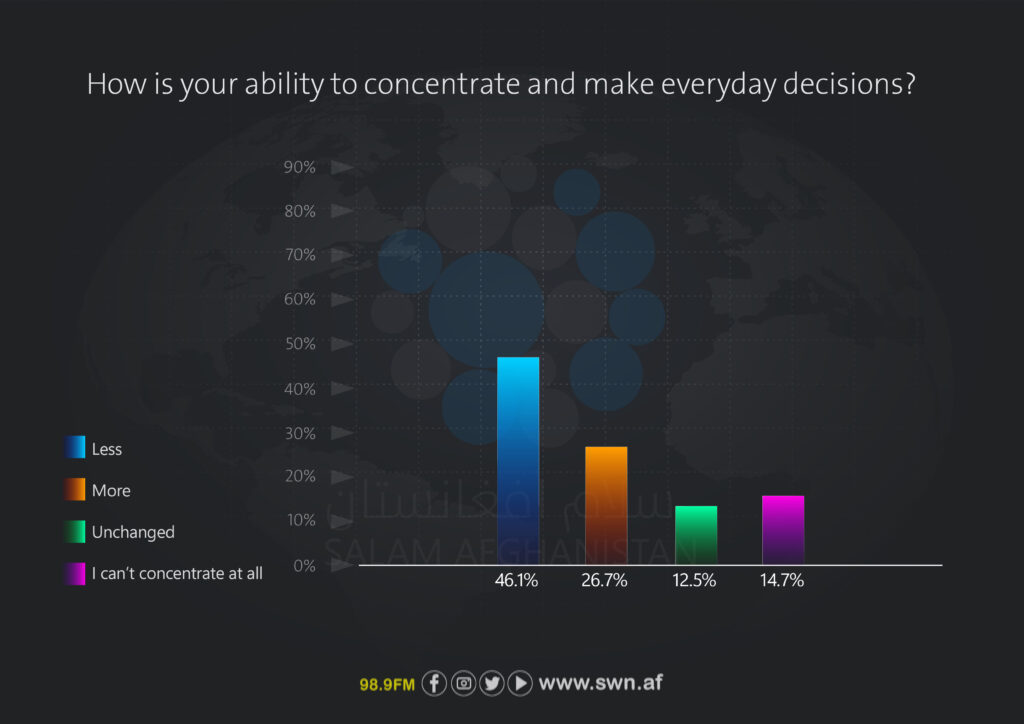
Regarding the ability to concentrate in daily decision-making, 46.1% of women have low concentration, 26.7% have high concentration, 14.7% have very poor concentration, and 12.5% report no change in their concentration during daily decision-making.
Regarding feelings toward family gatherings, 39.9% of women reported feeling happy, 39.2% reported having no special feeling, and 20.9% reported feeling anxious.

In terms of sleep, 31.9% of women sometimes have difficulty sleeping, 30.2% have deep and sufficient sleep, 22.2% regularly have difficulty sleeping, and 15.7% experience restlessness.

In terms of appetite, 35.9% of women have less appetite, 33.4% have a normal appetite, 17.0% have slightly less appetite than usual, and 13.7% eat either too much or too little.

In terms of self-value, 56.6% of women love themselves, 32.7% feel worthless, and 10.7% feel empty.

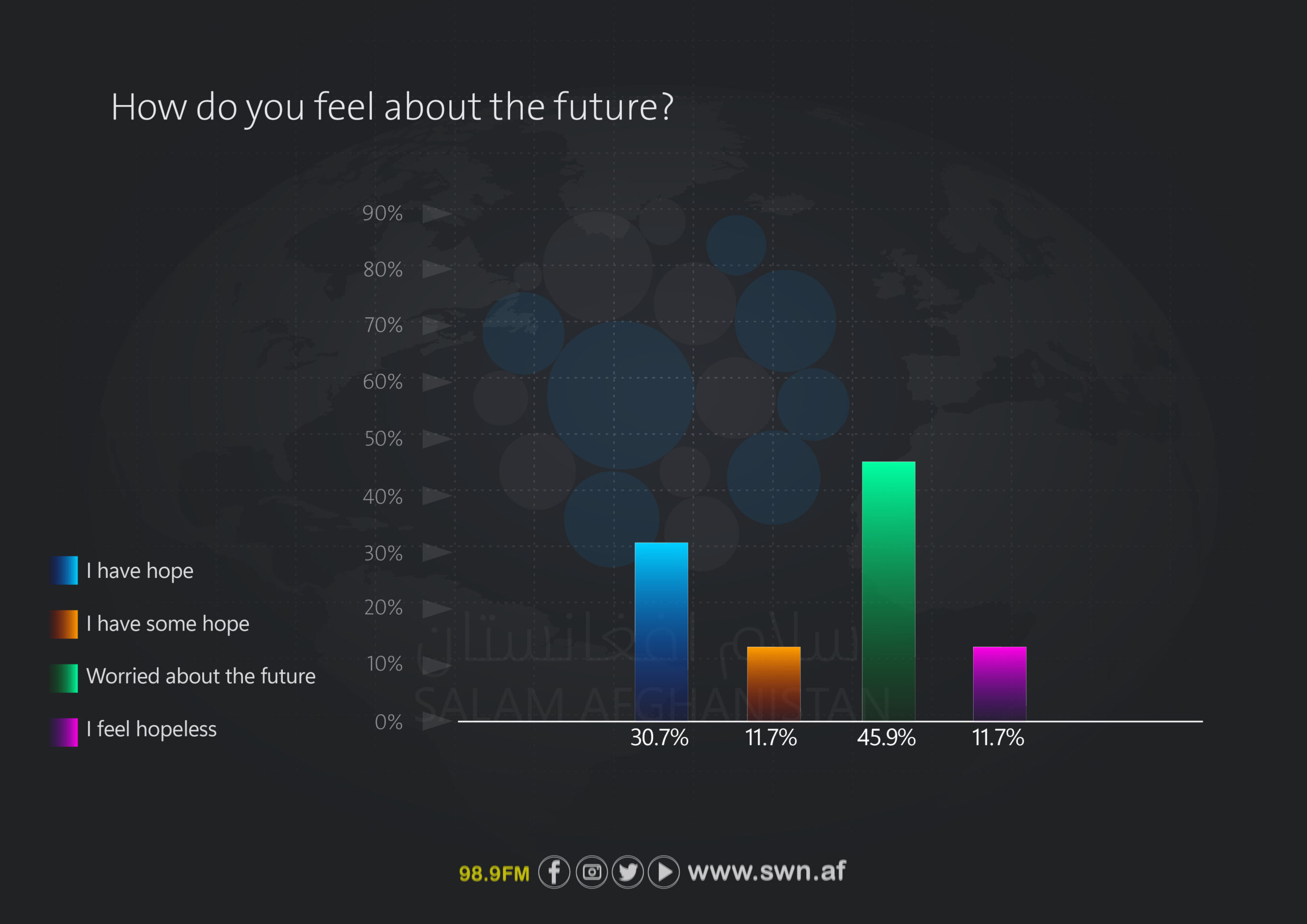
Regarding feelings about the future, 45.9% of women are worried, 30.7% feel hopeful, 11.7% have low hope, and 11.7% feel hopeless.
In terms of spending time on entertainment activities, 39.9% of women sometimes engage in them, 32.7% rarely do, 14.7% do so regularly, and 12.7% do not spend any time on entertainment.

In terms of feeling successful and satisfied with their work, 48.1% of women feel successful, 23.7% feel very successful, 22.4% feel somewhat dissatisfied, and 5.7% feel completely dissatisfied.

Regarding whether they have the feeling that life is meaningless and have no future goals, 62.3% said they have no future goals, while 37.7% said they have future goals.

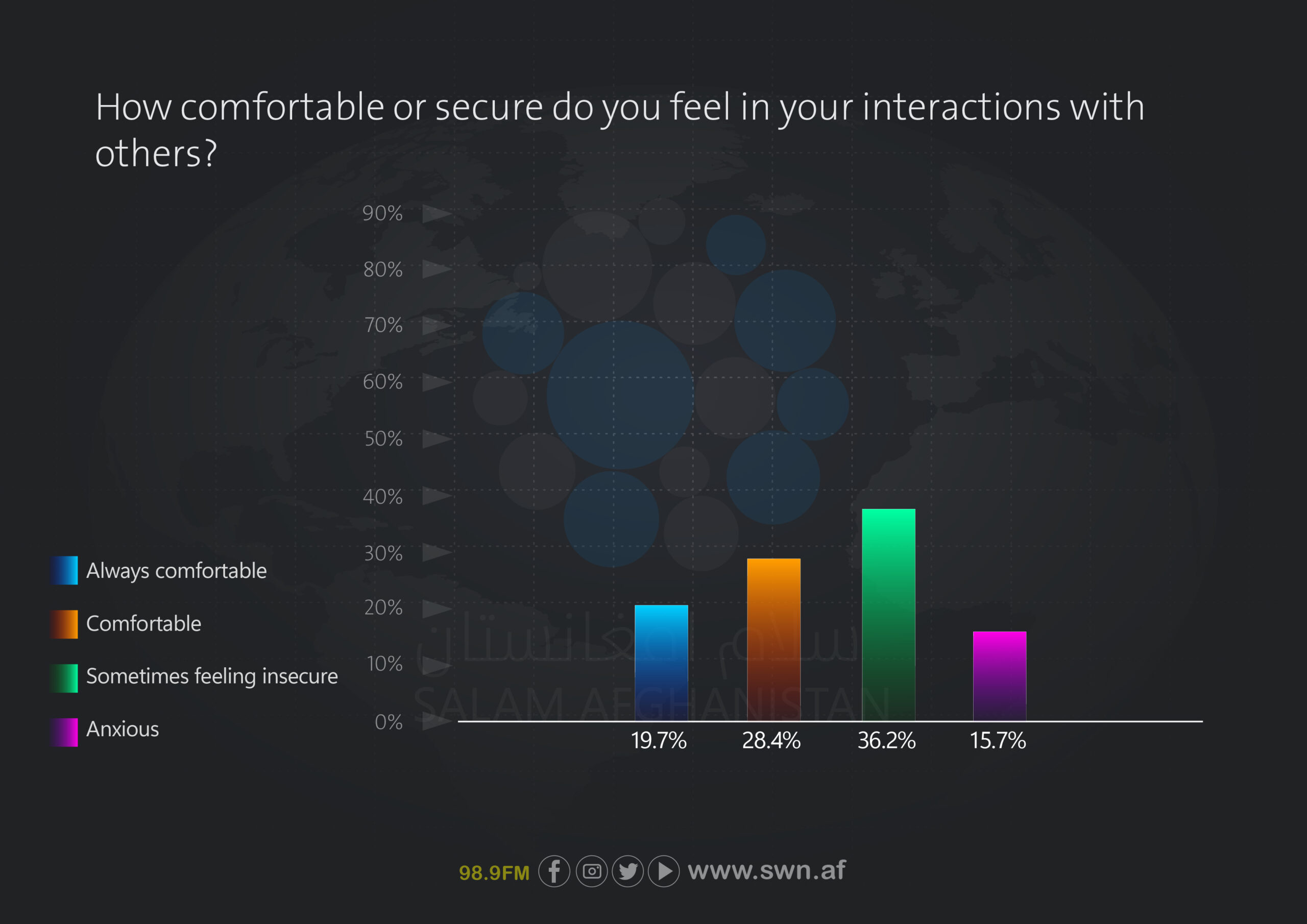
In terms of feeling comfortable and safe when interacting with others, 36.2% said they sometimes feel insecure, 28.4% feel comfortable, 19.7% feel always comfortable, and 15.7% feel anxious.
Regarding whether they thought of harming themselves, 48.6% never thought of doing so, 31.2% sometimes thought of it, and 20.2% have thought of harming themselves.

Regarding whether they consider seeking help from a psychologist or counselor, 38.7% seek help, 36.9% think about seeking help, 13.2% do not need help, and 11.2% never consider seeking help.

Recommendations
To reduce the level of depression among women in Afghanistan, the following recommendations are presented to the government, health institutions, and the media:
- It is recommended that government authorities take measures to reduce the level of depression among women by establishing treatment centers with psychotherapeutic facilities, providing education and awareness programs, and strengthening social support and economic empowerment for women.
- Health institutions can help reduce women’s depression by providing life skills training, conducting training programs to combat violence, using modern treatment methods, and supporting women’s physical health.
- The media can reduce the level of depression among women by conducting support campaigns and organizing educational and awareness programs on women’s rights.
Reporter: Momina Zarif
Translated by: Friba Qaderi