For many women in Afghanistan, Eid is not just a celebration; it is an opportunity for families to gather, strengthen their bonds, and keep alive traditions that have been rooted in the country’s culture for generations. During this time, homes are filled with the colors and atmosphere of Eid, as women enthusiastically prepare Eid sofras—Sofras that symbolize hospitality, love, and the preservation of long-standing traditions.
27 women in Bamyan, Daikundi, Balkh, Takhar, Nangarhar, Kandahar, Faryab, Badakhshan, Baghlan, Samangan, Kapisa, Parwan, and Jawzjan told Salam Watandar that, to decorate their Eid sofras, they prepare sweets such as cakes and cookies, Gosh-e-feel, Roghan Joshi, and Qatlama.
These women say that despite economic pressures, they strive to keep their homes joyful and preserve local customs by baking homemade sweets and arranging Eid sofras.
Aziza, a 33-year-old resident of Balkh, says that she prepares different kinds of sweets for Eid and to host her guests. She adds, “We make homemade sweets ourselves. We bake Parata, cakes, and cookies, and we also buy almonds, chickpeas, and Simiyan, along with sweets and chocolate, from the market.”
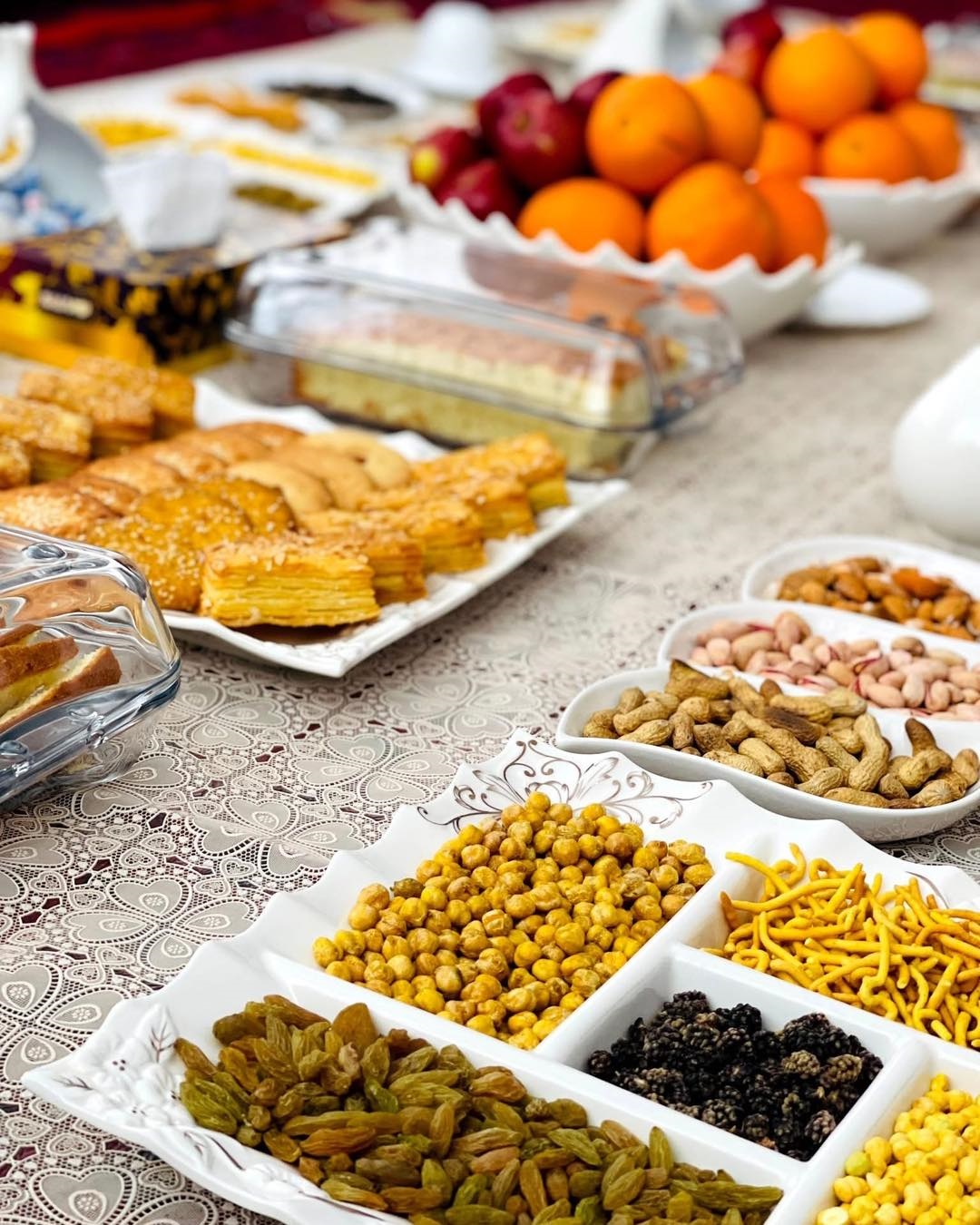
Fariba, a 21-year-old resident of Jawzjan, says, “We prepare Khajoor, cakes, and cookies; on our Eid sofra, we place raisins, chickpeas, almonds, pistachios, chocolate, and simiyan. We buy some items from the city and prepare others at home.”
Gosh-e-feel and salty cookies are among the most common Eid sweets in Takhar. Lida Mirzayi, a resident of Takhar province, says that she prepares her Eid sofra by baking these sweets at home, and she adds, “We definitely place dried fruits such as raisins, chickpeas, almonds, and pistachios, as well as fresh fruits, on the sofra. Homemade cookies play a very important role, and most people really like them.”
Marwa, a 25-year-old resident of Kapisa, also says that their Eid sofras include homemade foods, dried fruits, and sweets. “During Eid, the sweets we prepare are cakes and cookies, and our Eid sofra includes dried fruits, fresh fruits, cakes, and cookies.”

However, rising prices and economic challenges have made it difficult for some women to celebrate Eid as they did in the past.
Zainab, a 23-year-old resident of Parwan, says that due to economic difficulties, she was unable to prepare as many sweets for this year’s Eid al-Fitr. She says, “This year I personally spent less on Eid because the economy has become weaker compared to last year.”
Marwa Sadat, a resident of Nangarhar, says, “In the past, people visited their friends more often, but now some things have changed. Visits have decreased and prices have risen, which has affected celebrations somewhat.”
Nevertheless, a number of social experts and women’s rights activists say that women play a very prominent role in preserving Eid traditions and customs, which is why many of these practices have still been maintained in society.
Shoaib Ahmadi, a social expert, says, “Women have a more visible role in Eid preparations because they carry most household responsibilities. From cleaning the house to preparing various foods and arranging new clothes, preserving traditions within families largely rests on women’s shoulders.”
Zakia Alizada, a women’s rights activist, says, “We see women preparing for Eid; this preparation is itself a tradition, and women have a very strong and influential role in both the family and society.”
Eid al-Fitr is one of the most important religious and cultural occasions in Afghanistan, celebrated each year with the preparation of sweets, dried fruits, wearing new clothes, and family visits—a celebration in which women play a fundamental role in keeping its warmth and spirit alive.
Reporter: Zarafshan Sharifi