A woman in Farah province has launched a small quail-farming business in an effort to reduce her economic dependence and play an active role in supporting her family’s expenses. Najiba Naji says she started raising quails with a small investment in a limited space inside her home.
“After the new government came to power and women were confined to their homes, I began thinking about what kind of work I could still do. There was some land available, and with the cooperation and advice of several local women, I started home-based production.” she explains.
She had previously tried to support her household through agriculture, but her efforts were cut short due to water shortages and drought in the province.
“I used to have a greenhouse where I grew vegetables and medicinal plants, but because of water scarcity I could no longer manage it. It has now been about a year and a half since I started quail farming.” she says.
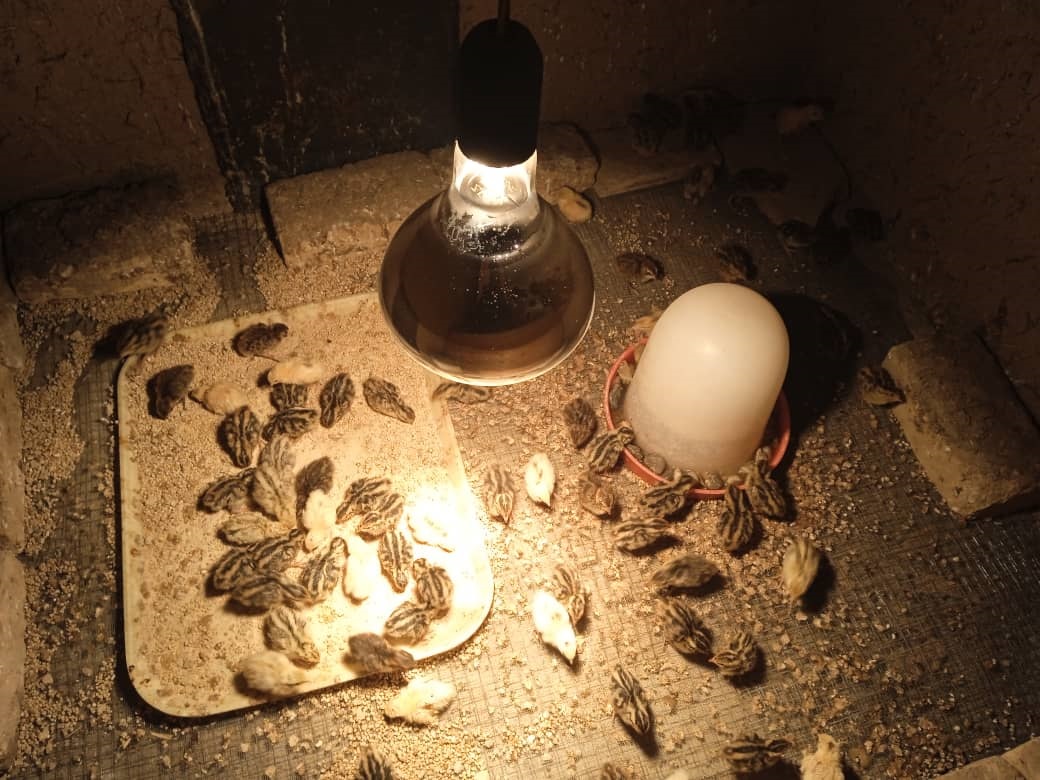
For Najiba, quail farming is not only an alternative but also an opportunity to meet part of her family’s financial needs. According to her, the products have received strong interest in the market, particularly among athletes.
“The eggs sell for five Afghanis each, and the meat sells for between fifty and seventy Afghanis. People are interested—especially athletes—because they consider quail eggs and meat healthier than chicken.” she adds.
She describes quail farming as a low-cost, fast-return activity and believes that, with proper support and access to training and markets, more women could take up this work. She says,
“In any case, it has some impact. Economically, it helps with expenses—at the very least, the meat and eggs contribute to the family. Besides that, I sell some of the products, which has been somewhat helpful.”
Najiba learned quail-farming techniques through informal channels—an approach that has become one of the few available paths to education and skill development for many women and girls today.
“Now that it’s the internet age, I have watched and used some online content.” she says.
She believes that women’s capabilities go beyond existing limitations and that, with support, they can play an effective role in both family and community economies.
“Women in Afghanistan are capable of doing many kinds of work, and if they receive financial support, many more women will be able to do so.”
Meanwhile, some experts say quail farming can be a practical option for generating sustainable income, particularly for women. Mahmood Shah Haidariyan, a university lecturer, says, “Women can start this work with very little capital—even with just a few cages and a small number of quails. It does not require large areas of land or complex equipment, and most of the work can be done at home, which makes it especially suitable for women.”
He emphasizes that if such initiatives are supported financially and educationally, they can play an important role in improving household livelihoods and increasing women’s economic participation.
It is worth noting that in recent years, an increasing number of women have started small home-based businesses to support their families’ livelihoods while maintaining their economic and social roles.