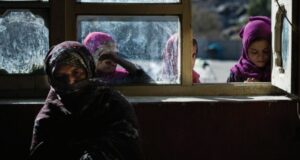
The new academic year has begun in Afghanistan, yet educational restrictions on girls continue. Over the past several years of these limitations, some girls have married, some have turned to online education as an alternative, others have pursued vocational skills, and a significant number have become occupied with household duties. To examine the alternative paths taken by these girls, Salam Watandar interviewed 15 girls deprived of education and six mothers.
Sahar, a 25-year-old from Badghis who has turned to online education, says, “I did not remain idle; I kept thinking that education must continue, even if its path changes. I am now studying journalism at an online women’s university because I have always been interested in media, reporting and telling different issues. This online program became a valuable alternative that allowed me to resume my studies.”
Ayesha, 20-year-old also from Badghis, who studies online, says, “The hardest part of these years was being separated from my studies, my friends, and my dreams. I felt that I had lost many opportunities. I studied at home and sometimes followed online lessons through my mobile phone, but access to facilities was not always available. It was helpful, but it could not replace in-person education.”
Some other girls have turned to vocational training and handicrafts. Hasan Ara, a 28-year-old resident of Jawzjan, says, “In my opinion, the greatest thing I lost was my education. I became very depressed. During this period, I focused only on sewing. Before the university closed, I was studying computer skills, and after the closure, I continued with tailoring.”
Maryam, a resident of Badakhshan, says, “Since I cannot continue my education at school, I have enrolled in a religious school (Madrasa) and hope to successfully pursue my studies there. My second path toward learning and progress is to serve religion in the future and become a good teacher.”
The report also includes interviews with six mothers. They say their daughters have become impatient and, in some cases, depressed due to the lack of access to education. They emphasize that, to prevent the negative effects of being away from school, they try to keep their daughters engaged in household activities and encourage them to read books.
Khadija, a 46-year-old from Bamyan, whose two daughters have been unable to continue school or university, says, “It is very difficult. Every day my daughters become more hopeless than the day before. I have also become depressed like them; I don’t feel well, and I cannot do anything. I try to keep them occupied—they help with housework, read books at home, and participate in online lessons—but they have become discouraged.”
Shayesta, a 38-year-old mother of four children, says she cannot afford online classes for her daughter who has been deprived of education, “As much as we could afford, we enrolled her in online courses—once in a home-based school and in a religious school —but now our economic situation is weak, and we can no longer afford even these online classes. For now, she reviews her lessons at home.”
The mothers and girls interviewed for this report hope that one day the doors of education will reopen for girls. They call on the Islamic Emirate to reopen schools and universities as soon as possible so that girls can achieve their dreams and aspirations.
Freshta from Panjshir, a mother of four children, says, “Our request to the government is to allow girls to study—both school students and university students—so families can feel hopeful and girls can help build the future.”
Sahar Akbari, an economics student, says, “I still hope that one day I will return to a real university and continue my education in an in-person academic environment. I see my future as bright because I continue to strive, learn, and gain experience, and I believe that no restriction can completely stop a determined girl.”
Meanwhile, Tahmina Mangal, women’s rights activist, warns about declining literacy and rising poverty and calls on the Islamic Emirate to reopen schools and universities to girls. She says,
“The closure of schools and universities to girls for more than four years will lead to increased illiteracy, psychological problems, poverty, and social backwardness. When girls—who make up half of society—are deprived of education, the future of families and society is harmed. Our request to the government is to reopen the doors of education as soon as possible.”
Experts and psychologists also warn about the harmful psychological and social consequences of depriving women of education. Jamaluddin Sulaimani, an education expert, says, “The closure of universities and educational institutions to girls will result in a backward society. It also has economic consequences; many people have become unemployed, and many others have been deprived of literacy and education. This is an irreparable loss for society in Afghanistan.”
Mohammadullah Baloch, a psychologist, says, “School and university are essential psychological needs for every individual, especially girls. If they are deprived of this need, serious problems such as hopelessness, depression, forced marriages, social instability, economic decline, and… may arise.”
Shoaib Ahmadi, a sociologist, says that depriving girls of education will result in a shortage of skilled professionals, “When several years of interruption occur in education, individuals may lose the ability and motivation to continue. Even if education resumes, no matter how much encouragement is given, there will still be a shortage of professionals. Since girls make up half of society, when they do not study, it means fewer specialists and slower social and economic progress.”
However, Qutbuddin Mujtahid, a religious scholar, states that Islamic Sharia does not determine any prohibition to stop education. He says, “If a girl wishes to pursue further learning, advanced religious sciences such as jurisprudence and hadith—which are a communal obligation (Farz Kifayah) —as well as beneficial worldly sciences such as medicine and skills training are permissible and sometimes recommended (Mustahab). No specific limit has been set for ending education; the condition is that religious obligations are not neglected.”
After the Islamic Emirate returned to power in 2021, girls above sixth grade were barred from continuing school education, and in December 2022, university education for women was also suspended. More than four years have now passed during which girls in Afghanistan have been deprived of access to secondary and higher education.
Reporter: Sharifa Qasemi