Women’s right to work; Allowed by religion, prevented by families
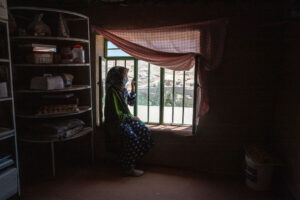
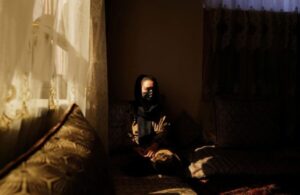
Although scholars of ‘Fiqh’ and Sharia say that, according to Hanafi jurisprudence, a sane and mature woman has full legal capacity and may work outside

Although scholars of ‘Fiqh’ and Sharia say that, according to Hanafi jurisprudence, a sane and mature woman has full legal capacity and may work outside

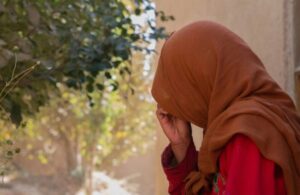
She says, “I truly lost hope at first and fell into depression. Despite all these challenges and restrictions, I did not want to give up on my goal. I want to become a doctor, and I am confident that one day I will achieve my dream.”

Farzana, 30 years-old also resident of Kunduz, said, “Loneliness and avoiding society have caused me anxiety and depression, and now I take antidepressants.”

Fatima, a resident of Badakhshan, told Salam Watandar: “I personally prefer things to be in my own name, but my family says that in some situations it is better to use a surname or the name of a male family member so that people talk less. People think that mentioning a woman’s name in public leads to suspicion or gossip, so that’s why they avoid it.”

She considers only about 40% of her job is secure. She explained, “I don’t have a permanent contract, and even small changes in the organization’s budget or management can risk my job. I support my household and three children, so I often work beyond my capacity. It makes me very tired and sometimes discouraged.”

UNODC’s report recently shows that drug use in Afghanistan is still mainly influenced by traditional substances; however, the consumption of synthetic drugs and the misuse of medical medicines are on the rise.

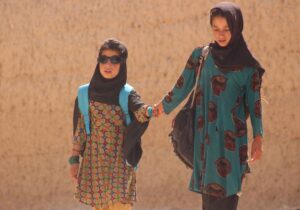
Despite these rights, many women still struggle in practice. Fatima Ahmadi, a 29 years old teacher, says, “My husband decides how my income is spent. Sometimes I can give my opinion, but he always makes the final decision. He has forced me to hand over my full salary even when I needed it myself.”

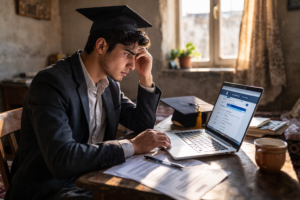
“For many Afghans, education is not just a right. It is a necessity. If we do not study, we have nothing to stay for, nothing to survive on. Education is a way to escape a fate that threatens us,” Samir says.

He said: “I studied Turkish online through YouTube for about four months, and it was very useful. Today, we can study from home and create a university-like environment for ourselves. Online learning is also very cheap—almost free. You only need internet.”

On Sunday night, 31 August 2025, a powerful earthquake struck eastern Afghanistan, especially Kunar Province. The tremors were also felt in nearby provinces. According to reputable global seismic centers, the earthquake registered 6.0 on the Richter scale, which is relatively rare in Afghanistan’s history of natural disasters. Most districts of Kunar were affected, with the strongest shaking felt in Nurgal, Sawkai, Khas Kunar, and some other districts. This earthquake has been recorded as one of the deadliest in Afghanistan in recent years. As a result, around 2,200 people lost their lives, more than 4,000 were injured, and over 8,000 homes were destroyed.

Many children across different provinces of Afghanistan says that poverty and the absence of parental care have kept them from attending school. Instead they are

Afghan youths are leaving their country in search of economic opportunities despite serious risks abroad. Iran remains a primary destination, even amid political unrest and security threats. Salam Watandar’s findings indicates that Afghan young people are migrating to Iran despite the country is facing waves of internal instability and the threat of an external conflict.