UN-Habitat: Many people lack access to safe water
The United Nations Human Settlements Programme (UN-Habitat) in Afghanistan says that many people in the country do not have access to safe water and sanitation.

The United Nations Human Settlements Programme (UN-Habitat) in Afghanistan says that many people in the country do not have access to safe water and sanitation.

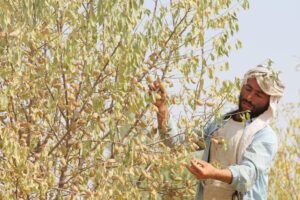
Grafting and propagation through cuttings are considered important and effective methods in agriculture. In Laghman province, these methods are being used to produce improved and resilient saplings from fruit trees and other plants.

The survey on Artificial Intelligence and Afghan youth was conducted with 1,154 respondents across 32 provinces of Afghanistan. The findings indicate that artificial intelligence has become more deeply embedded in the daily lives of Afghan youth than expected.

Studies show that migraine is more common in women than in men, and one of the main reasons is hormonal changes in women’s bodies. These changes, which occur during the period, pregnancy, and even daily stress, can make the pain worse.

Today, artificial intelligence (AI) is no longer merely a scientific concept; it has become part of the daily lives of youth. From education and work to personal advice, this technology is gradually finding its place among Afghan youth as well. A survey by Salam Watandar, based on 1,154 young respondents (50.6% men and 49.4% women) across 32 provinces of Afghanistan, shows that 84.1% of youth have used artificial intelligence at least once in areas such as work, education, and personal life, while 92% of respondents are familiar with AI.

Findings from Salam Watandar, based on interviews with experts and 20 women who have experienced gender inequality within their families, show that this issue has had serious physical and psychological effects on women.

Although opium poppy cultivation has been completely banned by the leadership of the Islamic Emirate, a number of residents in Badakhshan have turned to cultivating the crop again this year. Some farmers say that the lack of suitable livelihood alternatives and limited employment opportunities have forced them to continue growing opium poppy.

Giving women in baad — a practice aimed at settling disputes between families — remains a harmful and ongoing custom in some parts of Afghanistan.

A number of youth in Samangan province say they are working to promote a culture of reading among the people, particularly the younger generation, by establishing private libraries and cultural institutions.

The United Nations Population Fund in Afghanistan (UNFPA), on the occasion of the International Day of the Midwife, has announced that in order to save the lives of mothers and newborns, one million more midwives need to be trained.

After several consecutive years of drought, this year’s widespread rainfall in Herat—particularly in the northern districts of the province—has brought renewed hope for increased harvests of grains and legumes. Officials from the Herat Directorate of Agriculture say that the condition of rainfed crops is relatively good, and that this year’s rainfall could mark a different season for agriculture and farmers.

Doctors warn that violence against women during pregnancy has irreversible consequences. However, some women, in interviews with Salam Watandar, describe experiencing severe violence during this period—violence that has even resulted in miscarriages.