Consecutive droughts, unusually high temperatures, and water shortages have left orchard owners in Herat struggling with the spread of plant pests and declining crop yields. Orchard owners say that despite repeatedly spraying their orchards and spending large sums on pesticides, plant pests continue to damage their crops.
Abdul Azim, an orchard owner from Ziarat Jah village in Guzara district, has 35 jeribs of land planted with grapes, pomegranates, peaches, and apples. He says unusually warm temperatures during last winter, combined with a lack of sufficient cold weather, disrupted the plants’ natural winter dormancy, creating favorable conditions for plant pests to spread in his orchards. He says this has also affected this year’s harvest.
“Due to the increase in plant pests, I had to spray my orchard five times this year and spent more than 35,000 Afghanis on pesticides. Although repeated spraying has weakened my grapevines and other fruit trees, I would not have been able to save even this much of my harvest if I had not sprayed them,” he says.
Abdul Zaher, another orchard owner from Siawashan village in Herat, says the growing number of plant pests and the repeated cost of spraying, despite these efforts producing no effective results, have placed additional economic pressure on orchard owners.
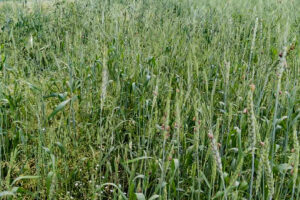
“This year, plant pests have spread more widely than in previous years. Insects damaged wheat fields earlier in the year, and now our orchard crops are also being affected by various pests and diseases, such as wilt (Shol-zadagi). This year, 80 to 90 percent of the orchard produce in this village has been lost due to these pests,” he adds.
Saleh Mohammad, another orchard owner in Kaftar Khan village of Guzara district, is facing a similar situation. He complains that fruit production in his orchard has dropped significantly and that repeated pesticide spraying has failed to stop the spread of plant pests.
“Plant pests are becoming more widespread each year, and no matter how often we spray pesticides, it does not help. Our harvest this year is much lower than it was last year,” he says.
Orchard owners in Herat are calling on the Department of Agriculture, Irrigation and Livestock to strengthen its monitoring of the pesticide market, prevent the sale of low-quality pesticides, and provide greater support and cooperation to farmers in effectively combating plant pests.
Excessive pesticide use; a solution or part of the problem?
While orchard owners see pesticides as a way to save their crops, agricultural experts warn that repeated and improper pesticide use not only fails to control plant pests but can also cause them to develop resistance to pesticides and lead to environmental damage.
Malina Shabanpoor, an agricultural expert, identifies whiteflies, scale insects, mites, powdery mildew, and plant rot as some of the most common plant pests and diseases. She emphasizes that these problems should be addressed through integrated pest management.
“Pesticides not only cause pests to develop resistance to chemicals but also pollute the air and water. Farmers should consider chemical pesticides as a last method of controlling plant pests and diseases. Instead, they should use alternative and integrated methods, such as proper irrigation management, ploughing, and weed removal,” she adds.
Meanwhile, officials at the Herat Department of Agriculture, Irrigation and Livestock say they have taken measures to control plant pests and that the spread of pests and diseases has been better controlled this year than last year.
Nasir Ahmad Qazizada, a specialist at the Herat Department of Agriculture, Irrigation and Livestock, confirms the presence of wheat sunn pests (Kafshak), plant mites, locusts, and grape moths. However, he says the overall incidence of plant diseases has decreased compared with last year.
“To combat with these pests, insect traps have been distributed to some farmers. The department has also monitored the pesticide market as part of its efforts to manage and control plant pests and diseases. Farmers have received guidance and advice on planting schedules, crop selection, irrigation management, weed control, and the proper use of pesticides,” he says.
Orchard owners in Herat continue to face these challenges as the province has experienced a significant decline in rainfall, falling water reserves, and rising temperatures in recent years. According to the Food and Agriculture Organization of the United Nations (FAO), climate change and prolonged drought have caused serious shortages of the water resources needed during the growing season.
Reporter: Lida Habibi