Over the past few days, representatives from dozens of countries have gathered at the Antalya Exhibition Centre in Turkiye to discuss the future of the Earth’s climate. Meanwhile, in Balkh, a farmer looks down at a well that is losing more water every year. Afghanistan, one of the countries most vulnerable to climate change, has an empty seat at the conference.
A major conference, an even greater absence
The global climate conference, COP31, is taking place in Antalya, Turkiye, from 9 to 20 November. Government representatives, experts, international organizations, and environmental activists have gathered to discuss several key issues, including reducing greenhouse gas emissions, climate finance, adapting to climate change, clean energy, water management, and food security.
The arrangements for this year’s conference are unusual. Turkiye is hosting the conference and serving as its official president, while Australia is leading the negotiations. Antalya is expected to be the center of discussions and decisions that will determine vulnerable countries’ access to funding, technology, and technical support. Although Afghanistan contributes very little to global greenhouse gas emissions, it is one of the countries most affected by the climate crisis. Yet, it has no place among the decision-makers.
This contradiction is the main focus of this report by Salam Watandar Radio’s Maseer Sabz program. The country that bears the greatest costs has the least say in the very forum where decisions are made about how to compensate it for those costs.
Afghanistan in Antalya: who is attending, and who is not?
On 3 November, the Associated Press reported that officials from the Islamic Emirate had been invited to attend the conference as observers and planned to participate in a UN climate conference for the second time. Rohullah Amin, Head of Climate Change at the National Environmental Protection Agency, confirmed this plan to the Associated Press. A Turkish official also said that representatives of the Islamic Emirate would attend COP31 as observers. Two years earlier, the Islamic Emirate had participated in the Baku climate conference for the first time since returning to power in 2021.
A few days later, however, a different picture emerged. Domestic media reported that the Afghan delegation had decided not to attend the conference, despite receiving an official invitation from Turkiye. Last year, the Islamic Emirate also expressed dissatisfaction at not being invited to COP30, despite Afghanistan’s vulnerability to climate change.
This has shifted the question from “presence” to a more difficult one: Who can represent Afghanistan, and with what authority? Nayab Seddiqi, a climate change and water resources expert, tells Salam Watandar that the issue is not simply whether an invitation is sent. The question is which delegation has the authority to fully represent Afghanistan in COP negotiations.
What does observer status mean, and why is it better than nothing?
Many experts who spoke to Salam Watandar emphasized one point: even observer status would be valuable for Afghanistan.
Khalid Behzad, an environmental expert, explains the difference. Official representatives of countries can take part in negotiations and decision-making under the conference rules and have the right to vote. Observers may attend some public sessions and side events, but they do not have voting rights or the power to make decisions. Although he accepts these limitations, he says: “Being an observer is still much better than nothing.”
According to him, the conference will offer many opportunities to meet and talk with representatives of countries and international organizations on its sidelines. Afghanistan could have used these opportunities to discuss stalled environmental projects and present its financial and technical needs.
Nayab Seddiqi, another environmental expert, shares the same view. He believes that even as observers, Afghan representatives could have raised the country’s environmental problems, met with specialists, and learned from other countries’ experiences in managing drought, protecting water resources, and developing early warning systems for floods. He also warns:
“People’s livelihood problems should not be put on hold until political disagreements are resolved.” Farmers without water and families affected by floods cannot afford to wait for political agreements.
Shoaib Sadat, a climate change expert who is attending COP31, offers a dual perspective. He says that Afghanistan’s official presence at the conference could create opportunities for direct engagement with international organizations and development partners. This could help the country design and secure funding for practical projects in the future.
Much of international cooperation develops through face-to-face meetings, project presentations, and discussions with different organizations. Without an official representative, accessing these opportunities becomes more difficult.
However, he emphasizes that a country’s official absence does not mean that all opportunities for cooperation are lost. International organizations, non-governmental organizations, and independent institutions can still work to support vulnerable communities.
He also adds that COP31 will only be meaningful for Afghanistan if global decisions and commitments lead to practical projects that benefit affected communities. In his view, Afghanistan’s problems should not simply be presented through figures and reports; practical solutions must also be developed to reduce people’s vulnerability.
What do farmers say?
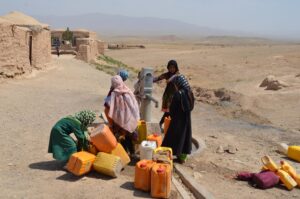
For farmers in Afghanistan, climate change means much more than international conferences. They experience the crisis through dry farmland, declining water levels in wells, reduced crop yields, and incomes that no longer meet their families’ needs.
Balkh: Azizullah, a farmer, says that continued drought and water shortages have reduced crop yields and severely affected his family’s income. He wants COP31 to include practical programs to support farmers. He also raises a question that remains unanswered: “If drought conditions continue in the coming years, as they are now, what measures will be taken to support the people of Afghanistan?”
Nangarhar: Khal Mohammad, a farmer from Nangarhar, says that declining rainfall over the past few years has put agricultural land at risk of destruction. He believes that Afghanistan’s presence at COP31 could have helped reflect the challenges faced by farmers and drawn international attention to the country’s agricultural situation. His request is simple: “We want the opportunity to restore our land, provide for our families, and contribute to strengthening the country’s economy.”
Herat: Faraidon, an orchard owner from Herat, says that climate change and drought have seriously affected farming and orchard production. In his view, the problem has two sides: “Drought on one side and floods on the other.” He calls on world leaders and international organizations to cooperate with farmers in Afghanistan.
These three accounts from different parts of the country share one important feature: none of these farmers speaks only about receiving aid. They speak about having the opportunity to stay, work, and produce.
When the numbers speak
The experiences of farmers are also reflected in United Nations reports.
- The UN Office for the Coordination of Humanitarian Affairs (OCHA) estimates that approximately 21.9 million people, nearly 45 percent of Afghanistan’s population, will need humanitarian assistance in 2026.
- According to OCHA, drought in 2026 has affected approximately 64 percent of Afghanistan’s arable land. The UN Humanitarian Coordinator for Afghanistan has also said that prolonged drought has affected 70 percent of the population, most of whom depend on agriculture.
- OCHA estimates that 3.7 million children will face acute malnutrition in 2026. According to the organization, child wasting has worsened in 26 of Afghanistan’s 34 provinces compared with 2025.
- Approximately 80 percent of rural households depend on agriculture, and reduced rainfall has destroyed crops in many areas. The United Nations has identified Badakhshan, Faryab, Sar-e Pol, and Takhar as the four provinces most vulnerable to drought.
- OCHA reports that natural disasters affected approximately 92,000 people across 34 provinces between January and August 2026.
- The UN’s $1.7 billion appeal for Afghanistan had received only 14 percent of the required funding by June 2026.
This is not the first time that this situation has been interpreted as “three simultaneous crises.” Indrika Ratwatte, the UN Humanitarian Coordinator, has identified drought, the return of millions of migrants, and a sharp decline in international aid as Afghanistan’s three major crises. Olga Cherevko of OCHA has said that drought is making life “impossible” in some remote villages. She has also referred to “ghost villages”, where everyone who was able to leave has already done so.
These figures convey two important messages for climate negotiations. First, Afghanistan’s crisis is not just a possible future scenario; it is happening right now. Second, the global response, both in terms of financial support and political representation, falls far short of the scale of the crisis.
Climate justice through the voices of youth
Alongside experts and farmers, youth also have a message to share. According to Shoaib Sadat, a conference bringing together youth from different countries was held before COP31 began. One of its main messages was that youth no longer want to be just listeners at climate events. They want to play an active role in decision-making and developing solutions.
Sadat considers Afghanistan a clear example of a vulnerable country. Its people face drought, declining water resources, flash floods, damage to agricultural land, and displacement every day. He calls on youth around the world not to forget Afghanistan in climate discussions. In his view, climate justice becomes meaningful only when the problems of vulnerable countries are taken into account in global decisions and practical and financial support is provided to address them.
What have the media done?
In recent months, Salam Watandar has produced dozens of reports and programs to highlight the consequences of climate change on people’s lives in Afghanistan. Reports such as ” El Niño 2026–2027; a possible opportunity and risk for Afghanistan’s water and agriculture”; ” Planting calendar vs. climate change; Kapisa farmers’ message to COP31″; ” 120-day winds and dust in Herat; A warning sign of climate change ahead of COP31″; ” Thin livestock and dry pastures; Faryab livestock owners’ message to COP31″ and “30,000 people in Farah displaced by climate change; a message for «COP31»”.
Questions that must be answered after Antalya
International meetings are not measured by their declarations. The real criterion is something else: what specific cooperation will emerge following the conference, and what tangible results will they bring to people’s lives.
Nayab Seddiqi makes the same point: the success criterion for an international conference should not be presence alone. This raises several important questions:
- Climate funds are more easily accessible to countries that have a presence and a voice in negotiations. How will the funding allocated for drought adaptation reach villages in Afghanistan, and through which channels?
- If official representation is not possible, to what extent can non-governmental institutions and international organizations fill the gap? Sadat says this option remains open. However, OCHA warns that a shortage of funding is already limiting humanitarian operations.
- The United Nations has recommended prioritizing rural water and livelihood programs, including investment in irrigation, drought-resistant agriculture, and local markets. These are exactly the things that the farmer from Balkh and the orchard owner from Herat are asking for.
- At a time when drought and floods are threatening farmers simultaneously, early warning systems and better water management require outside expertise and technology more than ever. In other words, the very outcomes that can be achieved through discussions on the sidelines of the conference.
COP31 is continuing in Antalya. For millions of Afghans citizens, climate change is not a problem of the distant future. It is a daily reality for farmers struggling with dry land, reduced harvests, water shortages, rising living costs, and migration.
Their demands are clear. They do not want to be described only as “victims of climate change” in global reports and statistics. They want real opportunities and support to save their land, manage water resources, provide for their families, and remain in their villages.
If Antalya is to speak of “climate justice,” it must respond to these demands, whether Afghanistan is present or not.
Reporter: Liza Omari
A report from the “Maseer Sabz” program