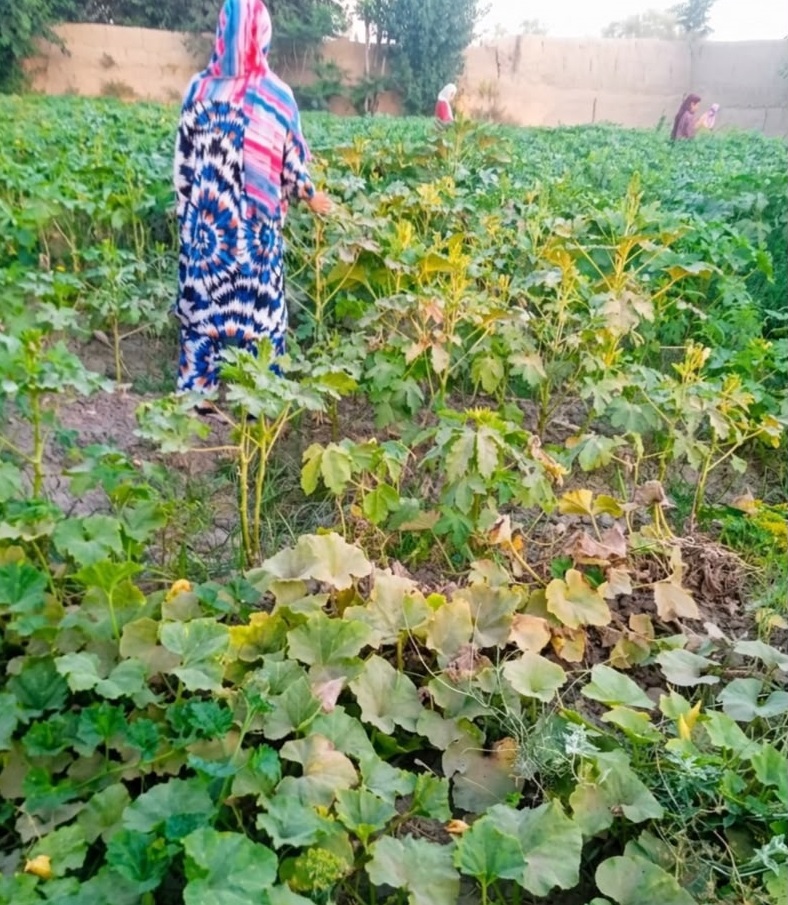
Consecutive droughts, declining rainfall, and drying water sources in Jawzjan have changed farming methods and the lives of farmers in the province. A number of women farmers in Jawzjan say they are striving to maintain their families’ food security and income by using drip irrigation, improving water management, establishing home gardens, and diversifying their agricultural production.
Sayera, a 42-year-old resident of Ghora village in Jawzjan who has 15 years of farming experience and covers part of her family’s living expenses through farming, says droughts, storms, and hail in recent years have reduced her crop yields.
“We ask the government and organizations to cooperate with us, provide better and more professional training, and provide more facilities so that we can cope with these problems and improve our farming. In recent years, we have been using wells and solar-powered systems for irrigation. Because of the water shortage, we also use a drip irrigation system to minimize water waste,” she adds.
Seddiqa, another 38-year-old farmer in Ghora village who is responsible for looking after a four-member family, says she has been covering her family’s living expenses through farming for the past four years.
“Drought has destroyed our farming, and we have been forced to use wells and solar-powered systems to provide water for our farmland. Because of the water shortage, we also use a drip irrigation system to reduce water waste,” she says.
According to her, if women are provided with technical training, modern equipment, and more support, they can play an effective role in ensuring their families’ food security.
Meanwhile, agricultural experts emphasize that climate change has changed farming patterns in Jawzjan in recent years.
Abdul Sattar Jalal, an agricultural expert, says rising temperatures, declining rainfall and limited water resources, reduced fodder, and lower agricultural production have affected the livelihoods of thousands of families.
“Climate change has had a greater impact on the lives of people in rural areas in recent years. Rising temperatures, declining rainfall, limited water resources, and lower agricultural production are among the problems that rural families are faced with,” he says.
He adds that women in rural areas play an important role in cultivating vegetables, managing home gardens, livestock farming, and preserving and processing food. However, declining water resources have also limited their ability to produce.
He also emphasizes that expanding water-saving irrigation systems, providing training on methods for adapting to climate change, and improving women’s access to agricultural facilities are among the most important measures to reduce their vulnerability.
On the other hand, Zabihullah Khairandish, spokesperson for the Jawzjan Department of Agriculture, Irrigation and Livestock, says the department has taken several measures to empower women farmers. In cooperation with partner organizations, it has established more than 250 greenhouses around Sheberghan city and across the districts.
“More than 500 women in Jawzjan are engaged in greenhouse farming, mushroom production, saffron cultivation, and other agricultural activities. In the future, we plan to provide more training and support for women farmers so that their contribution to agricultural development and the local economy can increase,” he adds.
According to the report, despite drought, declining rainfall, and water shortages, women farmers in Jawzjan are striving to maintain their families’ food security and income by using drip irrigation, establishing greenhouses, improving water management, and diversifying their agricultural production.
Reporter: Marina Barakzai