“My son was 16 years old. We were not at home. When we returned, this terrible thing had already happened. My son had taken his own life; he had hanged himself.” These are some of Farzana’s words, a 40-year-old mother from Kapisa who, two years ago, returned home and found her son no longer breathing. Farzana says that her son had committed suicide—a death that marked the end of her son’s life but the beginning of a deep and strange pain for his mother, a pain that now slowly erodes her soul piece by piece.
In this report, the stories and painful experiences of 20 mothers from the provinces of Badghis, Farah, Ghor, Kapisa, Laghman, Kunar, and Kabul, who lost their children between three months and five years ago, have been heard. These women continue their lives with the emptiness caused by the loss of their children. Each of them carries a story of loss, regret, and a grief that continues to hurt them even after years; a pain that has taken away their peace and kept their eyes waiting for the sight of their children—a sight that will never be repeated.
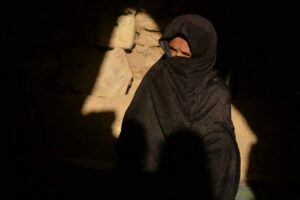
Every day, at sunset, Farzana goes to the cemetery—the place where she buried all her hopes for life. Beside her son’s grave, she sits alone with a grief that she loves as much as she loved her own child. She says that during every Eid, the New Year, the cold days of winter, and the falling leaves of autumn, with every drop of rain and snow, she searches for signs of her son; signs that she has still not found after two years. With a sorrowful expression, she says,
“You can never forget. He is in my thoughts every moment and every hour; he is always on my mind. Although two years have passed, I will never forget him, especially because he helped me so much at home and with the household work, and because I think about how talented my son was. He is in my thoughts every moment and every hour.”
This pain is not limited to Farzana. In Afghanistan—a country where decades of war, insecurity, poverty, and successive changes have left deep wounds on its people—many mothers have paid a heavy price and continue to mourn the loss of their children. These women have faced lasting sorrow and psychological exhaustion after losing their children. The stories of these 20 mothers represent only a part of the reality that many women across Afghanistan continue to live with.
Maryam, a 39-year-old resident of Badghis, who lost her 10-year-old son due to illness one year ago, talks about the impact of this loss on her mental health,
“It has only been one year since I lost my child. I went through very difficult days and months. Psychologically, it was very hard for me, and even now, the situation I am in has changed my relationship with my husband and children at home. I have become somewhat aggressive. After that incident happened and I lost my son, I faced many problems and did not have a good relationship with my family.”
Among the 20 women interviewed in this report, 13 lost their children due to illness, four in war, one during migration, and two due to natural disasters.
Nadia, a 60-year-old resident of Kunduz who lost her only son during the civil wars, describes the pain of living without her son.
“I had only one son; he was martyred. After that, my husband also suffered a stroke and passed away. My son was 23 years old when he was martyred in the war in Zabul. I still cannot forget him. Whenever I think about him, I miss him, and I become emotionally distressed. I have never been able to forget my son,” she says.
Nooria, a 43-year-old resident of Badakhshan whose young daughter died of a stroke three months ago, says,
“My daughter suffered a stroke; she was very unhappy in her husband’s home. She left behind four children. When someone loses their child, they feel terrible. A child is the vein of a mother. I still do not feel well. Every time I look at my daughter’s children, my heart breaks because they will grow up without their mother. No one, not even a grandmother, can take the place of a mother.”
The women interviewed in this report say that, to cope with the pain of losing a child, they have needed, above all, the support of family members, empathy from those around them, and, in some cases, counseling from psychologists. According to them, this support has, to some extent, helped reduce psychological pressure and helped them adjust to the emptiness caused by the loss of their children.
Sharifa, a 39-year-old resident of Ghor who lost her eight-year-old daughter to leukemia two years ago, says that through counseling, support, and sympathy from family members and those around her, she has been able to cope with this pain to some extent.
“My heart was broken. I screamed and cried a lot. After that, I was depressed for a long time. I had insomnia, physical weakness, and severe anxiety, and these conditions still continue sometimes. A female doctor talked with me and provided counseling; after that, I became somewhat calmer,” she says.
Halima, a 32-year-old resident of Kabul, who has carried the grief of losing her three-year-old child for four years, also says,
“I lost my child due to illness. It was winter, and we could not take care of him properly, and he passed away. I had lost myself; I could not believe it. I cried for months and did not talk to anyone. I had stress, loss of appetite, and excessive crying. Even now, I become upset quickly. My sister helped me a lot; she came to me every day, and this helped me not remain alone.”
Psychologists say that coping with the pain of losing a child is a time-consuming process. However, mothers can better manage their grief and gradually adapt to it by accepting their feelings, talking with trusted people, and, when needed, seeking help from psychologists or therapists.
Zuhal Amirzada, a psychologist, says, “One of the most important ways to help mothers is to encourage them to accept their feelings. A mother has the right to cry, become angry, miss her child, or even experience numbness. She should not be prevented from expressing these feelings because failing to accept them can make grief deeper and more complicated. A mother should talk about her feelings, pray, and allow the natural grieving process to take its course. She should also not be forced to suddenly put aside the memories of her child because this can prolong the grieving process. If this process continues for too long and disrupts the mother’s daily life, seeking help from a counselor or psychologist becomes necessary.”
The sky slowly becomes darker. Farzana picks up a handful of soil from her son’s grave and smells it, remembering the scent of his body. She kisses his gravestone as if she is touching his cheek and forehead. Carrying the container of water she used to water the plants beside her son’s grave, she begins her journey back home; but she leaves her heart behind there. She looks back several times, as if she is still waiting for a voice that will call her “mother” once again.
Reporter: Soodaba Haidari