In recent years, climate change has become one of the main challenges facing the horticultural sector in Samangan. According to officials and orchard owners, unexpected cold weather, early heatwaves, irregular rainfall, and the increasing prevalence of pests and plant diseases are among the main factors contributing to lower yields and substantial losses in almond orchards.
Officials from the Department of Agriculture, Irrigation and Livestock say they have undertaken preventive measures and training programs to help orchard owners address these problems. However, orchard owners emphasize that they need greater support to cope with these challenges.
Unexpected cold weather; a key factor behind lower almond yields
Orchard owners say this year’s weather conditions caused significant damage to their almond orchards. Despite their efforts to control pests, lower yields remain one of their main concerns.
Mohammad Osman, an orchard owner in Samangan, says, “This year, our almond trees flowered very well at the beginning of the season, but unexpected cold weather caused most of the blossoms to fall, resulting in a much smaller harvest than we had expected. Pests also caused some damage, but the greatest losses were due to the unexpected cold weather and changing weather patterns.”
He adds that they applied pesticides to control the pests, which proved effective to some extent, but there was no way to prevent the damage caused by the cold. As a result, they lost about 40 percent of their crop this year. He says they expect the Department of Agriculture to support orchard owners by providing high-quality pesticides and technical training.
Some other orchard owners also say that, in addition to water shortages, the increasing prevalence of pests and plant diseases, combined with sudden temperature changes, has reduced both the quality and quantity of their harvest while increasing orchard management costs.
Noor Mohammad, another orchard owner from Samangan, says that this year’s almond harvest was lower than in previous years because they faced both water shortages and unfavorable weather conditions. He adds that insects and certain plant diseases caused fruit to drop and reduced the quality of the almonds.
“These problems have become more severe over the past two or three years, and each year we spend more on pest control. Unexpected cold weather in the spring and early heat also caused the blossoms to fall, reducing yields. Despite spraying pesticides, we lost about 50 percent of our crop. We therefore ask the Department of Agriculture to support us by providing high-quality pesticides, improved seedlings, and technical training,” he says.
Plant diseases; another factor threatening almond orchards
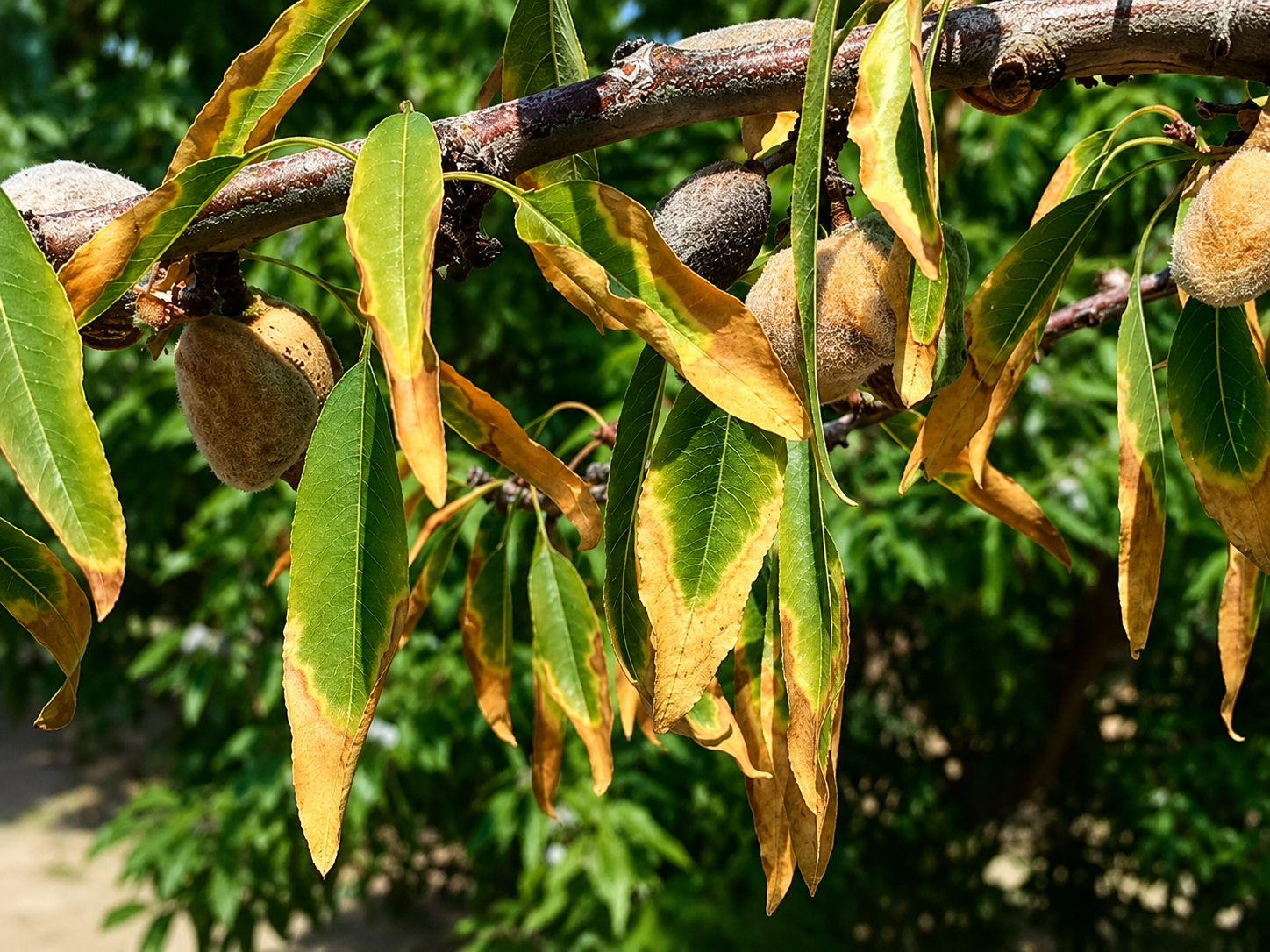
In addition to these challenges, a number of orchard owners say that the spread of plant diseases—particularly powdery mildew—has become a growing concern. They add that if this situation continues, losses will increase further. Hayatullah, another orchard owner, says,
“The harvest is generally good, but this year one of the most serious diseases affecting trees has been powdery mildew, which has caused significant damage to our almond trees. Wilting leaves are one of the main symptoms of this disease. Powdery mildew reduces fruit production and overall yields. Severe cold and early heat have also damaged the trees. Heavy rainfall this year caused us to lose part of our harvest as well. We ask the Department of Agriculture to help us control these pests and diseases.”
Experts believe that closer cooperation between orchard owners and relevant institutions, the use of scientifically proven pest management methods, and greater adaptation to changing climatic conditions are essential to prevent further losses and improve horticultural production in Samangan.
Gulabuddin Khan, an agricultural expert and Director of Plant Protection at the Samangan Department of Agriculture, Irrigation, and Livestock, says Afghanistan has experienced the effects of climate change for several years. He notes that after consecutive droughts in previous years, this year’s untimely rainfall has contributed to the spread of pests and plant diseases.
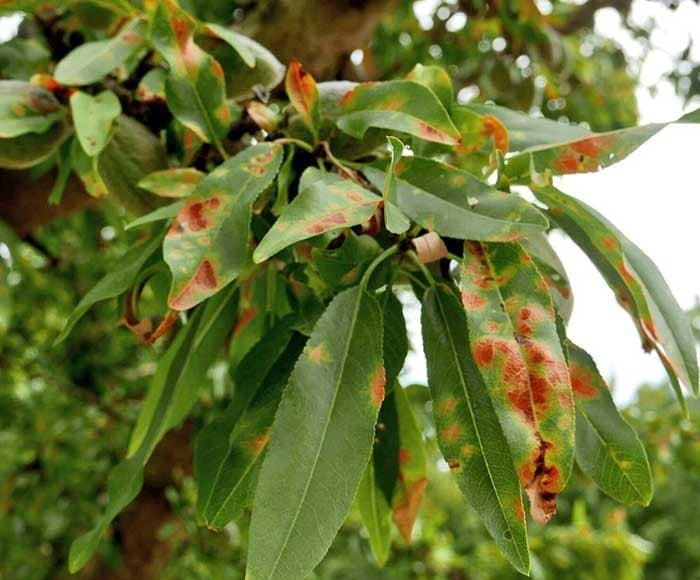
“Weather conditions, particularly during the months of March to May, when rainfall was unusually heavy, created favorable conditions for fungal diseases such as shot hole, anthracnose, and dieback in grapevines, as well as in almond and apricot orchards. To control these pests and diseases, we recommend a range of preventive methods to farmers during the winter, and these have proven highly effective. We also recommend that farmers use lime-sulfur solution to help prevent and control pests and diseases,” he adds.
Officials from the Department of Agriculture, Irrigation, and Livestock say that climate change has played a significant role in the spread of plant diseases in recent years, while increasingly unfavorable weather conditions have led to crop losses for orchard owners.
They add that promotional and training programs are underway across various districts to help orchard owners adopt appropriate cultivation methods and reduce losses caused by climate change.
Abdulkhalil Karim, Head of Agricultural Affairs in Samangan, says,
“Climate change affects orchards in many ways, including extreme heat, cold weather, and heavy rainfall. Rainfall no longer occurs at the appropriate time. We have agricultural extension workers in our districts who train farmers in cultivation methods that have proven effective. Among these, the mechanical control method has produced good results, including the application of dormant oil during the winter and proper pruning.”
Climate change, the increasing prevalence of pests and plant diseases, and extreme temperature fluctuations have become some of the most serious challenges facing orchard owners in Samangan in recent years.
The Department of Agriculture, Irrigation, and Livestock says it is implementing ongoing training and preventive programs, orchard owners are calling for greater support through the provision of high-quality pesticides, improved seedlings, training in modern orchard management practices, and technical support.
Reporter: Farahnaz Zaheri