Although opium poppy cultivation has been completely banned by the leadership of the Islamic Emirate, a number of residents in Badakhshan have turned to cultivating the crop again this year. Some farmers say that the lack of suitable livelihood alternatives and limited employment opportunities have forced them to continue growing opium poppy.
Shah Mohammad, a resident of Argo District in Badakhshan, says that if the government provides him with job opportunities, he will stop cultivating opium poppy. He adds that opium poppy cultivation has not been satisfactory for him compared to other crops and that he is seeking a suitable alternative.
“Employment opportunities are not available to us. If there were jobs, we would take them and completely stop cultivating opium poppy, because earning a livelihood is a necessity in our society today,” he adds.
Gul Mohammad, one of the farmers in Kishm District of Badakhshan, says that income from opium poppy cultivation was better than from other crops; however, the leadership of the Islamic Emirate declared it prohibited, and his opium poppy fields were destroyed this year.
He adds that after the destruction of his opium poppy fields, he has faced severe economic difficulties. He says,
“Our hope was somehow the opium we had produced. When our crops were destroyed, we completely lost hope for the future. If employment opportunities and alternative livelihoods are provided for us, we will no longer need to cultivate this.”
Zalmai, another resident of Badakhshan, says that if suitable alternatives are provided, he would never turn to opium poppy cultivation. He calls on officials to provide practical alternatives such as improved seeds and access to irrigation water for farmers.
“Our request to the government is to pay serious attention to this issue. They should help irrigate agricultural land and provide people with alternative crops to opium poppy cultivation so that people stop cultivating this harmful plant,” he adds.
Experts believe that if suitable alternatives are provided for farmers, opium poppy cultivation can be largely prevented.
Din Mohammad Asad, an agricultural expert in Badakhshan, says that distributing alternative crops such as hing (asafoetida) and saffron could serve as suitable substitutes for opium poppy cultivation. He adds that farmers are familiar with opium poppy cultivation because it is relatively easy, but they still lack sufficient knowledge about cultivating hing and saffron.
“Government officials should support the people in a good manner; they should also provide financial assistance to them, for example by giving money, and in addition properly teach them the methods of cultivating saffron or hing, or provide them with fertilizers. They should supply whatever facilities the people need. People should feel that if we cultivate something other than opium, the government will cooperate with us,” he says.
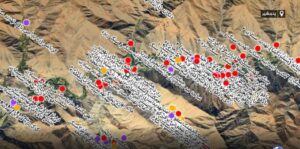
Meanwhile, Zain-ul-Abidin Bidar, Head of the Press Office of the Counter-Narcotics Directorate of the Badakhshan Police Command, says that nearly 60,000 jeribs of land under opium poppy cultivation have been identified in the province this year, and the destruction process is ongoing.
He adds that the trend is being carried out under the orders of the leadership of the Islamic Emirate, while programs to distribute alternative crops to farmers are also ongoing.
“The trend of destroying opium poppy cultivation has been carried out by a force of one thousand personnel, who are currently engaged in destroying opium poppy fields across the districts of Badakhshan. Overall, around 60,000 jeribs of land in Badakhshan have been cultivated with opium poppy,” he says.
Opium poppy cultivation in Badakhshan has a long history, and many farmers have turned to it because of its relative profitability and established market. After the Islamic Emirate returned to power, the cultivation and production of narcotic substances were banned nationwide, and destruction trends were launched in some areas. However, the lack of alternative livelihoods and limited employment opportunities have caused some farmers to remain dependent on opium poppy cultivation.
Reporter: Faridullah Yaqobi