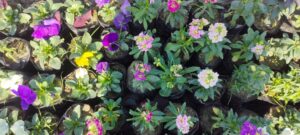
With the arrival of spring, the flower and plant market has taken on a fresh look, and youth working in this sector report increased sales during this season. Many of them turned to this profession because of their personal interest and the lack of job opportunities. By cultivating different kinds of ornamental plants, they not only beautify the environment but also create a source of income for themselves.
Seyar Nadim, a 28-year-old from Logar, says he began growing flowers and plants two years ago and has since cultivated about 4000 flowers.
“I started flower cultivation two years ago. At first, I kept a few flowerpots at home, and after a year and a half I opened a small greenhouse in our village in Logar. So far, we have grown around 4000 flowers. I learned this work by watching YouTube videos and consulting experienced greenhouse owners. I have a strong passion for it,” he says.
Faisal, from Kabul, says he turned to flower and plant cultivation because of economic hardship, and that this work helps him cover his own and his family’s basic expenses.
“Because of the difficult economic situation and the lack of jobs, I started growing flowers and plants. I also have a strong interest in greenery. I earn about six to seven thousand Afghanis per month from this work, which helps cover my family’s living expenses,” he says.
Walid, a 27-year-old youth from Kabul, says he chose this work because of his interest and passion for plants. He explains,
“Growing flowers and plants is something I inherited from my elders. I started growing flowers and plants when I was 14 or 15 years old, and I was very interested in it. At first, we had a small greenhouse at home where we grew flowers, but a few years later we built a larger greenhouse.”
Meanwhile, Sayed Mohammad Sulaimankhail, an environmental expert, says that flower and plant cultivation is very important in Afghanistan, and to develop and expand these activities, modern technology and methods must be utilized to achieve better results.
“Flower and plant cultivation in Afghanistan is important from commercial, environmental, social, and cultural perspectives. Therefore, practical steps need to be taken in the field of plant cultivation. To expand these activities, modern techniques and technologies should be used so that better results can be achieved at lower costs by using improved plant varieties that are resistant to drought and water shortages in varying weather conditions.”
Sher Mohammad Hatami, spokesperson for the Ministry of Agriculture, Irrigation, and Livestock, says that the ministry has useful programs to support those youths who are engaged in the cultivation of plants and flowers.
“The Ministry of Agriculture, Irrigation, and Livestock of the Islamic Emirate has established greenhouses to support youths in plant and flower cultivation, distributed flower saplings, and provided opportunities for work and training so that they can earn a sustainable income.”
Flower and plant cultivation not only adds beauty and greenery to the environment but also provides youths with income and hope. These activities show that even amid economic challenges, the efforts and passion of youths can bring hope, dynamism, and greenery to their surroundings—an effort that symbolizes life, creativity, and capability in society.
Reporter: Husna Sadat