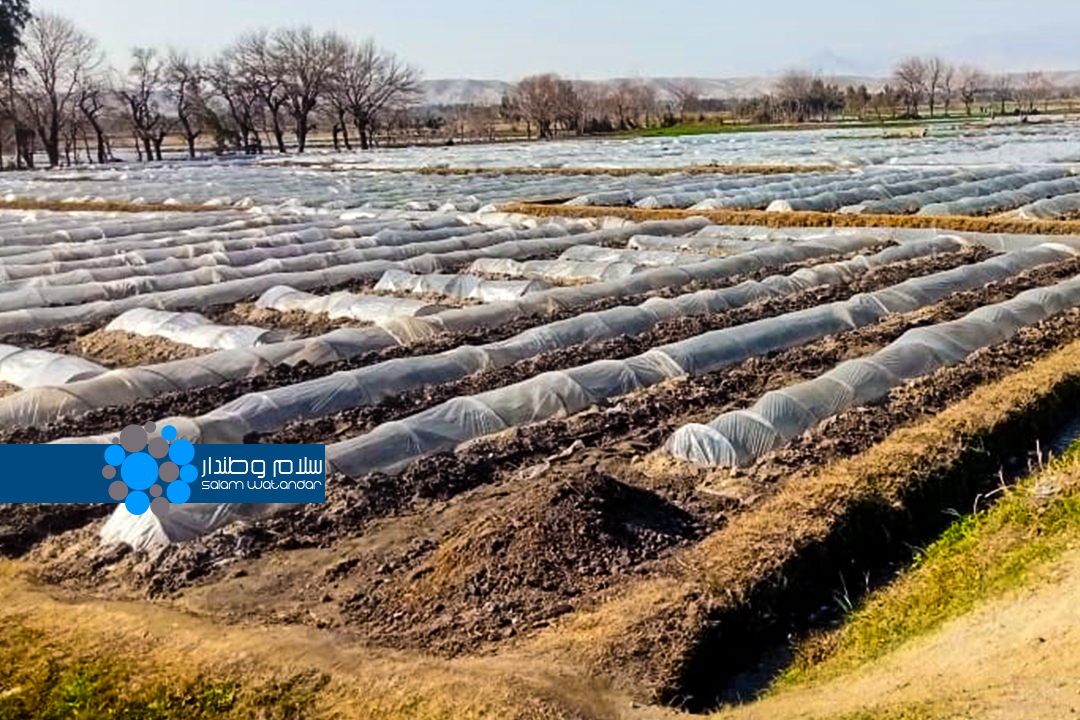
Laghman, one of the provinces that has achieved self-sufficiency in vegetable production, not only meets domestic demand but also exports its products to other provinces, including Kabul. Although vegetable production in the country decreases during winter, many farmers in this province use plastic-covered cultivation to bring vegetables to the market ahead of the season, which significantly helps stabilize prices.
Kamran, a resident of ‘Qarghayi’ district in Laghman, has cultivated various vegetables under plastic on three and a half jeribs of his land. He says that despite the high costs of this cultivation method, the income from the harvest is satisfactory. According to him, in this method, vegetable are protected from frost, and their growth is faster. He has now planted cucumber, tomatoes, chili peppers, and eggplants on his land, which are approaching the harvest stage.
“We are now cultivating all kinds of vegetables, such as cucumber, tomatoes, chili peppers, eggplants, and other crops. Although the cost of plastic-covered cultivation is very high—for example, each pole costs five Afghanis, and plastic and chemical fertilizers also require significant expenses—these vegetables yield good harvests, which benefit both the farmers and the people.” he adds.
Helal, another farmer, says that buying plastic and poles to protect the plants is expensive, and many farmers cannot afford it. He calls on the government and aid organizations for support and cooperation in this area.
“We have cultivated one and a half jeribs with tomatoes, cucumber, and chili peppers. Maintaining them is difficult; in wind and rain, we have to stand beside them to prevent the wind from blowing away the plastic or water from getting inside. It is very hard work, and plastic is costly. We ask the institutions and the government to cooperate with us in this matter.” he adds.
Agricultural experts emphasize that cultivating vegetables under plastic in winter is very effective for farmers, as it provides suitable temperatures for maintaining and growing the plants. Karamatullah Shafiqi, an agricultural expert, says that this method yields better results in areas with cold weather and strong winds.
“In plastic tunnels, we can grow vegetables because the temperature is properly controlled. During the day, sunlight warms the tunnel and transfers heat to the plants, and this warmth is retained at night. Additionally, humidity inside the tunnel remains stable, and the plants are protected against many diseases.” he says.
On the other hand, officials at the Laghman Department of Agriculture, Irrigation, and Livestock say that around 1,500 hectares in ‘Qarghayi’ district have been cultivated under plastic, with much of the area planted with cucumber, tomatoes, eggplants, and other vegetables. According to the officials, cooperation has also been provided to farmers in distributing chemical fertilizers and improved seeds.
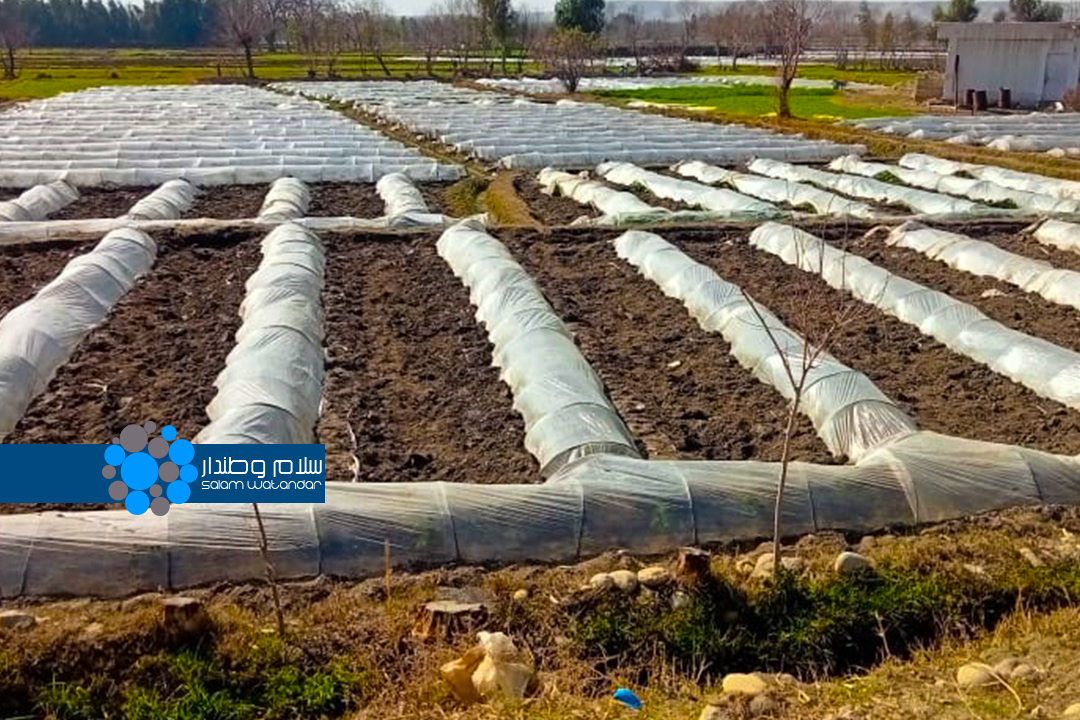
Baryalai Hamdard, Director of Agricultural Affairs at the Laghman Department of Agriculture, told Salam Watandar, “In ‘Qarghayi’ district, approximately 1,500 hectares of land have been cultivated under plastic with vegetables, much of which includes cucumber, tomatoes, eggplants, and other crops. In this district, farmers have some professional capacity, and the Department of Agriculture is working to expand plastic-covered cultivation and introduce it to areas where this method has not yet been promoted, so that farmers can earn higher incomes.”
It is worth noting that, compared to many other provinces, the production of seasonal and off-season vegetables in Laghman is more extensive, and the province’s products, in addition to meeting domestic demand, are also exported to other provinces of the country.
Reporter: Wasifullah Osmani