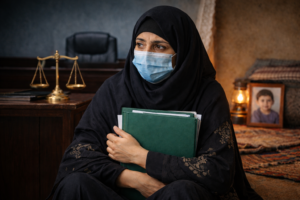
Interviews conducted by Salam Watandar with 15 women from nine provinces of Afghanistan show that 13 of them have experienced physical violence from their husbands, one from their father, and one from their stepmother (father’s wife). The women interviewed in this report stated that they were beaten and mistreated for reasons such as preventing their husbands’ families from interfering in their lives or raising their children, being late in completing household chores, or their husbands’ addiction to drugs. They believe these reasons are non-Sharia and do not deserve physical violence.
Maryam, a 25-year-old resident of Maimana center of Faryab Province, who has been married for eight years, says she has been repeatedly beaten by her husband—violence that, according to her, has nothing to do with her own behavior. She says,
“Most of the time, I was beaten for small things, like being late in preparing food or talking to my family. Sometimes it was slaps and punches; other times, sticks or household items were used. The reasons for these actions were anger and economic problems. When my husband was unemployed or had conflicts outside, he would take out his anger on me at home.”
Similarly, Zeenat Rasouli, a 30-year-old resident of ‘Dawlatyar’ district of Ghor province, says she experienced physical violence from her husband for preventing his family from interfering in her married life and sometimes for delays in household chores,
“I have been severely beaten many times. I have been slapped and punched, and once hit with a stick, which caused a wound on my leg. I was also once thrown out of the house. Most of the violence was over minor issues, matters related to my children, and interference from my husband’s family. If I expressed a differing opinion or defended my rights, I was met with violence.”
Among the interviewed women, five women stated that even financial independence does not protect them from being beaten by their husbands.
Asma, a 33-year-old resident of Kabul, says that although she covers most of the household expenses, she still faces physical violence—violence that has caused both psychological and physical harm. She says,
“I cover about 90% of the household expenses and all the needs of my daughters. Yet I have been repeatedly beaten by my husband—slapped, punched, and kicked. The violence was so severe that my last vertebra was damaged, and now I cannot sit or stand properly. My husband beats me and asks why I do not put money in his pocket. This is extremely humiliating and painful because, even with financial independence, I still face violence.”
It is not only married women who experience beatings; punishment and physical violence against women and girls in their fathers’ homes while they are unmarried is also part of some negative cultural practices in Afghanistan.
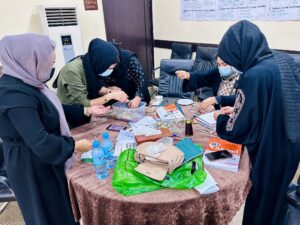
Nasrin Alidad, a 21-year-old resident Herat, says she was beaten due to her father’s unemployment and addiction. She adds that despite spending her days doing beadwork, she must give her earnings to her father to protect herself and her mother from violence. She explains,
“I am not the only one being beaten; my mother is also beaten. Often, we have no money at home, and my father does not provide for us. My mother and I do beadwork at home, but my father takes the earnings from us while shouting and cursing. Every time I try to stop him from beating my mother, he kicks me out and tells me not to return. But I am a girl with nowhere else to go, so I spend a few hours at a neighbor’s house and then return home.”
Some women’s rights activists emphasize that physical violence against women is increasing and cite lack of awareness as the main cause. They add that with proper enforcement of punishments, domestic violence against women can be reduced.
Frozan Dawoodzai, women’s rights activist, says,”Violence exists in Afghanistan, and unfortunately, it is increasing daily. The main reasons are lack of awareness, low education levels in society, economic difficulties, and social and traditional problems, which worsen day by day. The government must have programs for awareness and punishment to prevent violence against women. Without punishment in society, perpetrators do not pay attention and continue their behavior.”
Legal experts also state that if women are subjected to physical violence without cause, resulting in bodily harm and violation of their human rights, they have the right to seek justice and take legal action under both the law and Islamic principles.
Parwiz Khalili, a legal expert, says, “Whenever a woman is beaten, tortured, or suffers bodily harm, and it is visibly clear that violence has occurred, and she feels pain, medical and legal authorities should recognize that physical violence and mistreatment are against Sharia and the law. The woman has the right to file a complaint, claim compensation, and have the offender punished. This is her Sharia right in an Islamic court.”
Religious scholars also affirm that, from a religious and Sharia perspective, men do not have the right to harm women, and women should be treated with gentleness and respect.
Wahidullah Wahedi, a religious scholar, affirming the prohibition of violence against women under Islamic law, says,
“According to Sharia and the teachings of the Prophet (PBUH), violence against women and children is strictly prohibited. Minor corrective actions are only permitted in ways that do not cause visible injury, bruising, or disability. Women are considered the delicate gender and should be treated with gentleness, not violence.”
Meanwhile, the Ministry for the Promotion of Virtue and Prevention of Vice of the Islamic Emirate of Afghanistan emphasizes supporting women and resolving family conflicts.
Saif-ul-Islam Khyber, spokesperson for the ministry, tells Salam Watandar,
“In Afghanistan, one out of every two families faces violence against women. In the past four years, we have handled about 200,000 cases, resolving women’s family issues. Daily reported cases across the provinces account for over 35%. While people may think that public awareness is high in the capital and that problems are minimal, about 10 cases related to violence and family issues are addressed every day, so that they become aware of their women’s rights.”
According to a UN Women report published in November 2025, the number of Afghan women and girls exposed to violence has increased by 40% in the past two years, and 14.2 million require support and assistance.
Reporter: Momina Zarif