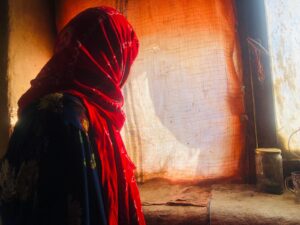
The results of Salam Watandar interview with 42 participants (21 men and 21 women) from 16 provinces of Afghanistan show that most respondents define whether a woman is good or bad not on the basis of gender, but rather on human personality traits. At the same time, 14 participants consider respect for and obedience to one’s husband to be the primary criteria for a “good woman.”
The concept of a “good woman” is one of the most fundamental social constructs in any society, shaped through the intersection of cultural, religious, historical, and psychological beliefs. Afghanistan, however, has experienced decades of war, regime changes, and multiple waves of migration. At the same time, the spread of human rights discourse over recent decades and the persistence of tribal and cultural values among the population have contributed to diverse interpretations of women’s identity and character.
Zahed, 28-year-old from Samangan, and Palwasha, 36-year-old from Parwan, state that the value and goodness of a woman are determined by personality, responsibility, and respectful behavior toward others.
Zahed says, “A good woman essentially means a good human being—someone who behaves with honesty and responsibility toward herself, others, and God. A woman’s value is not limited to traditional roles such as being a wife or mother; rather, it depends on her personality, ethics, and behavior toward others and herself.”
Palwasha similarly says, “In my opinion, a good woman is someone who respects herself and others, is responsible and kind, and strives for the growth and well-being of herself and those around her. Personality, morality, and awareness are the most important characteristics of a good woman.”
Most respondents in this report associate a woman’s goodness with personal characteristics, a perspective that aligns with positive psychology and the Big Five personality theory. According to these views, traits such as honesty, kindness, empathy, and responsibility are considered among the most important qualities of a good human being and, therefore, a good woman.
Among the respondents in this report, fourteen participants (seven men and seven women) identified ethical and humane behavior as defining characteristics of a good woman. Another fourteen participants (seven men and seven women) emphasized personal development and responsibility. A further fourteen participants (seven men and seven women) highlighted values and commitment to family as key qualities of a good woman.
However, fourteen participants (seven men and seven women) believe that respect for and obedience to one’s husband are among the most important attributes of a good woman.
Sebghatullah, 33-year-old from Balkh, says, “The qualities of a good woman include adaptability. She pays attention to her husband’s wishes, respects him, and follows his guidance. She does not make life difficult for her husband, avoids unreasonable demands, and respects her husband’s family and relatives. In general, a good woman is someone who makes her husband a king and, in doing so, makes herself a queen.”
Tasal, a 30-year-old from Kabul, also says, “A woman should treat her husband and family members with kindness and mutual understanding. A good woman, by preserving religious and cultural values, plays a positive role in raising children. Through mutual respect with her husband and family in household matters and child upbringing, she can contribute positively both within the family and in society.”
Regarding the definition of a bad woman, respondents expressed different perspectives. Twelve participants (six men and six women) mentioned disrespect and causing harm to oneself or others; eleven participants (five men and six women) identified lying and betrayal; eight participants (four men and four women) referred to irresponsibility and a lack of effort toward personal growth; while eleven participants (six men and five women) described poor character and negative behavior within the family and society as negative qualities that may emerge in women’s behavior under various circumstances.
Sarah, a 24-year-old resident of Kabul, says, “I cannot define a woman as bad because I do not accept that a woman is bad. People are different, but no one wants to be bad; everyone tries to be good. Depending on life circumstances, a person may be compelled to act negatively.”
Mohammad Abbas, 25-year-old from Laghman, also says, “We cannot label a person as bad. Human beings are not bad; rather, certain actions and behaviors may portray them negatively. It is these behaviors that lead society to view them unfavorably.”
Some psychologists argue that perceptions of good and bad qualities depend on culture and patterns of thinking. They identify human emotions, positive thinking, good behavior, empathy, and sincere affection as five essential positive human traits.
Mohammadullah Baloch, a psychologist, explains, “In every society, the understanding of good and bad qualities is shaped by cultural context and ways of thinking. The first good trait is emotional sensitivity, which is considered the most important positive trait, while negative traits distort these emotions. The second one is positive thinking, whereas negative thoughts diminish mental well-being. The third trait is good behavior, while bad behavior represents harmful conduct. The fourth one is empathy toward others, and the loss of kindness is seen as one of the worst traits. The fifth one is sincere affection without hypocrisy.”
Sociologists argue that social definitions of good and bad individuals are often influenced by personal interests. They suggest that if people adopt a conscious and healthy perspective toward one another without gender discrimination, society could overcome many of its problems.
Shoaib Ahmadi, a sociologist, says regarding this, “The labels assigned to individuals in society are unfortunately frequently based on personal benefit. When people perceive advantage from others, they describe them as good, regardless of whether they are men or women. However, when they experience harm, they tend to label them as bad. According to him, a good person is someone who does not harm others for personal gain, regardless of being a woman or a man. If people truly understand who a good human being is and define this concept correctly, social problems can gradually be resolved, and public perceptions can become healthier.”
At the same time, women’s rights activists emphasize defining women based on human qualities, arguing that strengthening a human-centered perspective between women and men is necessary to reduce social tensions.
Tahmina Mangal, a women’s rights activist, states, “A society free from misogynistic perspectives is healthier and more aware. She adds that such perspectives and people should be supported and encouraged because they contribute to social progress. In societies with misogynistic views, women face discrimination and are often forced to behave according to societal expectations.”
Meanwhile, Qutbuddin Mujtahid, an Islamic scholar, explains that the criteria for goodness in both men and women are reflected in their inner character rather than external attributes. He also emphasizes that society cannot issue definitive judgments about whether individuals are good or bad. He says,
“In Islam, the standard of goodness for both men and women is based on piety, faith, and moral character, rather than appearance, wealth, or social status. From an Islamic perspective, a good woman is someone who firstly possesses piety, faith, and commitment to God’s commands, secondly demonstrates religious devotion and good morals, thirdly maintains modesty and observes religious boundaries, behaves well within the family, and pays careful attention to the upbringing of children. These standards apply equally to men, and the ultimate judgment regarding whether individuals are good or bad belongs to God.”
However, officials from the Ministry for the Promotion of Virtue and Prevention of Vice of the Islamic Emirate state that the success of a good woman lies in obedience to her husband and adherence to Sharia law.
Saif-ul-Islam Khyber, spokesperson for the ministry, told Salam Watandar, “A woman should remain committed to all religious commands and rulings, shape her character, appearance, and morals within the framework of Sharia, obey her husband in righteous matter, because the secret of a woman’s success also lies in serving and obeying her husband, raise her children well, and protect herself from wrongdoing.”
Finally, findings from the World Values Survey (2017–2022) indicate that in many developing countries reliance on traditional gender roles is gradually declining, although the process remains slow. Nevertheless, the result of this report shows that even in Afghanistan, a segment of society is moving toward personality-based standards that are less dependent on gender.
Reporter: Hosai Afghan