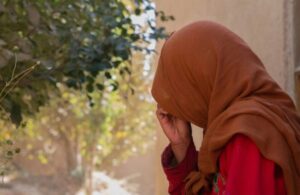
In families without sons, girls not only carry heavy economic and social responsibilities but also face humiliation, family blame, and psychological pressure. This is what Salam Watandar found after interviewing 36 girls from 10 provinces in Afghanistan. The study shows that humiliation, reproach, and psychological stress aimed at girls without brothers have become a recurring pattern in Afghan culture.
The girls, from Kabul, Faryab, Kunduz, Badghis, Kunar, Herat, Ghor, Badakhshan, Jawzjan, and Parwan, shared their experiences with Salam Watandar. Most said that not having a brother weakened their position both in the family and in society, leaving them feeling less valuable.
Family; the root of gender discrimination
Many girls said their first experiences of humiliation came from within their own families, especially those who had no brothers. Khadija Qambari, 26-year-old from Herat, the eldest child in her family, spoke about the gender discrimination her father showed toward her sister years ago.
She says, “After I was born, another daughter was born into our family, but unfortunately my father abandoned her because she was a girl. My mother was told that the child had died, but years later, my father admitted the truth himself.”
Najla, 25-year-old from Faryab, recalls how humiliation and disappointment began in her paternal family. She says, “My parents often say, ‘We wish one of you—or even all three of you—had been boys.’ My father argues with my mother about why she gave birth to a daughter. I have faced humiliation from my family, been blamed by my father, and often told that a daughter belongs to others—meaning she will go to her husband’s house once married.”
Among the 36 girls, most said they had been blamed at least once—directly or indirectly—for not having a brother. Some also reported that their mothers were criticized for giving birth to a daughter.
Studies by the United Nations Population Fund (UNFPA) on “son preference” in South Asia (2020) show that these attitudes are rooted in patriarchal structures linking economic and social value to gender.
Pressure from relatives and social stigma
Discrimination against girls without brothers does not stop at the household; it often structurally continues among relatives.
Shukrana, a 17-year-old from Kunduz, talks about the humiliating behavior of her relatives. She says, “My aunt and uncle don’t care about us; they curse us, saying, ‘What use is a daughter? A son protects the family.’ My uncle’s daughters also say, ‘You have no brothers, so how long will you stay in your father’s house? Who will protect you? If you had a brother, he would work and provide for your food and other expenses.’”
At family gatherings, girls often hear phrases like, “A house without a son is incomplete” or “It’s the son who protects the family.” While some comments may be intended jokingly, psychologists warn that they can have lasting negative effects on self-esteem.
Chaman, a 35-year-old from Faryab, talks about the impact of this behavior on herself. She says, “These words have had a negative effect on my mental health. Hearing phrases like ‘A house without a son is not a house, it’s like a dark house’ makes us feel worthless and even fills us with anger.”
Missing opportunities due to the absence of a male companion
Finding shows that girls without brothers often miss certain work or social opportunities. Marwa, 26-year-old from Faryab, says, “We’ve lost opportunities simply because we don’t have a male companion. People’s behavior is hurtful; sometimes they say, ‘You wish you had a son,’ or make sarcastic jokes. Because there is no son, our worth is considered less. Neighbors often say a house without a son is incomplete.”
Some of these girls said that when handling administrative tasks, following up on documents, or resolving financial issues, they have faced both formal and informal restrictions.
Sara, 25-year-old resident of Kunar, explains, “Important household decisions and external work fall entirely on women. Going to offices, managing documents, handling finances— because of social restrictions, I cannot carry out these tasks easily.”
Girls without brothers share experiences of discrimination and humiliation, while experts warn of the serious consequences. Psychologists explain that such treatment within families can undermine girls’ self-esteem and leave them feeling worthless, cautioning about its long-term effects.
Mohammadullah Baloch, a psychologist, says, “Low self-esteem, neglect of one’s own worth, stress, social anxiety, and psychological insecurity arise when discrimination raises. Families need to raise awareness about harmful cultural norms affecting daughters. Professional training—work skills, social behavior, and counseling—can prevent these effects. Finally families should support their daughters.”
Shoaib Ahmadi, a sociologist, says, “Restrictions on girls disrupt both families and society and affect the next generation.” He emphasizes the importance of creating awareness and educational programs about the role of women in society.
“Today’s daughter is tomorrow’s mother. If she faces such pressures, lacks independence, and struggles with challenges, the next generation she raises will also be affected. This can create social problems and even disrupt the family system. Governments should develop programs to raise awareness about the role of women in society, informing both women and the public so they are better understood.” he says.
Women’s rights activists stress the importance of raising awareness among families and add that, to empower girls, educational opportunities must be provided so they can challenge prevailing social norms and family attitudes.
Husna Raufi, a women’s rights activist, says, “First, families without sons need to understand the value of daughters in Islam and in society. Second, the importance of girls should be promoted through the media. Third, support means ensuring that girls have access to education and work so their minds are enlightened, they are not a burden on their families, and they help broaden their families’ perspectives. In this way, each generation that grows up will be open-minded and will recognize the equal value of women and men.”
However, officials at the Ministry for the Promotion of Virtue and Prevention of Vice of the Islamic Emirate emphasize that women’s rights are protected and that support is available. They say that if women face restrictions or any form of discrimination, various authorities at the provincial, district, and local levels are available to provide guidance and assistance.
Saif-ul-Islam Khyber, spokesperson for the Ministry for the Promotion of Virtue and Prevention of Vice, told Salam Watandar,
“Regarding professional responsibilities, especially in protecting women’s rights, all cases are covered. If a woman feels undervalued, is treated with disregard in her family, or faces problems because she has no children, these issues fall under the ministry’s responsibility and must not be ignored. Women encountering such problems in their province, district, or local area should report them to officials of the Ministry for the Promotion of Virtue and Prevention of Vice.”
The absence of a brother in a family is not merely an individual or household issue; it is part of a broader cultural and social phenomenon that exposes girls to psychological, social, and familial pressures.
Reporter: Hosai Afghan