Some women working in the livestock sector in Pul-e-Alam, the capital of Logar, told Salam Watandar that they had been raising large and small livestock for the past five years to support their families.
They explained that they collected up to 20 kilograms of milk daily and sold it in the local market, but because there were no milk processing centers in the area, they were often forced to sell their products at lower prices.
Sediqa, a livestock farmer in Logar, said that women earned between 600 and 800 Afghanis daily from selling dairy products.
She added, “A bucket of yogurt sells for about 200 Afghanis. This work not only solves many of our economic problems partially, but it also allows us to play an active and meaningful role in our families’ economy alongside our husbands.”
Rahela, another livestock farmer, noted that although women made a good profit, most of Logar’s dairy was sent to Kabul for sale and processing.
She said, “If dairy processing and sales were done locally, women’s income would be higher.” She added, “Some of us have only basic knowledge of collecting and storing dairy products, so specialized training programs are needed to improve our skills.”
Saleha, a resident of Baraki Barak district in Logar, told Salam Watandar that she had been working with her male family members for several years, raising livestock and producing dairy. She explained that through this work, she earned hundreds of Afghanis daily and could meet her family’s needs. She also urged the Ministry of Agriculture, Irrigation, and Livestock to establish dedicated dairy production and processing centers in Logar.
She said, “Dozens of brave women in our province, including myself, produce and sell dozens of kilograms of milk daily. Right now, one kilogram of milk sells for 25 to 27 Afghanis.”
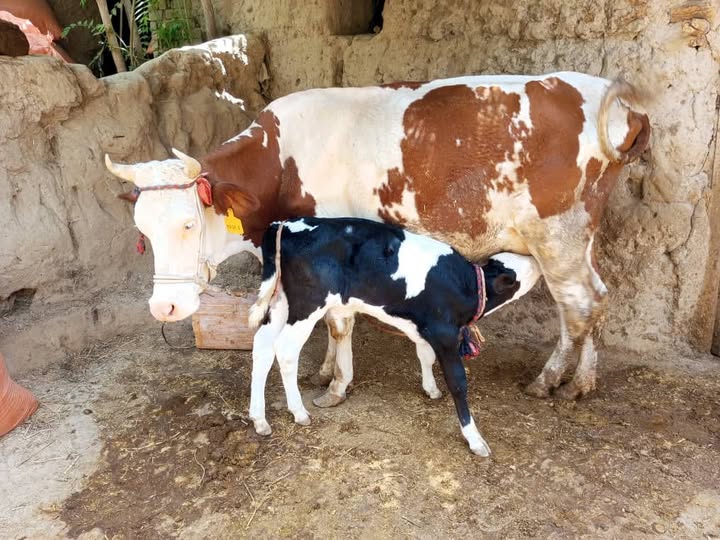
Abdul Hafiz, another resident, pointed out that most people in Logar were engaged in livestock farming and that the province’s dairy products—such as milk, yogurt, buttermilk, and butter—were well-known in many provinces of Afghanistan.
He called on the government and supporting organizations to set up advanced milk-processing centers in the provincial center and districts.
“If proper processing centers are set up here and milk is turned into dairy products, the economy of many families will improve, and there will be no need to transport milk to Kabul,” he said.
Mohammad Rafi Ibrahimi, Deputy Director of Agriculture, Irrigation and Livestock of Logar, told Salam Watandar that livestock farming in the province had made significant progress compared to the past. He added that currently between 3,000 and 5,000 liters of milk were transported daily to Kabul for processing.
He added that most low-income families, especially women, meet their daily needs by raising large and small livestock for milk production.
He said, “Dairy products have brought positive changes to the lives of low-income families, particularly women. Although the Ministry of Agriculture and Livestock has provided various support to livestock farmers, these efforts are not enough, and work to further strengthen this sector continues.”
Logar is one of the provinces where about 80% of the population works in agriculture and livestock farming, and family economies largely depend on these sectors.
Reporter: Khan Wali Ahmadzai