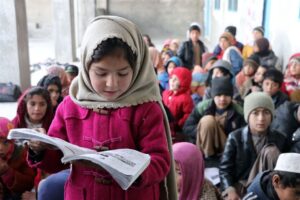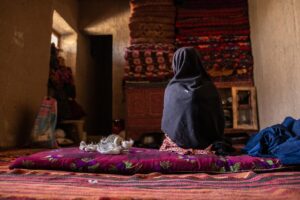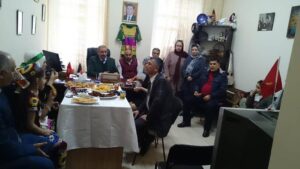
Despite the training of hundreds of women in handicrafts and small businesses in Maimana, the center of Faryab, an economic downturn, declining purchasing power, and limited capital have created serious challenges. These issues have raised concerns about the sustainability of their economic self-sufficiency.
Zainab, a shopkeeper in Maimana’s women’s market, who has been working in tailoring and fabric sales for seven years. She says business is no longer what it used to be.
“I have five students, but our sales are very low,” she explains. “Even when we manage to sell something, half of the payment is in cash and the other half is on credit. We sew ready-made clothes, but customers cannot afford to pay the full amount.” According to her, many women pay only part of the fabric cost upfront and take the rest on credit.
Salma, another tailor in the same market, explains that she started her shop with limited capital to support her family. However, the slow market has placed her under financial pressure.
“There are almost no sales, and people’s budgets are very tight. Several members of my family are unemployed. I opened this shop to earn a living for my family and serve people, but without enough customers and market, it’s very hard,” she says.
Madida, a young woman working in bead embroidery, also speaks about the decline in demand.
“There was a time when we had many customers. We used to sew dresses for weddings and parties. Now there is hardly any work or business. Fabric, bead and materials are expensive, but customers offer very low prices. It’s not profitable for us anymore. We need more support and more job opportunities,” she adds.
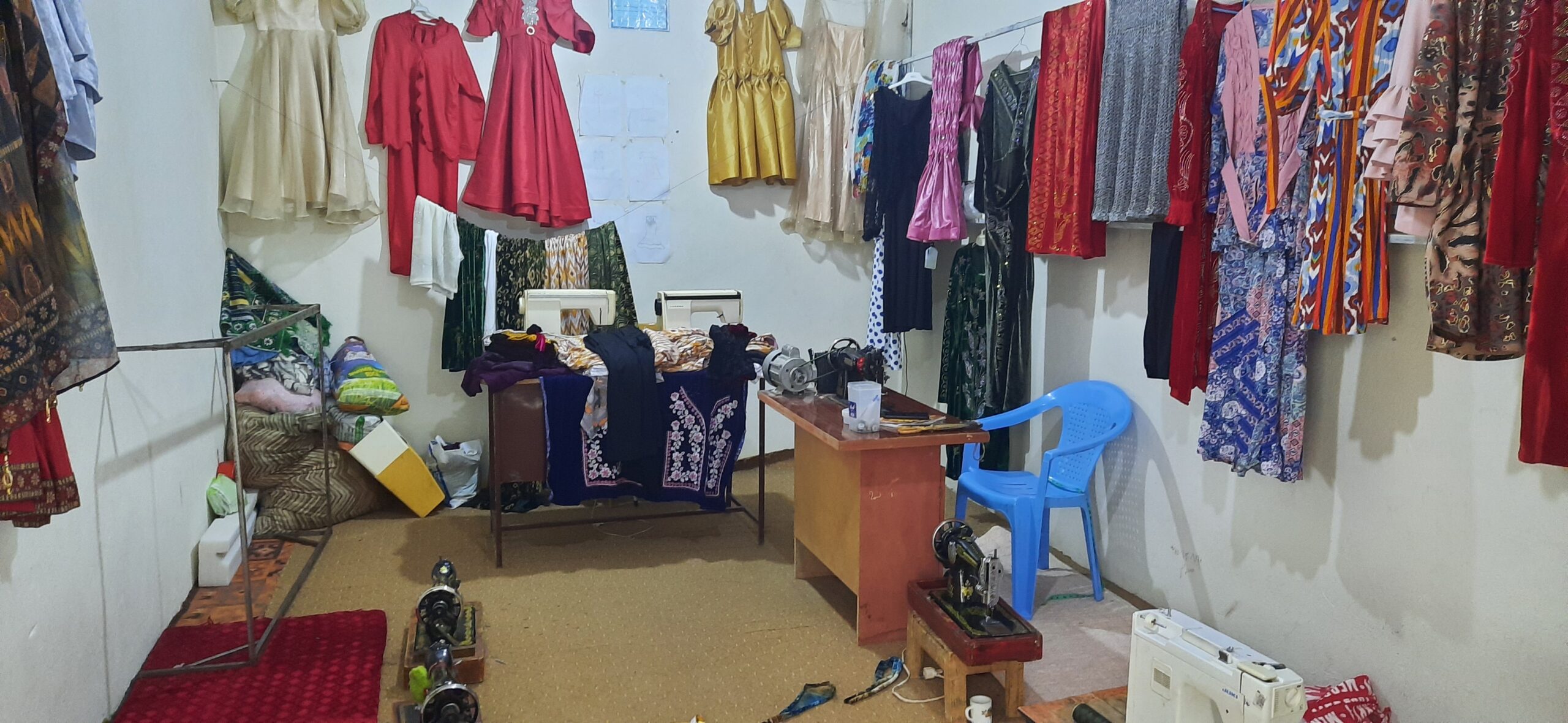
Meanwhile, Nasiba Hussam, head of the Maimana Women’s Development and Trade Center, says dozens of women artisans are currently active at the center. The center, which was established with the support of donor organizations, now operates in four production sectors.
“Currently, 300 women are engaged in training, and 195 of them are students. Our active workshops include hijab and curtain sewing, gulabatoon and mirror embroidery, beadwork, tailoring, embroidery, cake and cookie baking, and food processing such as jam and mixed vegetable pickles. The main challenges are limited capital, modern machinery, and specialized training,” she explains.
Noor Mohammad Mirzaei, Director of Finance and Administration at the Faryab Department of Industry and Commerce, states that around three years have passed since the establishment of this market. According to him, more than 700 women in Maimana have received vocational training in various industrial and commercial fields. He says,
“Over 700 women have completed training and started their own businesses. We provide stalls for them at annual exhibitions and have even sent some to Kabul to showcase their products,” He emphasizes that the main goal is to help women become self-sufficient and expand their sales both within the province and beyond.
Economic experts believe that women’s participation in production and sales plays a key role in improving family livelihoods.
Habiba Morowat, an expert on economic issues, highlights the importance of training, access to financial resources, reliable markets, and supportive government policies. She says,
“When women actively participate in the economy, they not only increase their household income, but they also strengthen their financial independence and develop skills.”
Many women in Faryab work in handicrafts and small businesses, but their future depends on stable markets and financial support from the government and the private sector. With proper support, they can overcome economic challenges, become self-sufficient, and contribute to the local and national economy.