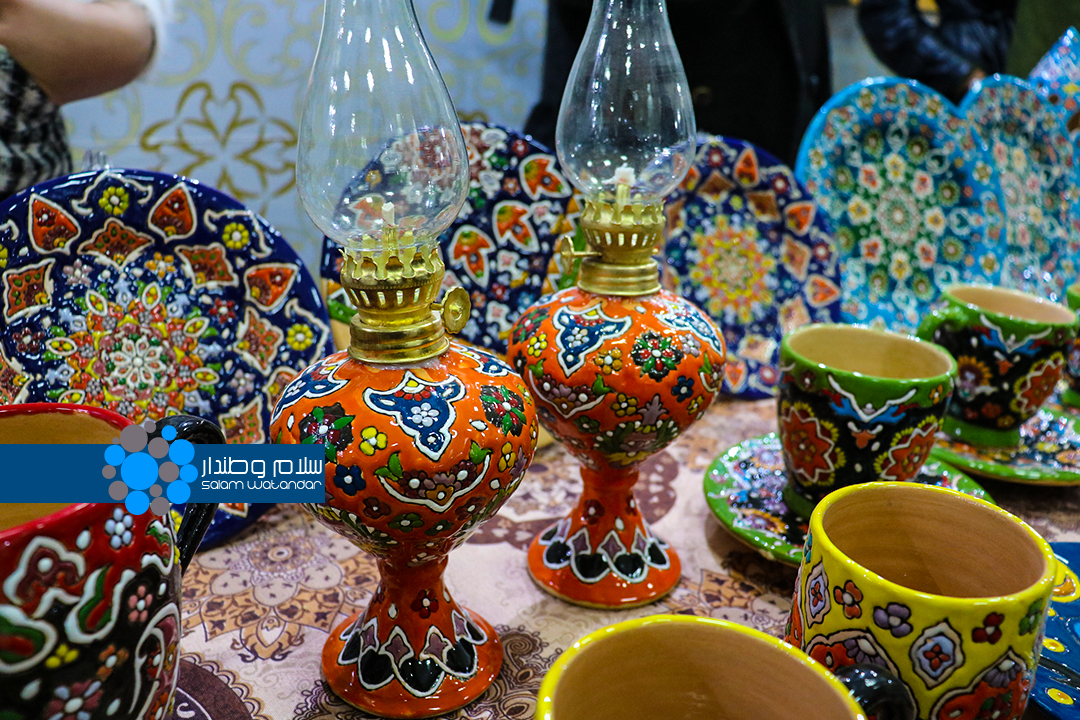
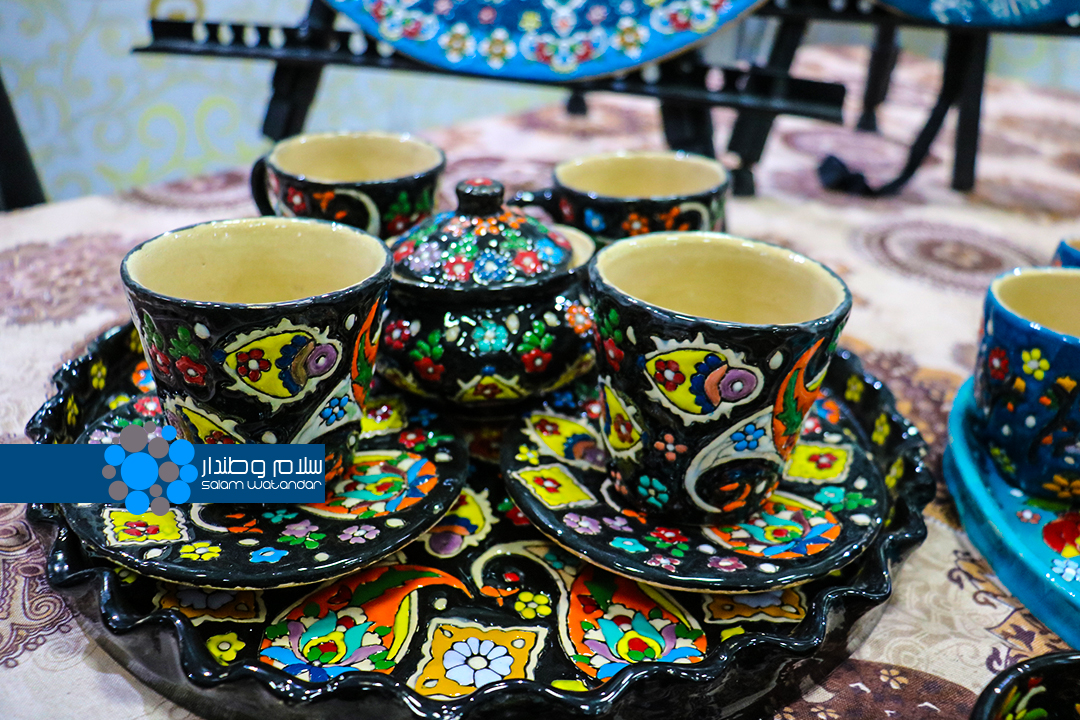
In a small art workshop, patient hands bring life to cold clay, turning it into vibrant expressions of culture, nature, and daily life. Every day, a group of girls gathers here, using the delicate art of enameling to transform simple earthenware into colorful stories that reflect their creativity and culture.
Their daily work unfolds in a space filled with the scent of paint and pottery clay, where silence is broken only by the soft sound of brushes gliding across pottery. The girls paint delicate designs—flowers, historic buildings, and traditional scenes—each pattern reflecting their imagination, memories, and personal experiences.
Among these young artists is Zahra Akbari, one of the workshop’s staff members.
She says, “I’ve been part of this workshop for seven months, and my love for art is what brought me here. Being in a colorful, artistic space surrounded by other girls lifts everyone’s spirits. If we stay at home, we become depressed. Going out, working, and being together gives us energy and happiness.”
She believes that enameling is not just an art form, but also a way to express emotions, preserve cultural identity, and find meaning during difficult times.
Most of the women and girls in the workshop have been forced to stop studying or working due to restrictions. They say that the supportive environment of the workshop has helped them avoid isolation and reduced psychological pressure.
Ayesha Cheshti, another staff member, shares,
“I was studying until the new restrictions were imposed. After that, I joined this workshop and started painting. It has had a very positive effect on my morale.”
For some girls, this art has become the only remaining path to social and economic participation. Through enameling, they not only preserve their personal identity but also gain an opportunity for financial independence.
Asiya Kakar, another employee, explains, “The situation in Afghanistan is difficult. Women had nowhere to go, and the only door that remained open to us was the door of art. Economically, it really helps.”
Quraish Malekzada, the head of the workshop, says that the main goal of creating this space was to support women artists and provide opportunities for learning, producing, and selling their work.
He says, “Currently, 25 women are learning the art of enameling here,” he adds. “For some of them, selling their creations has already become a source of income.”
He also explains, “From start to finish, I am both the manager and the worker. I began this work nine years ago. I have trained 25 students so far, and many of them go on to open their own workshops and teach others.”
At a time when social and economic opportunities for women and girls are limited, this workshop has become a place of creativity and hope. Enameling on pottery is no longer just decorative—it has become a symbol of resilience, identity, and the unbroken voice of women artists.
Reporter: Kobra Salari