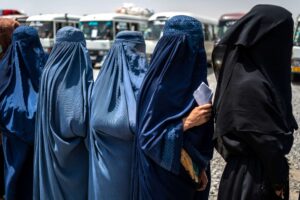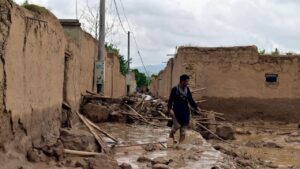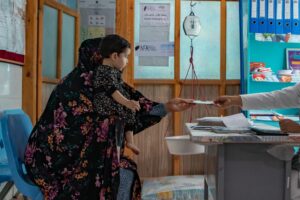
Afghan youths are leaving their country in search of economic opportunities despite serious risks abroad. Iran remains a primary destination, even amid political unrest and security threats. Salam Watandar’s findings indicates that Afghan young people are migrating to Iran despite the country is facing waves of internal instability and the threat of an external conflict. Earlier, in the aftermath of Israel’s military attacks on Iran, some Afghan migrants residing in the country faced accusations of espionage and were subjected to abuse, humiliation, torture, extortion, and forced expulsion. In a previous round of expulsions, several Afghan migrants died from dehydration and extreme heat while being deported from Iran, and others returned to Afghanistan in dire health conditions.
Nevertheless, findings from Salam Watandar, drawn from interviews with twelve young people planning to migrate to Iran, shows that poverty and unemployment are pushing them toward a country where they are fully aware of the risks to their safety and dignity. Salam Watandar conducted interviews with 12 youths from the provinces of Kabul, Faryab, Ghor, Nimroz, and Herat for this report. These youths emphasized that they intend to enter Iran illegally—a decision they see as the last chance to provide food for their families.
Ehsan, resident of Ghor province, says that although he knows the journey is dangerous and is aware of Iran’s recent protests and unstable conditions. Economic difficulties made him to take this decision. He said:
“We are well aware these days of the challenges and problems in Iran, and that the country is facing many difficulties. But we are forced to migrate there for a piece of bread, just to have some income. Whether this decision has been taken under pressure or force, the response is yes. Because the absence of work in Afghanistan, and even in the province where we live, is very high.”
And, Mohammad, a 40 years old resident of Darulaman in Kabul, who has only recently returned to the country, intends to migrate to Iran illegally again. He stated as: “Our return to Iran will be 100 percent through smugglers, with extreme dangers—including threats to our lives. The cost we pay for smuggling is more than 50,000 Afghanis, and we endure many hardships at this stage in order to succeed.”
Basir, a 19-year-old resident of Faryab province who has spent most of his life in Iran, says that despite of all the difficulties, he has decided to migrate to Iran again. He describes his painful experiences as follows:
“I’m talking about those who had passports—not those who went illegally. Even migrants who entered Iran legally were treated with obscene language and completely intolerable, inhumane behavior. I saw it with my own eyes; I wouldn’t speak if I hadn’t seen it. Afghans, especially our youths, endured everything because of necessity—having weak economic or whatever else—and they still do.”
Also, Abdul Zahir, a 26-year-old resident of Ghor province, has also decided to travel to Iran due to poverty and the lack of job opportunities. He says with fear and concern that if he is deported by Iranian police during the illegal migration route, the money he has paid to the smuggler will turn into a heavy debt. He explained his feelings as:
“I feel very bad about it, because the money the smuggler takes—25,000 Afghanis—is given to me by my friends. If I am deported, that money will remain a debt on me. That’s why I feel anxious. I am from Nimroz province, but we decided to leave from Ghor, then go to Herat, and from there to Nimroz. From Nimroz, smugglers inside Afghanistan will take charge of us and move us part of the way.”
Mohammad, another interviewee, says that he has been victim of unemployment and the lack of work in the country and, like many other youths, is forced to leave Afghanistan. He urges the responsible institutions to create job opportunities within the country before more youths want to migrate on the uncertain paths. He suggests that:
“I am not the only one; unfortunately, many young people in this area suffer from unemployment and lack of work. I myself have decided to travel to Iran. My request to the government and responsible institutions is that they pay attention to this issue and create job opportunities for young people, so that we are not forced to leave the country and face thousands of problems with an uncertain future.”
Mohammad, a 26-year-old resident of Ghor, says that despite being aware of the protests and insecurity in Iran, he set out on this journey and is willing to risk any danger, just so his children do not die of hunger in Afghanistan. Mohammad told that they were aware of the situation in Iran and the protests there, but in Afghanistan they were weak in terms of work and the economy. They were willing to endure whatever may happen to them personally for the sake of providing a piece of bread for his children and family in Afghanistan so they not perish from being hunger.
Salam Watandar also asked some experts for their opinions on this matter. For instance, According to sociologists, limited job opportunities and economic issues in Afghanistan are among the main factors driving youths to migrate to neighboring countries, especially Iran.
One of the sociologists named as Zia Nikzad, says that due to the lack of job security, widespread unemployment, and insufficient investment in Afghanistan, there is no option to work inside the country, and for this reason Afghan youths choose the difficult and dangerous paths of migration. He added as:
“Unfortunately, they do not have job security in Afghanistan. Some of them are unemployed; industries and factories in Afghanistan have not developed, investment is not serious, and the government could not be able to create enough jobs for these youths so that they can work inside the country. Thus they are forced to take very difficult and very dangerous paths for surviving”.
Ali Reza Karimi, who is an expert on migration issues, says that despite Iran’s unfavorable conditions, the illegal entry of Afghan migrants into the country can lead to serious humanitarian, legal, and security consequences. He pointed that: “In recent days, with the intensification of the security crisis in the Islamic Republic of Iran, living conditions for migrants—especially foreign nationals—have become significantly more difficult. Increased security controls, residency restrictions, the risk of arrest and forced deportation, and difficulties in accessing healthcare services and social support are among the serious problems migrants are facing under the current conditions in Iran.”
The findings of this report shows that pressure of poverty and unemployment in Afghanistan, along with the hope of earning an income, has caused the security and social risks of this route to appear less significant to the young people interviewed. On the other hand, migration experts believes that in order to reduce this trend, it is essential to create job and educational opportunities in Afghanistan and to raise awareness about the dangers of illegal migration.
Asefa Stanikzai, a migration expert, says that cooperation between the two countries can also provide legal and humanitarian support to migrants and help to reduce social harms. She suggested for neighboring countries to make proper use of young laborers, who are relatively inexpensive. Especially in areas where there is a shortage of workers. At the same time, they should improve and reform immigration and labor laws in those countries so that it benefits both the host country and the migrants.”
For obtaining accurate statistics on the entry and return of Afghan migrants from Iran, Salam Watandar contacted the Ministry of Refugees; however, by the time this report was prepared and published, no official information was provided by the agency. But the International Organization for Migration (IOM) has reported that approximately 2.4 million Afghan returnees from neighboring countries face multiple challenges in reintegrating. The organization stated that only 11 percent of returnees are employed, while the rest of them are unemployed.