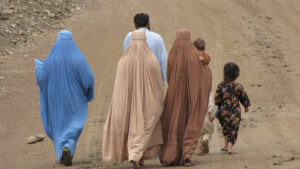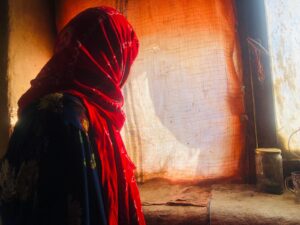
Many women in Afghanistan who have lost their husbands for different reasons, face social pressure and even threats of losing their children to force them into marrying their husbands’ relatives.
Legal experts told Salam Watandar that under Hanafi law, widows have clear and undeniable rights. These include owning property, receiving their Mahr (dower), getting financial support, inheriting from their late husbands, having full custody of their children, and making their own decisions about remarriage.
They say the Islamic government must support these women. However, some widows, now forced to marry their late husband’s brother, say that because they are unaware of the rights Sharia grants them, they have had to give in to social pressure to keep custody of their children.
Parwiz Khalili, a lawyer, says that Islamic law and Hanafi jurisprudence obligate the government to provide social services to widows. In Hanafi law, a widow has a special status in terms of rights and Sharia. Hanafi jurisprudence obliges the state to support widows. Forcing or coercing a widow is forbidden, and she has the right to remarry after her ″Iddat″ (waiting period). She is entitled to the inheritance that Sharia grants her and can enjoy financial independence, decision-making power, and recognition of her scholarly and Islamic standing.
Another lawyer, Ziba Zuhal states that widows possess clearly defined rights under Islamic law and Hanafi jurisprudence, including human dignity, the right to make decisions about their lives, marriage, property, and future, as well as financial rights such as Mahr (dower), independent ownership, maintenance during the ‘Iddat (waiting period), custody of their children, and the right to remarry. She further observes that widows in Afghanistan, due to limited awareness of these rights, often face social pressures and deprivations, and, in many cases, economic difficulties, fear of lacking social support, and distrust of the courts prevent them from pursuing legal recourse to assert their entitlements.
In this context, some women who have lost their husbands report that societal pressure pushed them toward remarriage. Consequently, they say they agreed to remarry, both because of limited social support and to secure custody of their children.
Shaima, 28 years old, from Herat, said that after her husband passed away, she had been forced to marry her late husband’s brother in order to retain custody of her children, due to economic difficulties and the lack of social support. For example, she explained that after her husband died, her children had been taken from her by her husband’s family. She had once consulted a female lawyer, who told her to file a petition in court, but she felt there was little support for women in such matters. Since she also lacked the financial means to pursue legal action, she said she had no choice but to marry her brother-in-law.
Lailuma, 38 years old, from Kapisa, mother’s of four children said they were forced to remarry due to economic challenges, which has brought her multiple difficulties. Lailuma said: The pressure came from my husband’s family; my brother-in-law forced me to marry him. I didn’t seek help because of economic problems. My own family was also financially weak and couldn’t support me and my children. For these reasons, I had no choice but to comply with my brother-in-law and enter into a second marriage.
Similarly, Marhaba, 40 years old, from Parwan, who is mother of four children, says: ″My children are with me; that’s why I accepted my brother-in-law. I agreed to a second marriage for the sake of my children’s care. Negative changes have come because I am not satisfied with this marriage—it was out of compulsion. If it were up to me, I wouldn’t have married. If someone had supported me after my husband’s death and helped with my children’s living expenses, I wouldn’t have gone through this marriage.″
In light of these experiences, several women’s rights activists emphasizes the importance of respecting widows’ rights and say that some people in Afghan society either don’t know about women’s Sharia rights, including those rights belongs to widows, or choose to ignore them.
Humaira Farhangyar, women’s rights activist, said that Widows have certain rights, such as inheritance from their husbands, Mahr (dower), custody of their children, and the right to remarry. But because most people don’t truly respect these rights, women end up facing more violence. Forced marriages of widows to their husband’s relatives are a tragedy, and these decisions are often made without the women being present.
However, officials at the Ministry of Virtue, Prevention of Vice, and Hearing Complaints say that, although they do not provide exact figures on cases involving widows and women without guardians, they have handled hundreds of such cases this year.
Saif ul Islam Khyber, spokesperson for the Ministry of Virtue, Prevention of Vice, and Hearing Complaints, told Salam Watandar: “Over the past four years, our ministry has handled thousands of cases involving widows and women without guardians, ensuring their rights are upheld. In the year 1404 alone, we protected and defended the rights of hundreds of such women across all provinces.”
According to human rights activists, forced and unwanted marriages are one of the problems widows face. Losing custody of their children, financial pressures, and being forced to marry a husband’s relatives, if not addressed by the responsible government institutions, can lead to serious family and mental health problems.
Reporter: Soodaba Haidari