As Afghanistan needs domestic energy sources more than ever to meet its energy needs, gas fields in Jawzjan produce about 650,000 cubic meters of natural gas each day. The gas helps meet part of the country’s electricity, fertilizer, and other energy needs. Officials say the gas is extracted in accordance with technical and environmental standards. However, experts warn that without close monitoring of water resources, soil, and pollutants, continued extraction could have serious environmental consequences.
Akhtar Mohammad Mansoor, head of the state-owned Afghan Gas Enterprise, says,
“Extraction is proceeding normally at four gas fields: Khwaja Gogerdak, Yatimtaq, Jar quduq, and Shakarak Mine. The gas is extracted using technical methods. We supply the extracted gas to the Kod-e-Barq of Mazar-e-Sharif, a state-owned company. The company uses 400,000 cubic meters of gas per day to produce fertilizer. We also have a contract with Bayat Power and supply the company with 200,000 cubic meters of gas per day, which is used to generate electricity.”
He adds that about 650,000 cubic meters of natural gas is produced each day and, after processing, is delivered to consumers through the pipeline network. According to him, there are seven active wells at the Yatimtaq gas field, with about 850 engineers and workers involved in different parts of the project.
“Currently, we have seven active wells at the Yatimtaq field, which produce enough gas. Around 850 engineers and workers are present at the site and address technical problems as they arise,” he says.
Officials from the state-owned Afghan Gas Enterprise say that, to reduce environmental consequences, the gas fields are located at distances from residential areas that meet the required standards. They also say that technical and environmental assessments are conducted before extraction begins.
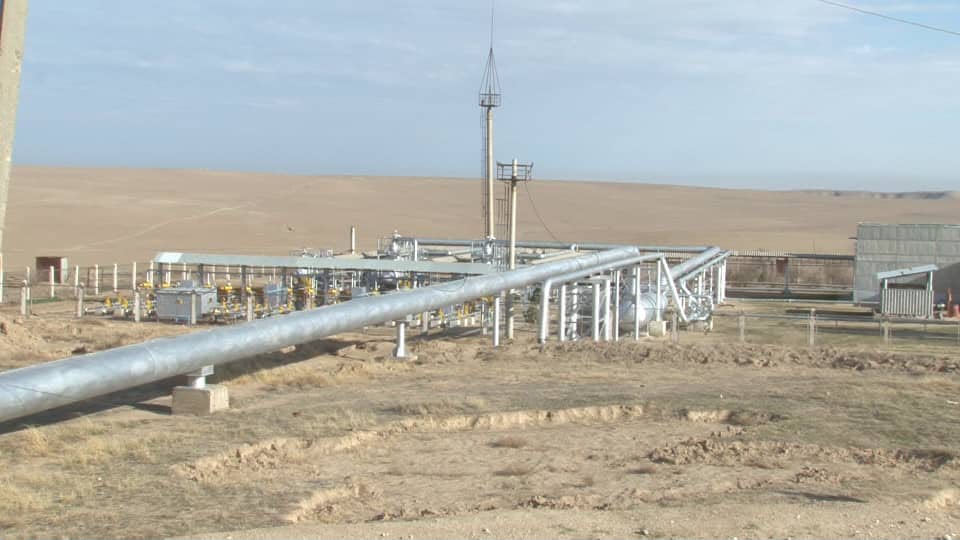
“The Khwaja Gogerdak and Yatimtaq fields are 10 kilometers from residential areas, while Jar quduq and Shakarak Mine are approximately 20 kilometers away. The required distance set by the General Environmental Protection Agency has been observed at these fields, and in some cases, the distance is even greater than the required standard,” Mansoor adds.
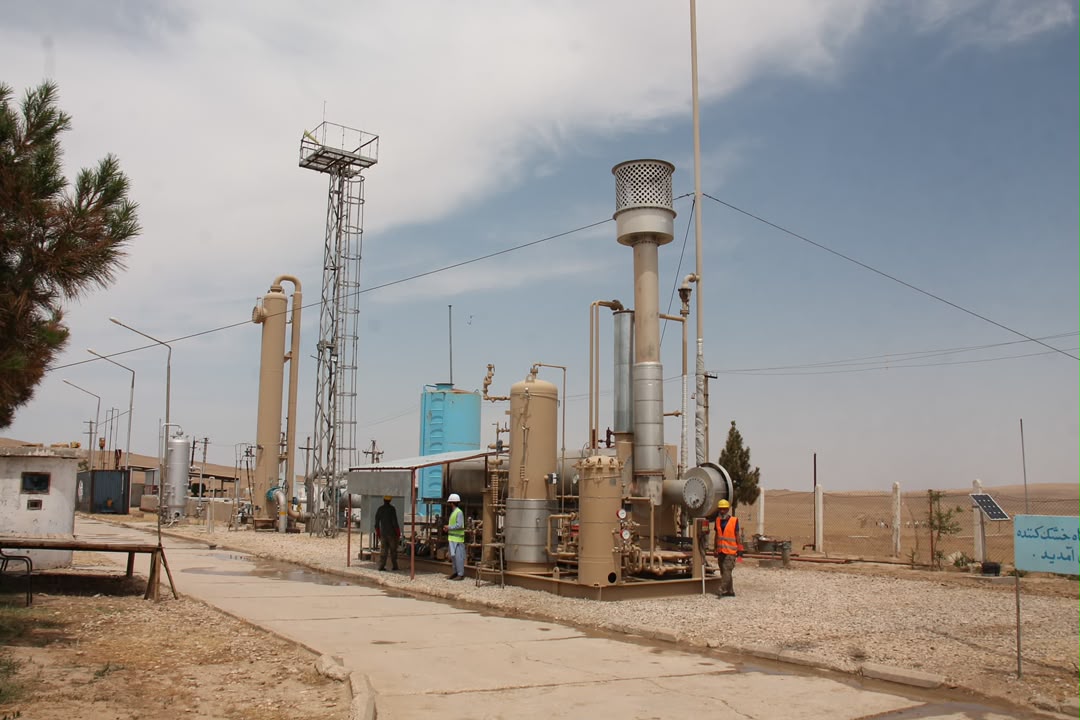
According to him, harmful substances present in the gas are separated before it is transported and are then burned in a controlled manner to prevent environmental pollution. He adds that the start of any extraction project is subject to preliminary surveys and technical assessments.
“The harmful substances contained in the gas are separated and burned in a controlled manner so the environment is not polluted and people’s health is not harmed. Before extraction begins, we also conduct a preliminary survey and use specialized equipment to separate harmful substances from the gas,” he says.
Alongside the views of officials, mining and environmental experts emphasize that although gas extraction is important for the economy and energy supply, it can have significant environmental consequences if oversight is weak. Mirwais Aryaa, a gas mining expert, says,
“Natural gas extraction can have significant impacts on the environment during the development, drilling, extraction, and transportation stages, both directly and indirectly. Direct impacts include weather pollution, noise and light pollution, and land subsidence. Indirect impacts include climate change, loss of biodiversity, social and economic consequences, and increased environmental risks.”
He also says that water and soil resources can also be harmed if gas extraction is not properly managed.
“Gas extraction can affect water and soil resources in several ways, including the pollution of groundwater and surface water, excessive water use, changes to soil structure, as well as soil pollution, degradation, and erosion,” he adds.
Meanwhile, some residents living near the gas fields say that the use of natural gas has helped meet some of their daily needs and that, so far, they have not observed any clear negative effects on people’s health or the surrounding environment. Gildi Murad, a resident living near the Yatimtaq gas field, says,
“Gas extraction has had a positive impact on our lives because gas is cheap and has made many of our daily activities easier. The gas is extracted according to proper standards, and so far, no problems or skin diseases have been observed in the area.”
Juma Khan, another resident of the area, also says, “Gas extraction provides a convenience for the people of Jawzjan. People can use it to meet their daily needs, and many families depend on this energy source to earn a living and address their difficulties.”
The findings of this report show that the daily production of 650,000 cubic meters of natural gas in Jawzjan is an important source of energy for Afghanistan and has also provided employment for hundreds of people.
At the same time, experts warn that continued gas extraction activities will only be sustainable if environmental assessments, pollution management, protection of water and soil resources, and continuous monitoring of extraction activities are carried out properly and consistently. They believe that the future of Afghanistan’s gas industry depends not only on the amount of gas produced but also on its ability to protect the environment and use natural resources responsibly.
Reporter: Marina Barakzai