Executive summary
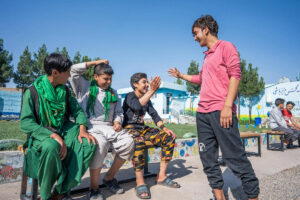
This national survey was conducted in 2025 to assess levels of humor and happiness among youths aged 18 to 35 in Afghanistan. The findings indicate that 62% of young respondents consider themselves humorous, and 81.5% use humor to reduce stress.
Key points
- Sample size: 500 youths from 22 provinces
- Method: Cross-sectional survey using a structured questionnaire
Background of the study
Humor and happiness are important factors in mental health and social well-being. They play a significant role in improving quality of life, reducing stress, and strengthening social relationships. Various theories—such as superiority theory, incompatibility theory, relief theory, and communication theory—have explained humor from different perspectives.
Research shows that humor can reduce anxiety and depression, improve physical health, and enhance the quality of social relationships. International and regional studies in countries such as Turkiye, Japan, Iran, Saudi Arabia, and Pakistan have also confirmed that youths use humor as a coping mechanism for psychological stress. However, cultural and social factors influence the type and extent of humor use.
Despite this, there remain gaps in the academic literature, including limited research in societies affected by conflict and crises, insufficient attention to cultural differences, and a lack of comprehensive studies among youth in developing countries.
Afghanistan, with its unique social context, large youth population, and rich cultural heritage, provides a distinct setting for studying humor and its use. However, no comprehensive study has previously been conducted in this area. This study aims to identify patterns of humor among Afghan youth, examine the role of humor in coping with stress, and explore gender and regional differences. It also seeks to provide a foundation for cultural, educational, and mental health programs in the country.
Methodology
Study design
- Type of study: Descriptive cross-sectional study
- Study population: Youths aged 18–35 in Afghanistan
- Sampling method: Stratified random sampling
- Data collection tool: Structured, closed-ended questionnaire (printed and online)
Main variables
- Demographic variables: Age, gender, place of residence, employment status
- Dependent variables: Level of humor, type of humor, timing of humor, humor environment
- Control variables: Education level, economic status
Data analysis method
- Software: SPSS version 28
- Statistical tests: Chi-square, t-test, and ANOVA
Geographical and demographic coverage
The survey was conducted across 22 provinces of Afghanistan, involving 500 young participants.
Geographical distribution
- Kabul: 14% (highest participation)
- Herat: 12%
- Faryab: 11.2%
- Nimroz, Farah, Helmand: 0.2% (lowest participation)

Gender distribution
- Women: 59.6%
- Men: 40.4%

Age groups
- 18–25 years: 48.2%
- 25–30 years: 39.4%
- 30–35 years: 12.2%

Place of residence
- Urban: 87.6%
- Rural: 12.4%

Employment status
- Unemployed: 42%
- Employed: 34.4%
- Students: 23.6%

Main findings
Level of humor
Overall, 62% of respondents considered themselves humorous, while 38% did not identify as humorous.

Gender-wise, 69.8% of men and 56.7% of women described themselves as humorous.

Recreation time
More than half of respondents (52.2%) reported allocating specific time for recreation activities, while 47.8% did not have a fixed recreational schedule.

Humor environment
Most respondents (55.4%) preferred joking within the family gatherings, while 36.2% preferred friends’ gatherings, and 8.4% considered both environments suitable.

Gender-based analysis shows that men are more likely to joke in friends’ gatherings (43.1%) or in both environment (45.5%), while only 11.2% prefer the family environment. In contrast, women are more likely to joke in both gatherings (39.9%) and have a higher preference for the family environment (26.5%) compared to men.

Type of humor
Most respondents (64.2%) preferred verbal humor such as jokes and anecdote, while 35.6% preferred physical humor.

From a gender perspective, 72.2% of men and 58.7% of women preferred verbal humor. Physical humor was slightly more common among men (38.9%) than women (27.5%).

Timing of humor
Most respondents (83.7%) reported engaging in humor during recreation time, invitations, and rest time. Only 15.9% reported using humor during work or study.

Gender-based analysis indicates that both men (73.2%) and women (63.7%) primarily engage in humor during recreation time, while humor in academic or work settings remains limited.

Humor as a way to reduce stress
A large proportion of respondents (81.5%) stated that they use humor and jokes to reduce stress and sadness.

Among them, 64.8% of men and 59% of women emphasized the positive role of humor in stress reduction.

Analysis and discussion
The findings of this survey indicate that humor and happiness among Afghan youth continue to play an important role despite existing challenges. Key points include:
- Prevalence of verbal humor: More than two-thirds of respondents prefer verbal humor, highlighting the importance of language and oral traditions in Afghan society.
- Gender differences: Men are more likely than women to describe themselves as humorous and demonstrate different patterns in humor environment and type.
- Role in stress reduction: The majority of respondents use humor as a coping mechanism, underscoring its importance for mental health.
- Time constraints: Nearly half of the respondents lack sufficient recreation time, which may negatively affect their overall well-being.
Conclusion
This survey indicates that humor and happiness among Afghan youths, particularly during recreation time and within family or friends gatherings, play a significant role in reducing stress and improving psychological well-being. Although most respondents consider themselves humorous, factors such as the lack of employment opportunities, limited recreational programs, and gender differences in the type and environment of humor are considered significant challenges to enhancing social well-being.
Recommendations
It is believed that youths constitute the backbone of a society, and their mental and psychological condition directly influences the stability, development, and future of the country. Happiness and well-being among the younger generation are not merely an individual need but are regarded as a social and national necessity.
Based on the findings of this research, the following recommendations are proposed:
- Development of recreational programs: Establishing appropriate spaces and healthy recreational programs for youths.
- Life skills training: Strengthening stress-coping skills and promoting the constructive use of humor.
- Creating job opportunities: Reducing unemployment in order to improve the psychological well-being of youths.
- Gender-sensitive approaches: considering gender-specific characteristics in planning.
- Further research: Conducting additional studies to better understand youths’ needs and challenges.
Researcher and Author: Sima Mayar
Translated by: Friba Qaderi