On the slopes of Parwan, where thousands of livestock traditionally begin their seasonal migration each spring, this year the routes were no shorter, yet pasturelands had declined significantly. Livestock owners who have followed specific migration patterns for years say the land has dried up, and some areas have completely lost their grazing capacity.
Alauddin, a livestock owner, says that in areas where they once spent this season, he now wonders how to provide enough fodder for his animals.
“I have 250 livestock. We move to the plains and mountains, but there is no pasture. We take them across all districts of Parwan province and bring them back hungry. There is no fodder for our animals. If we are not assisted with fodder such as grass, straw, and animal feed packages, hundred percent we will face serious problems.” he says.
Noor Ali, another livestock owner facing similar challenges, says, “I have 300 sheep. Due to climate deterioration, there has been little rain or snowfall in the mountains. When we take the sheep there, there is no grass, and they cannot feed properly. Our request to the Directorate of Agriculture of Parwan Province is to assist us with animal fodder through the Food and Agriculture Organization of the United Nations or other partner organizations working in agriculture.”
In addition to climate change, the expansion of orchards and uncontrolled construction has restricted large portions of public grazing land, reducing pasture capacity across districts and placing additional pressure on livestock owners.
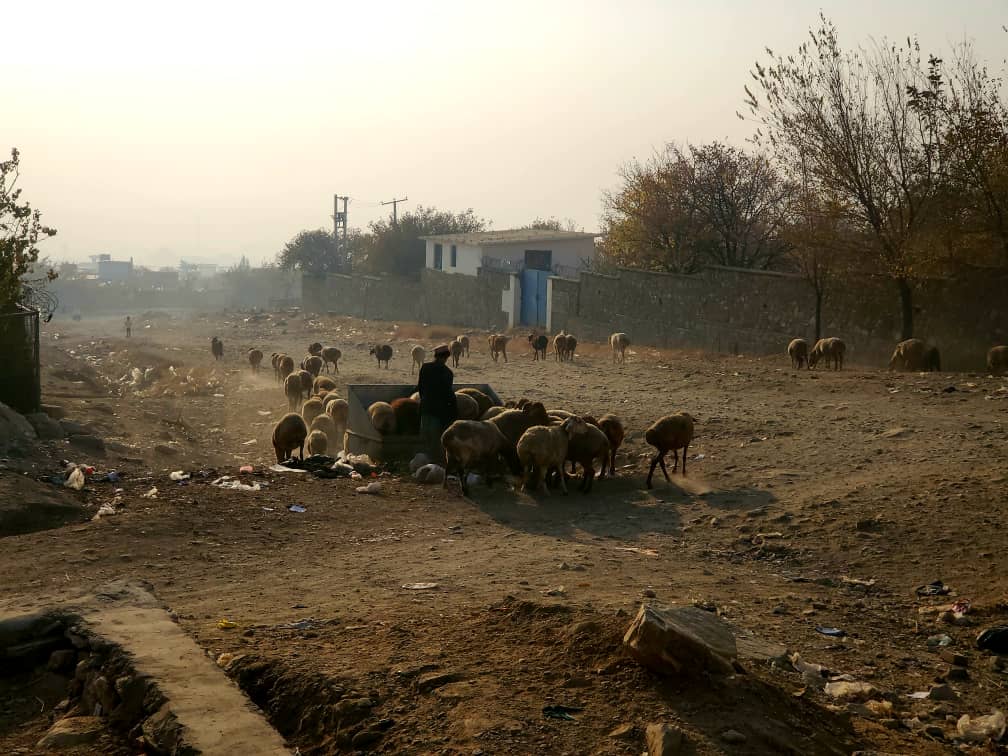
Meanwhile, another livestock owner who now grazes his animals daily among the garbages in Charikar city, the provincial capital of Parwan.
“My name is Khasta Gul. We have between 250 and 300 livestock. We used to go every year to these mountains, set up tents, and our animals had proper grazing areas. Now straw and grass are finished, and our livestock graze in the avenues of Charikar. There is no rain and no snow. Even if we go to Baghlan, we need to be shown a suitable place, such as Nikpi, which has grass, or another area.” he says.
Meanwhile, Abdul Jabbar Charkhi, a natural resources expert in Parwan, believes that poor pasture management, climate change, and soil erosion are key factors behind the decline of grazing lands. He emphasizes the role of national and international institutions in supporting livestock owners.
“Drought is one of the main causes of pasture reduction. Rising temperatures, soil erosion, population growth, and the expansion of agriculture have converted pastures into farmland. The cutting of plants and forests, along with the lack of proper pasture management, is also a serious problem. Unfortunately, pastures in Afghanistan are not properly managed. National and international institutions must work together. In areas with insufficient rainfall, irrigation systems or even artificial rainfall could help restore pastures. Livestock owners should also be supported with animal feeding.” he says.
At the same time, Neyaz Mohammad Taayeb, Head of Agricultural Affairs at the Parwan Directorate of Agriculture, Irrigation, and Livestock, estimates that about 40% of the province’s pasturelands have declined. Confirming the situation, he adds that some livestock owners have been forced to migrate to neighboring districts and even other provinces due to the lack of suitable grazing areas. He promises that structured programs are planned to address this threat.
“More than 40% of the pasturelands in this province have decreased. Some livestock owners have abandoned animal husbandry altogether. Climate change has had the greatest impact on seasonal migrations. Livestock owners have been forced to move to neighboring districts or other provinces to secure feed for their animals. Through development projects and community-based programs, we are working to improve pasture conditions and help livestock owners overcome this crisis.” he says.
Livestock owners in Parwan, whose livelihoods have for generations depended on natural cycles of rainfall and grass growth, now face seasons that are neither predictable nor stable. The sharp decline in pasturelands has led to rising costs, longer migration routes, and new livelihood pressures—placing the future of traditional livestock farming under serious threat. Nevertheless, there remains hope that through proper natural resource management and targeted support for livestock owners, this trend can be controlled and their livelihoods restored to a sustainable path.